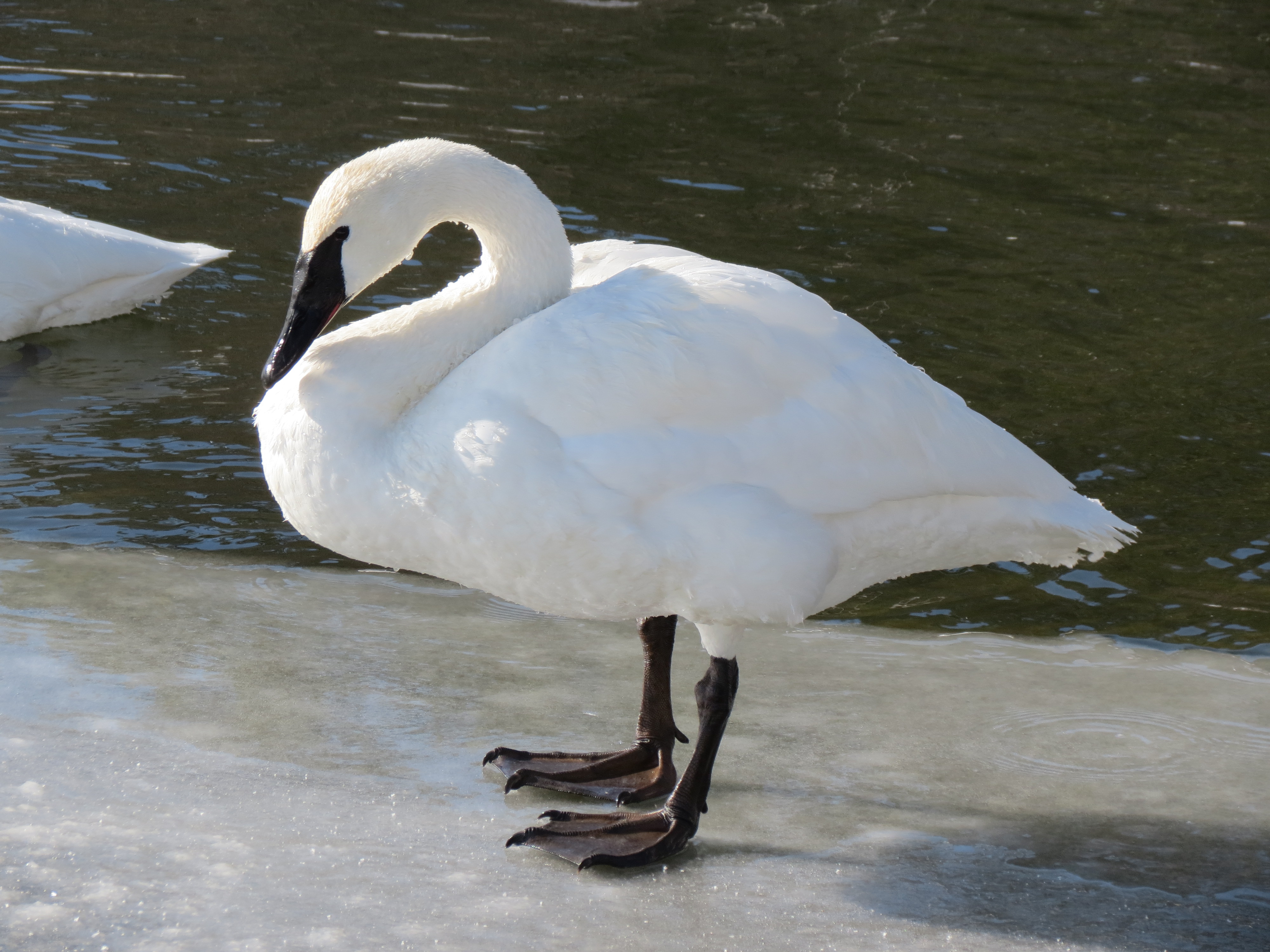
Species of the Week: The Trumpeter Swan

Photo by Mark Read

This week we have a bird with a very interesting story. The Trumpeter Swan (Cygnus buccinator), North America’s heaviest native bird and largest species of waterfowl, actually almost went extinct in the early 1930s, largely due to hunting (both for meat and the beautiful feathers). Reintroduction plans throughout Canada and the United States have been successful in bringing this beautiful bird back from the brink. Thanks are owed especially to the discovery of a large breeding population in Alaska, which was used to help re-introduce the bird into its historic range, bringing the population back to a Least Concern status. Since the Trumpeter Swan is so large (males are often over 26 pounds), they need a lot of space to take off – preferring at least 100 meters of open water. Because of this, you will often see them swimming in large ponds, wide rivers and quiet wetlands. Loon Lake, and the Black Creek wetland on the Lally Homestead Trail are good places to look for them, though we don’t see them very often. Native Trumpeter Swan populations will migrate during the winter, but introduced swans often do not. Swans form monogamous breeding pairs at age 3 or 4, and nest on beaver dams or floating vegetation, laying 4-6 eggs and warming them with their webbed feet. You may hear a Trumpeter Swan’s loud trumpet-like call before you see one – it’s like listening to a band warm-up from the sky!
Posted in Friends of Murphys Point, Murphys Point, Murphys Point Provincial Park, Species of the Week | Leave a comment

Species of the Week: The North American River Otter

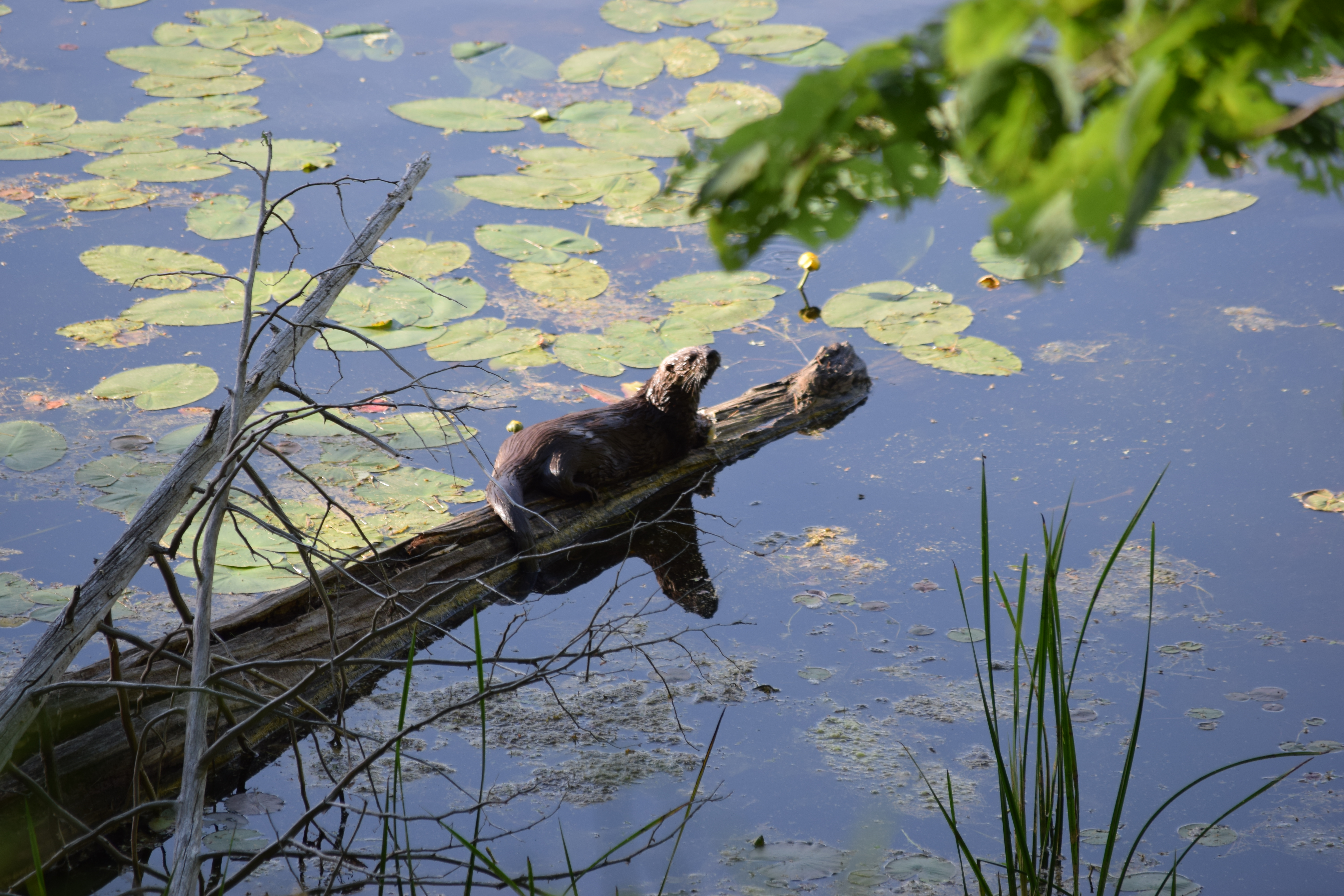
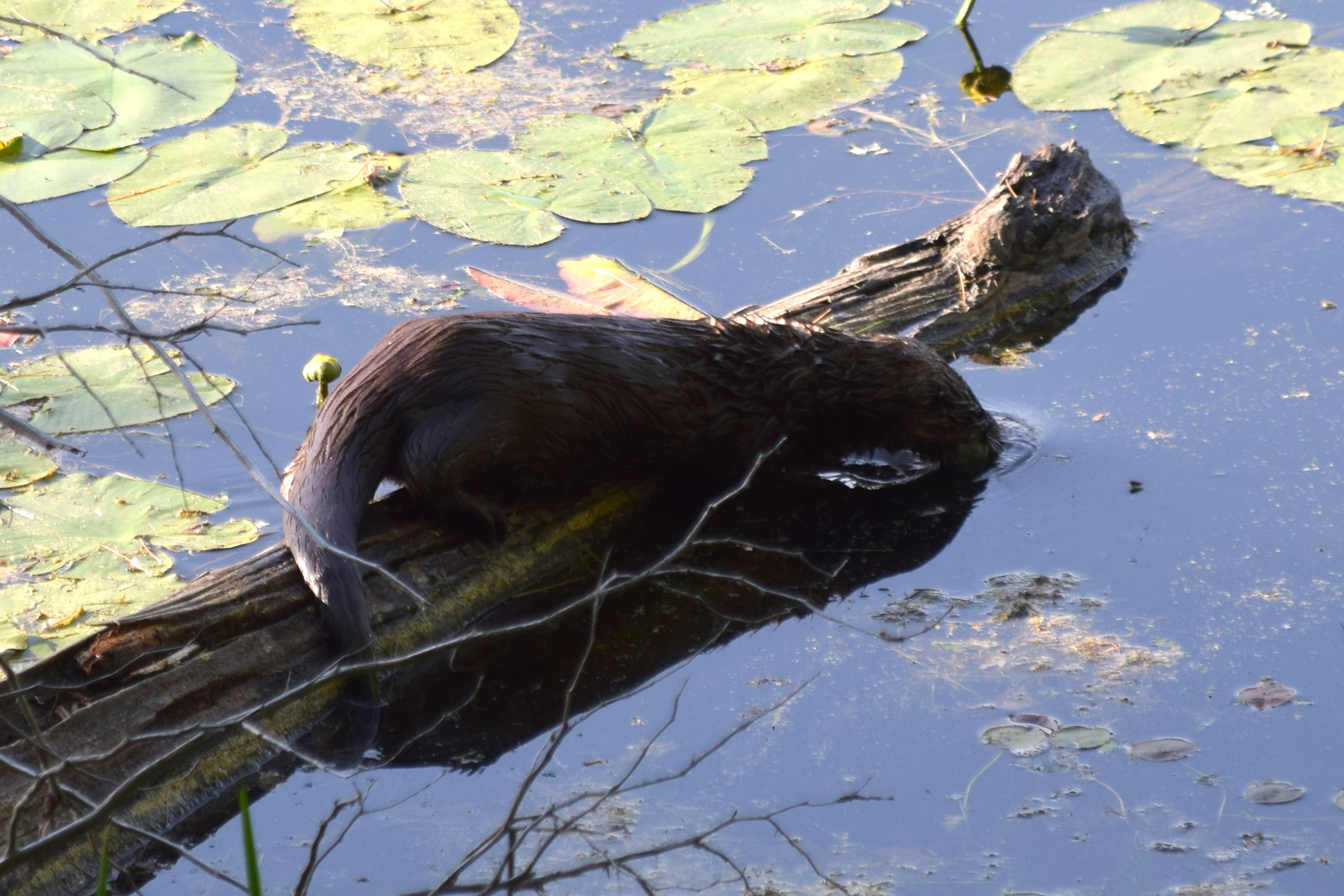
This week, our #SpeciesOfTheWeek is the North American River Otter (Lontra canadensis). This playful critter is well adapted to its semi-aquatic life — it has short legs with webbed feet, and a long slim body which helps it to swim efficiently. It also has a thick, water-repellent coat that keeps it warm while swimming in cold waters, allowing it to remain active even in the winter. Since they can only hold their breath underwater for roughly 8 minutes, they rely heavily on openings in the ice in the winter months. River Otters can be found in a variety of aquatic habitats, often making their home near the water’s edge in the form of a burrow or den. On land, they can actually run quite well, reaching speeds of up to 24 km/h. They also love to playfully slide down snow- or mud-covered hills, landing in the water with a splash! Their playfulness helps to strengthen their social bonds, while also teaching survival techniques to their young. Have you ever seen a family of otters playing at the water’s edge here in the park? Let us know in the comments!

Posted in Friends of Murphys Point, Murphys Point, Murphys Point Provincial Park, Species of the Week | Leave a comment

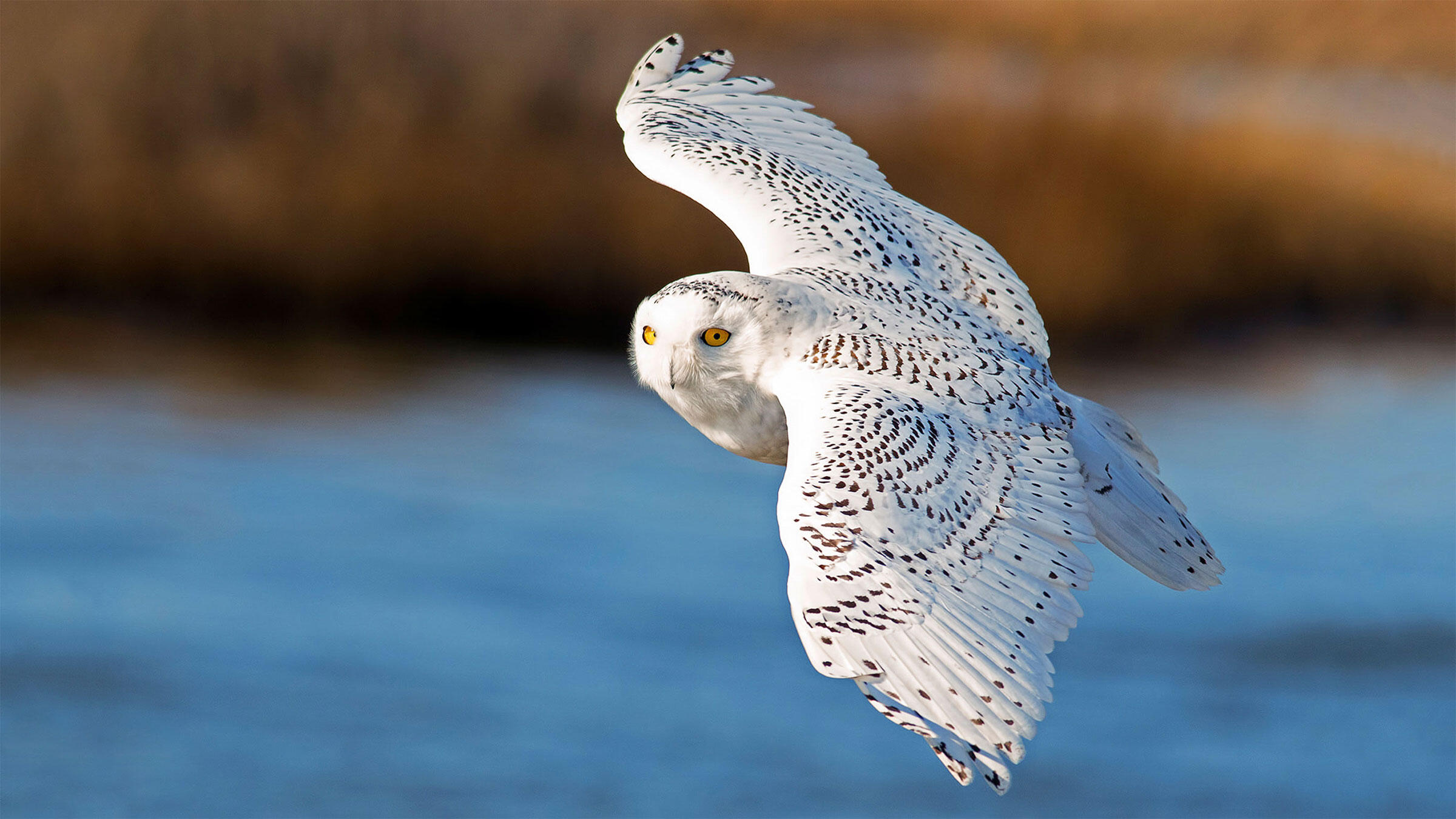
Species of the Week: The Snowy Owl

Photo by Brian Kushner

This week’s #SpeciesOfTheWeek is the Snowy Owl (Bubo scandiacus). These distinctive owls can be tough to pick out in a winter landscape. Adult males are almost all white, while females and juveniles have brown bars on the wings and chest. You’re most likely to see a Snowy Owl in the winter unless you live in the Arctic. Snowy Owls breed in the Arctic circle during the summer and migrate south of the tundra during the winter. Their wintering range covers all of Canada and the northern United States. You’re also most likely to see a Snowy Owl during the day. In the summer, when the Arctic sun doesn’t set, Snowy Owls can be seen hunting at all hours of the day. Like other owls, they hunt rodents, such as lemmings and Snowshoe Hares. They will also hunt birds, such as ptarmigan and waterfowl. Since there are no trees on their breeding grounds, Snowy Owls nest on the ground by scraping out a shallow hole in the ground, usually in dry, windswept spots. The eggs incubate for one month. The chicks leave the nest after 18-25 days but aren’t able to fly until they are around 7 weeks old, and the parents typically feed them until they are 9-10 weeks old. Migrants leave the Arctic late in the fall and can be seen in their wintering grounds from November to March. If you’re looking for a Snowy Owl, keep an eye out around open areas like farm fields or shorelines. Snowy Owls like to perch on good lookout posts, so check the tops of fences, telephone poles, or buildings, and you just might see one of these stunning birds!

Posted in Friends of Murphys Point, Murphys Point, Murphys Point Provincial Park, Species of the Week | Leave a comment