Species of the Week: The Northern Red-bellied Snake

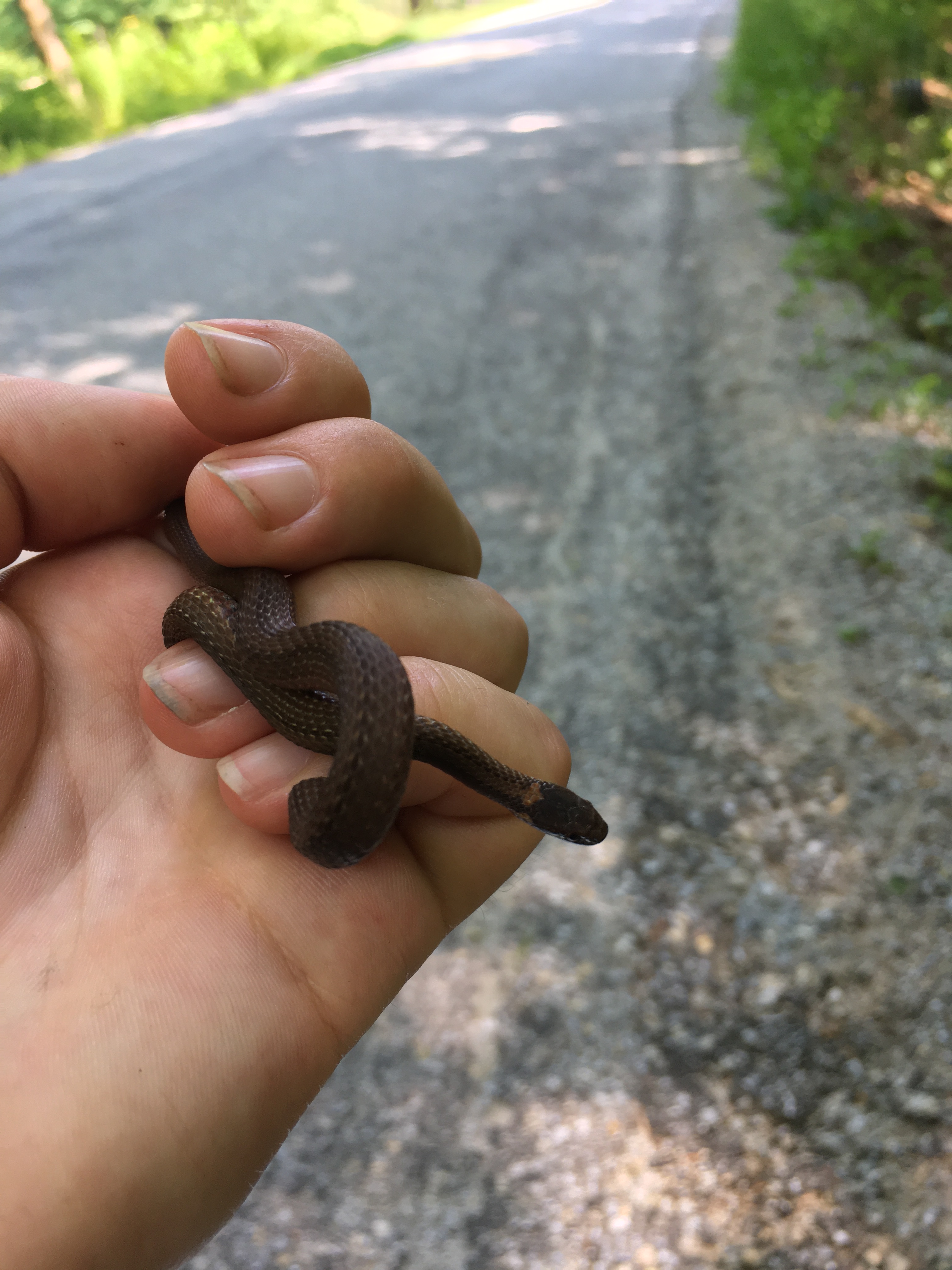
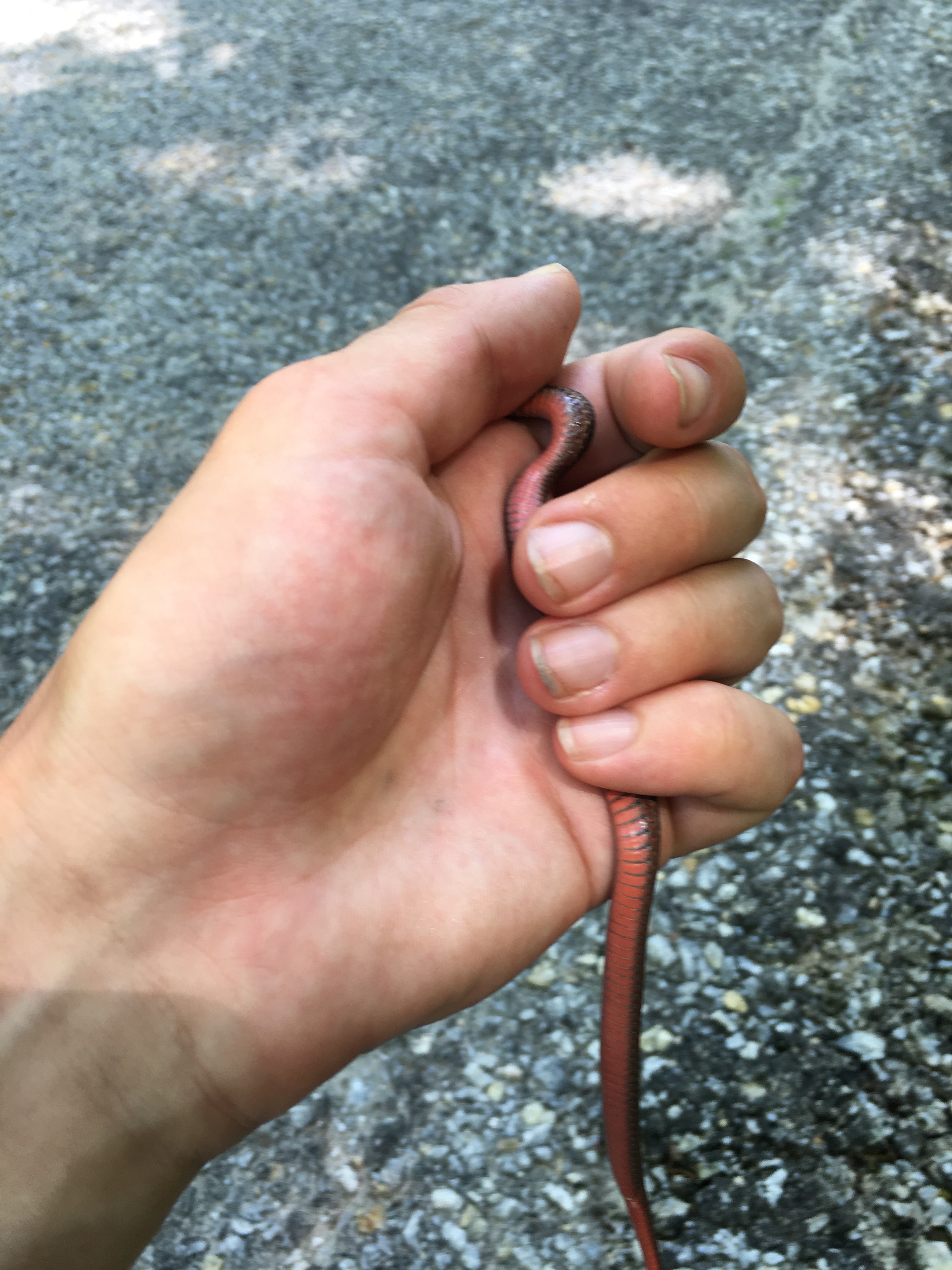
This week we are going to spend a year in the life of the Northern Red-bellied Snake (Storeria occipitomaculata). This snake is distributed throughout southern Canada and the eastern United States with the northern and southern extremities of their range being Nova Scotia and northern Florida. The Northern Red-bellied Snake is fairly small with adults reaching 8-11 inches in length. Northern Red-bellied Snakes are active from May to October with mating occurring in the spring and early summer. Females give birth to 7-8 live young sometime between late July and early September. Northern Red-bellied snakes are typically found in woodlands, meadows, swamp forests, open fields and edge habitats. Their diet consists of slugs, earthworms, insects, and beetle larvae. They usually spend the day hidden under rocks and emerge during the evening, with activity peaking at night. Over the winter, the Northern Red-bellied Snake spends its time in anthills and rodent burrows. They have many natural predators and are also susceptible to mortality by lawnmowers. This individual was spotted on the main road at Murphys Point Provincial Park.

Posted in Friends of Murphys Point, Murphys Point, Murphys Point Provincial Park, Species of the Week | Leave a comment

Species of The Week: The Wild Turkey

Just in time for the forthcoming holiday, this week’s #SpeciesOfTheWeek is the Wild Turkey (Meleagris gallopavo), As you likely know, turkeys are generally known for their large fan of colourful tail feathers, which the adult males (toms) display. These tail feathers display a range of colours including purple, red, green, bronze, copper, and gold iridescence. Despite being among the largest species of birds in North America, turkeys are actually agile fliers. They like to roost up in trees, where they are protected from predators on the ground such as coyotes and humans. Turkeys are known to communicate with each other – their vocabulary consists of 28 distinct calls, each with a general meaning. One of these is the iconic “gobble”, which is generally heard in the spring and early summer, from males announcing their presence to females. Wild Turkeys can be heard (or seen) in the park, particularly in the campgrounds or around the visitor centre. Have you heard any of their vocalizations while visiting the park?

Posted in Friends of Murphys Point, Murphys Point, Murphys Point Provincial Park, Species of the Week | Leave a comment

Species of the Week: The Clouded Sulphur

Photo by Nata Culhane

This week’s #SpeciesOfTheWeek is the Clouded Sulphur (Colias philodice).  The Clouded Sulphur is a species of meadow butterfly that gets its name from its colour which is similar to that of solid sulphur. The life cycle of the Clouded Sulphur starts when a female lays eggs on clover and similar legumes. Initially cream-coloured, the eggs change colour to red within a couple of days. A few days to a week after the eggs are laid, green caterpillars emerge and begin to eat. They moult several times as they get larger with hibernation occurring in the third or fourth instar in colder climates. When a non-overwintering generation is produced, the pupa requires 10 days in a cocoon in order to emerge as a full-grown butterfly. The Clouded Sulphur is widespread throughout North America, with the exception of Labrador, northern Quebec and the Arctic Regions of Canada.  It is commonly found in lawns and fields, where it drinks from different flowers such as clovers and milkweed. Predators of the Clouded Sulphur include birds, dragonflies, frogs and mantids.

Posted in Friends of Murphys Point, Murphys Point, Murphys Point Provincial Park, Species of the Week | Leave a comment