Species of the Week: The Yellow-bellied Sapsucker

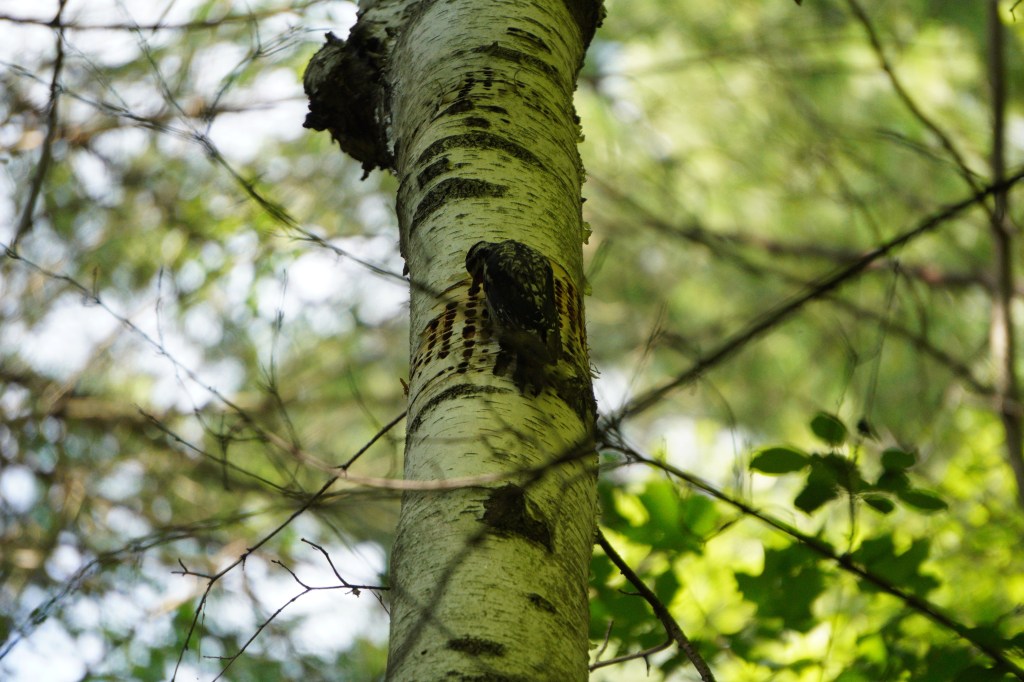
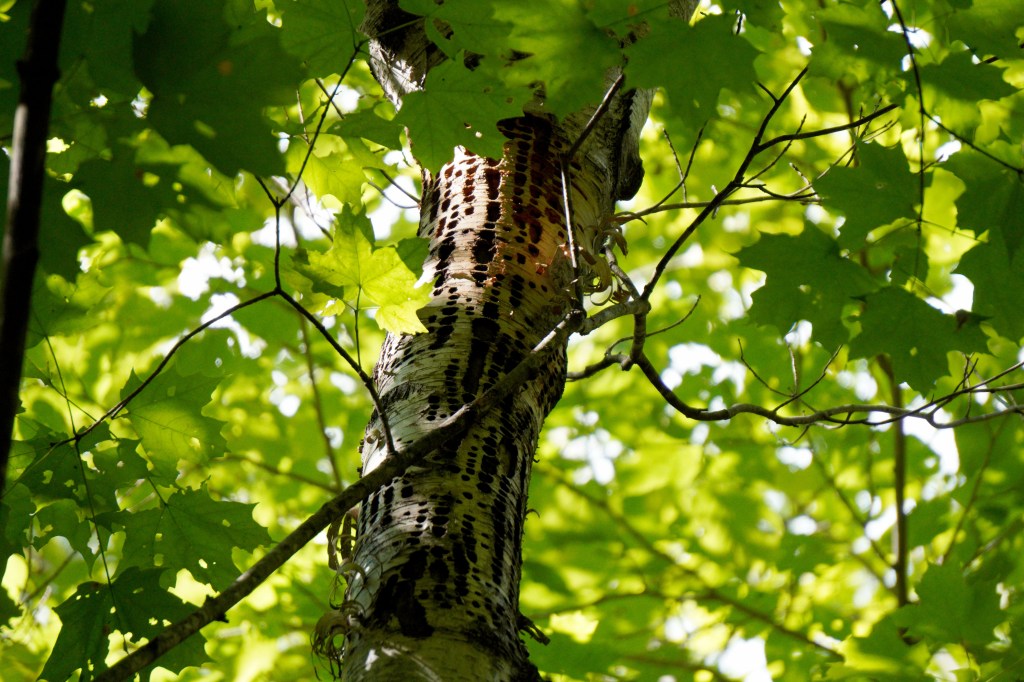
This week’s #SpeciesoftheWeek is the Yellow-bellied Sapsucker (Sphyrapicus varius), one of the most brilliant woodpeckers we have in the park! Yellow-bellied Sapsuckers are medium-sized woodpeckers with distinct, beautiful colouration, as well as a name-giving yellow belly. They are most common in young forests and along edge habitats, as young, fast growing trees are great places to look for their favourite meal… sap! They drill both circular and rectangular wells, often in sick or wounded birch, maple and hickory trees, and then lap up the sap that comes out… that’s right, sapsuckers love maple syrup just as much as we do! They will also eat insects they find below bark or in their sap wells. Interestingly, by creating these holes sapsuckers make sap available to many other animals that love this sweet liquid. Bats, squirrels, warblers, nuthatches, hummingbirds and many others come to eat at the ‘sapsucker cafe’, and lots of insects are attracted to the sap as well, attracting yet more birds that eat them. Sapsuckers nest in trees, usually picking those that are suffering from a fungal disease that makes heavy-duty excavating easier. Females have one brood per year, each clutch being 4-6 eggs large. We often see sapsuckers along the Silver Queen Mine Trail. Have you ever seen one of these lovely birds?
Posted in Friends of Murphys Point, Murphys Point, Murphys Point Provincial Park, Species of the Week | Leave a comment

Species of the Week: The Smallmouth Bass

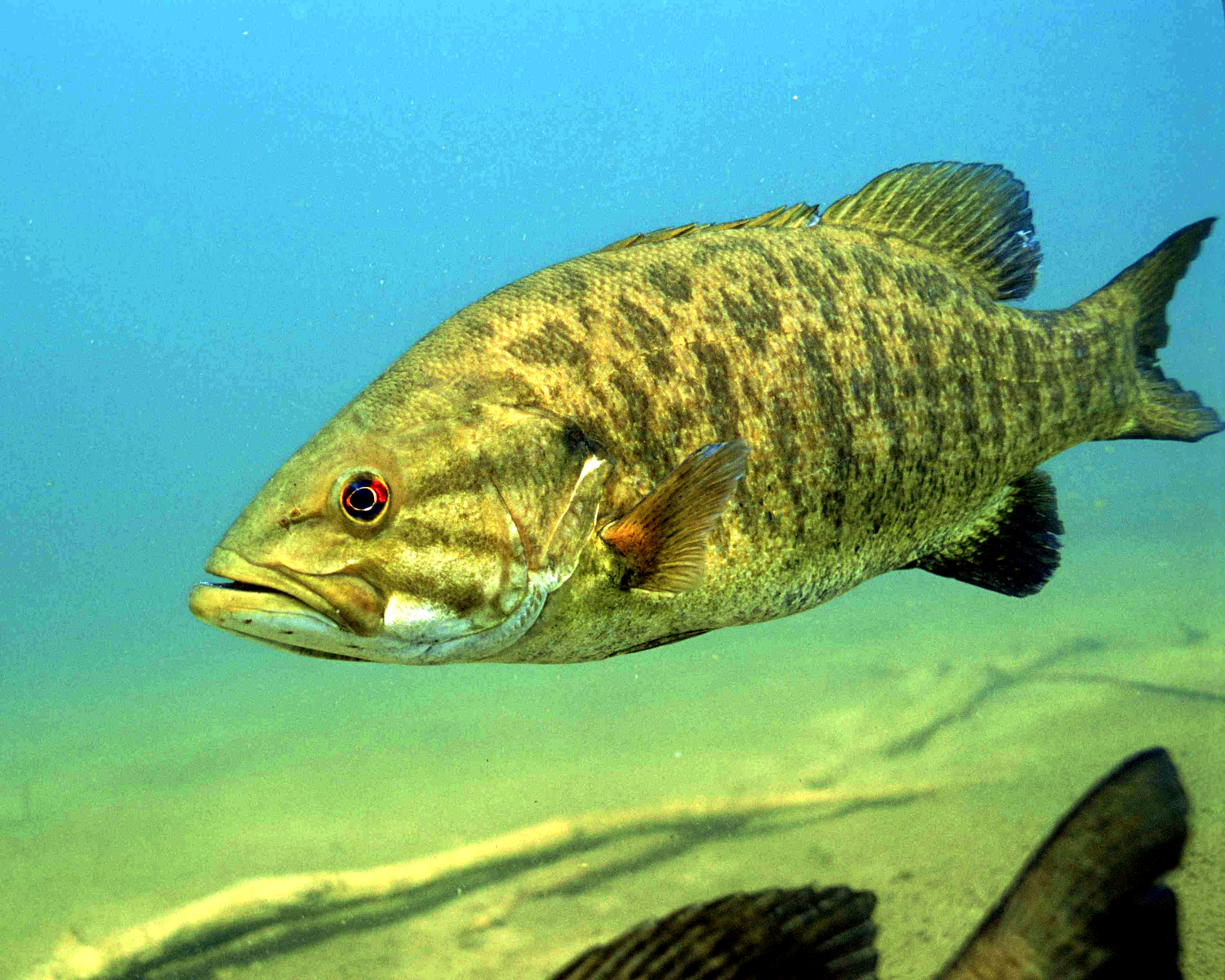
Photo retrieved from Engbretson Eric, U.S. Fish and Wildlife Service

Today’s #SpeciesOfTheWeek is the Smallmouth Bass (Micropterus dolomieu). Smallmouth Bass are members of the Sunfish Family which also includes Bluegill, Pumpkinseed, Largemouth Bass, Rock Bass and Crappie. A Smallmouth Bass has red eyes, a jaw that does not extend beyond the eye, vertical bars on the body, a laterally compressed body and dorsal fins that are joined to appear as one. The native range of the Smallmouth Bass is the waters of eastern and central North America. Within Canada, this fish is native to the Great Lakes – St Lawrence system. This Smallmouth Bass is a very popular sportfish and has been introduced to many places outside its native range. This has led to its proliferation as an invasive species in places such as British Columbia. The Smallmouth Bass prefers a habitat consisting of cold water found near shoals or submerged logs. They prefer sandy or rocky bottoms in relatively shallow waters. They do not compete with a similar species, Largemouth Bass, because Largemouth Bass prefer grassy areas with large amounts of aquatic vegetation.  Smallmouth Bass are top predators. Their typical prey includes other fish, crayfish, insects, frogs, tadpoles, and plants. The oldest Smallmouth Bass ever reported was 26 years old. At Murphys Point Provincial Park, Smallmouth Bass are commonly found in Big Rideau Lake and Loon Lake. 

Posted in Friends of Murphys Point, Murphys Point, Murphys Point Provincial Park, Species of the Week | Leave a comment

Species of the Week: The Grey Treefrog

Photo by Claire Alarcon-Belanger

This week, we are featuring the Grey Treefrog as our #SpeciesOfTheWeek. As its Latin name (Hyla versicolor) suggests, this species has the ability to change its colour and camouflage to its surroundings. Its colour can vary from grey to green or brown, depending on its surroundings. They are also characterized by the orange skin under their thighs and sticky toe pads which help them to climb. Grey Treefrogs typically live in woodland habitats near water and, true to their name, can be found at the tops of trees. This one here was actually found resting down in the Silver Queen Mine, as it enjoyed the moist environment created by the pools of water down there. They can be found in various other places around the park, most commonly during their breeding season, which lasts from late spring through to early summer. However, outside of their breeding season they tend to be less active and will hide in tree holes, rotten logs, or under bark and leaves.

Posted in Friends of Murphys Point, Murphys Point, Murphys Point Provincial Park, Species of the Week | Leave a comment