Mark your calendars for the morning of Sunday, April 26 when the Friends will be hosting our Annual General Meeting followed by the Spring Adopt-a-Road event! There will be food, too!
More specifics will coming very soon. We hope you will be able to join us for one or both activities.
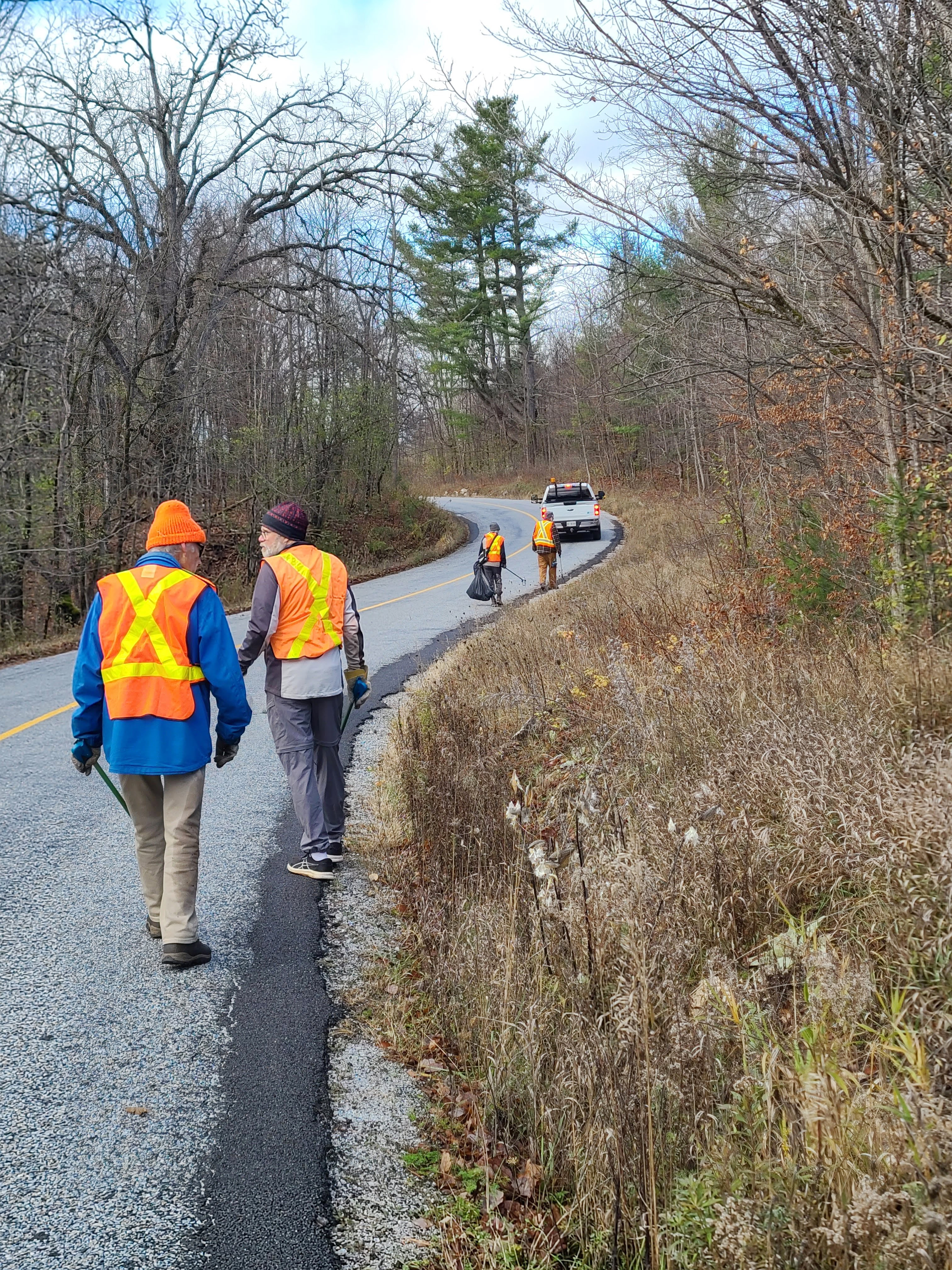
The Friends of Murphys Point Park have another successful Adopt-a-Road event in the books!
It seems before long we may be able to assemble an entire car – with two tires and a battery found during our event Nov. 8 (one tire was found last time!). We also got into some heavy metal – scrap metal, that is – with a pipe and a piece of rusted culvert. All of this with some bags of recyclables (including a vintage bottle) and garbage, too! We also uncovered a wee snake while moving some trash. The little guy was returned to a safe spot.
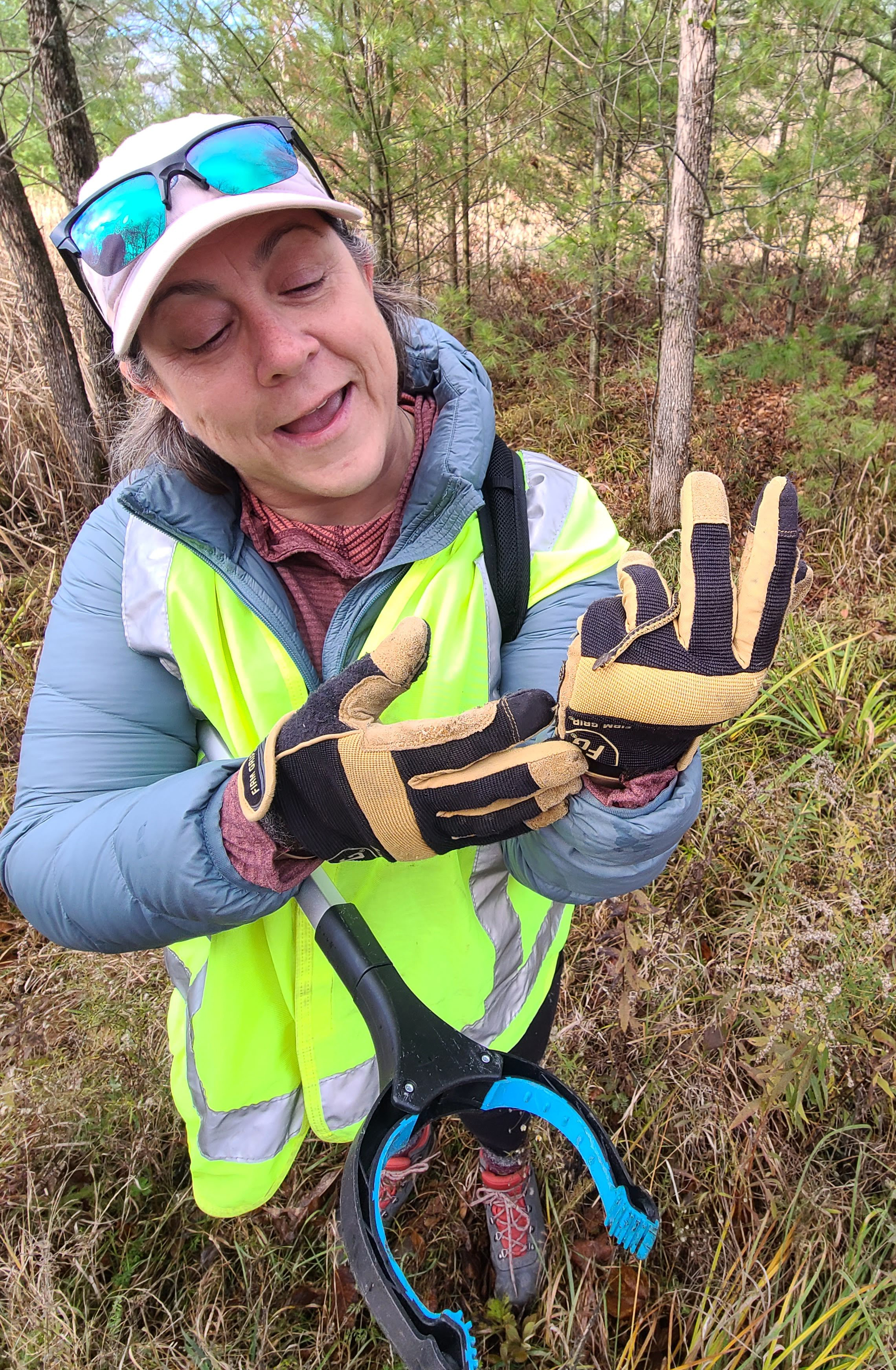
Thanks to our intrepid volunteers (David, Susan, Tara, Kev, Brian and Steph) for taking part and helping to keep County Road 21 tidy from the Park entrance to Group Camping. Big thanks also to Park Superintendent Curtis Thompson and Assistant Superintendent Mark Read for keeping us safe whilst we did it! Thanks also to Kev for our hot dog “tailgate” party when we wrapped up – such a nice treat!
The weather was great and it was a lovely morning to get out and volunteer with the Friends. If you would like to get in on the action next time, watch for posts in the spring!
It’s almost time for our Fall Lanark County Adopt-a-Road activity with the Friends of Murphys Point Park! This is a great way to help keep Murphys Point and the neighbourhood beautiful! We are seeking volunteers to help pick up litter and recyclables along the stretch of County Road 21 (Lally Road) that passes through the Park – from just before the main entrance through to the Group Camping area.
The event is slated to take place on Saturday, Nov. 8 from at 9 a.m. to noon with a rain date of Sunday, Nov. 9. (We will send an e-mail by or before 8 a.m. on the Saturday if the event needs to be postponed.) We do each side of the road, for a total of about 7 kilometres of walking.
Volunteers will meet at the Park Maintenance building a few minutes before 9 a.m. This is the first gate on the left after the main park entrance if you are travelling from Rideau Ferry Road.
Park staff will be on hand to assist, and safety equipment will be available. Please bring gloves. Volunteers must sign a waiver for the County in order to participate. Please note, if you have participated with us before, you don’t need to sign the waiver again – it remains valid for the duration of the program. Here is a link to the waiver if you need it: https://www.lanarkcounty.ca/wp-content/uploads/2025/06/Indemnity-Waiver.pdf
For your reference prior to signing the waiver, please have a look at:
If you would like to help, please send us an e-mail (and complete and return the waiver to us if you haven’t done so already) at friendsofmurphyspointpark@yahoo.ca by 4 p.m. on Nov. 6 so that we can forward it to the County. Volunteers will receive safety instructions prior to the pick up, including information about ticks. Sturdy shoes/boots and long socks that you can tuck your pants into are recommended. Equipment will be provided.
We hope to see you on Nov. 8 (or Nov. 9 if it rains)!