
Spring is now in full swing, which means that flowers are in bloom, and animals are out and leaving signs. Some of the cool things you can see at Murphys Point Park right now are in our Spring Scavenger Hunt on our Facebook (Friends of Murphys Point Park) and Instagram (@friendsofmurphyspointpark) pages! See if you can observe all nine.
Spring Flowers
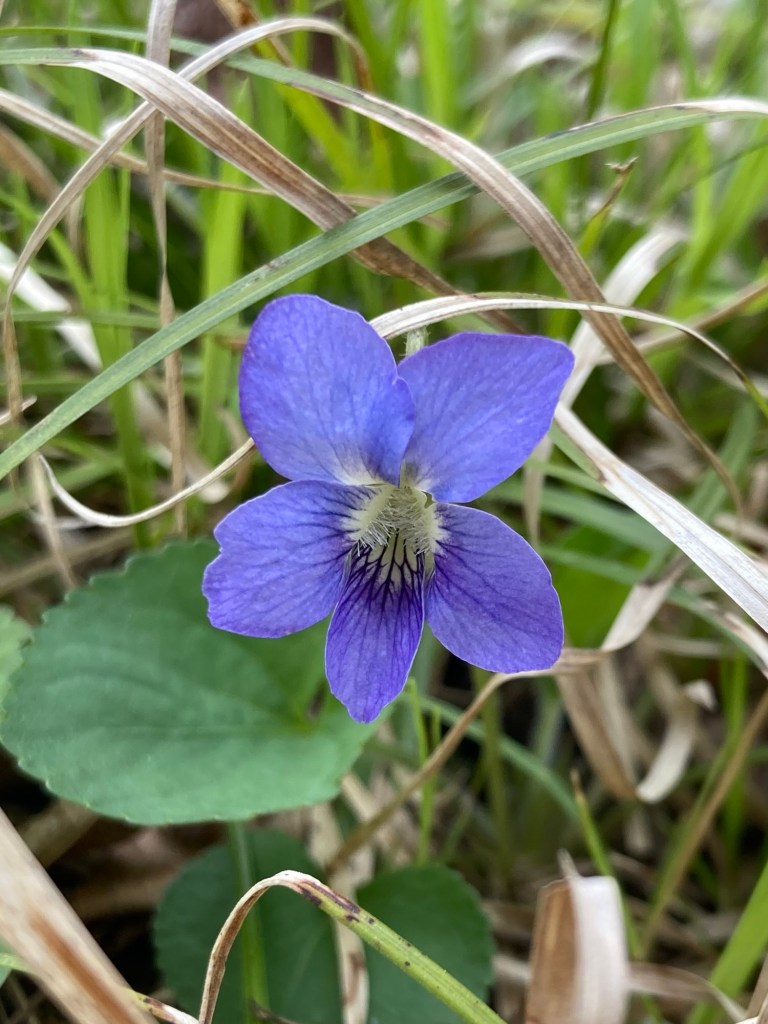
There are many flowers to see in the park, including spring ephemerals. Ephemeral flowers are ones that bloom only for a short period of time before they seed. Spring ephemerals in the forest bloom early in the season in order to soak up the sun before the tree canopy grows all its leaves. Examples of spring ephemerals you can see in the park are common blue violets, marsh marigolds, and bloodroot.
Fungi
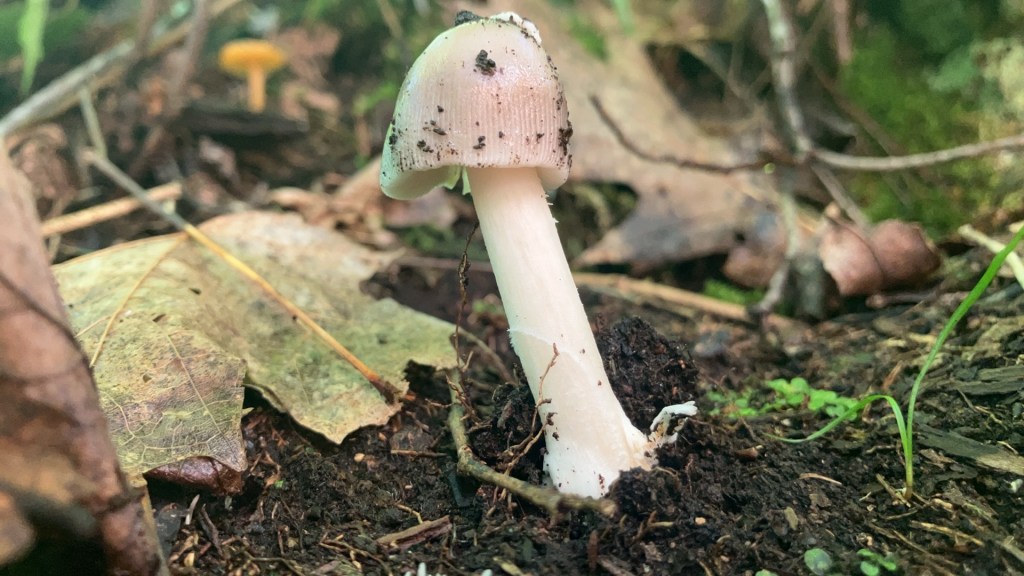
While fungi refers to mushrooms, yeasts, and molds, it is easiest to identify mushrooms. There are many different shapes and colours of mushrooms in the park. Be sure to check on trees and fallen logs, as well as on the forest floor. Remember to not forage or remove anything you find in the park!
Something you might also notice is lichen on trees and rocks. While it looks similar, lichen is actually not ONLY fungus! It is a symbiotic relationship between a fungus and an algae or cyanobacteria.
Beaver-chewed trees
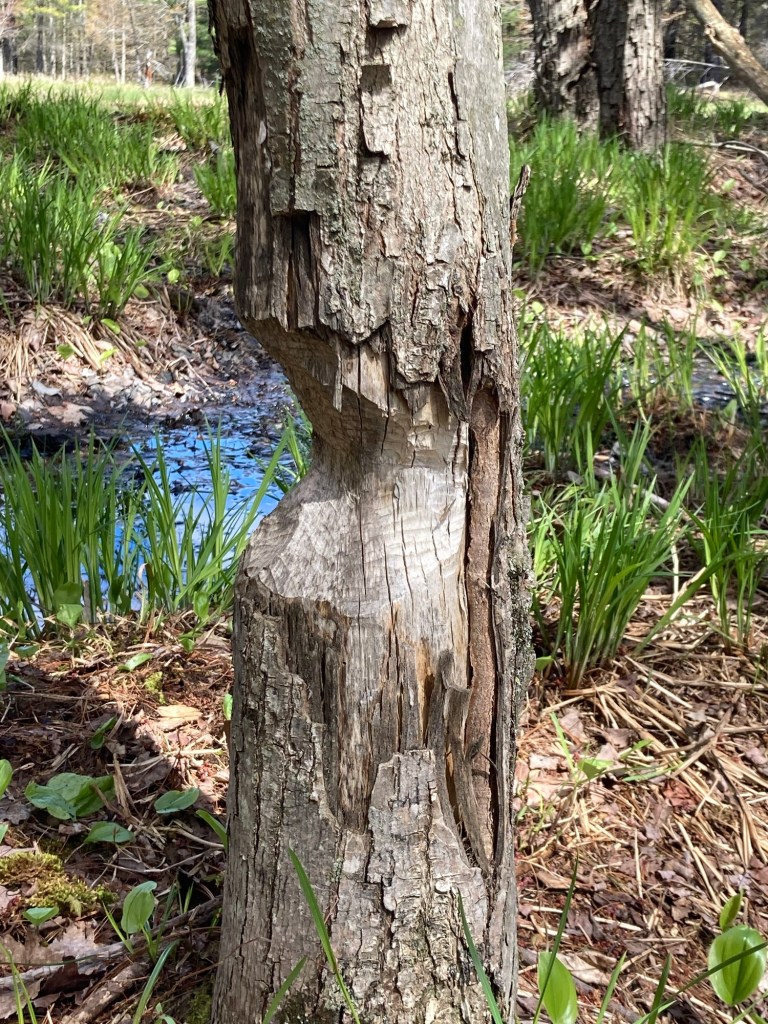
Trees that have been chewed on or felled by a beaver can be seen at any point during the year, but they are easy to spot in the spring when there is less plant growth. Beavers cut down trees small enough for them to carry for food and building their dams and lodges. Beavers have super strong front teeth that are self-sharpening. The back of their front teeth are made of enamel, like ours are, but the front of those teeth are made of iron which gives them an orange colour. As they use their teeth, the enamel wears away faster than the iron, creating a sharp point!
Loons
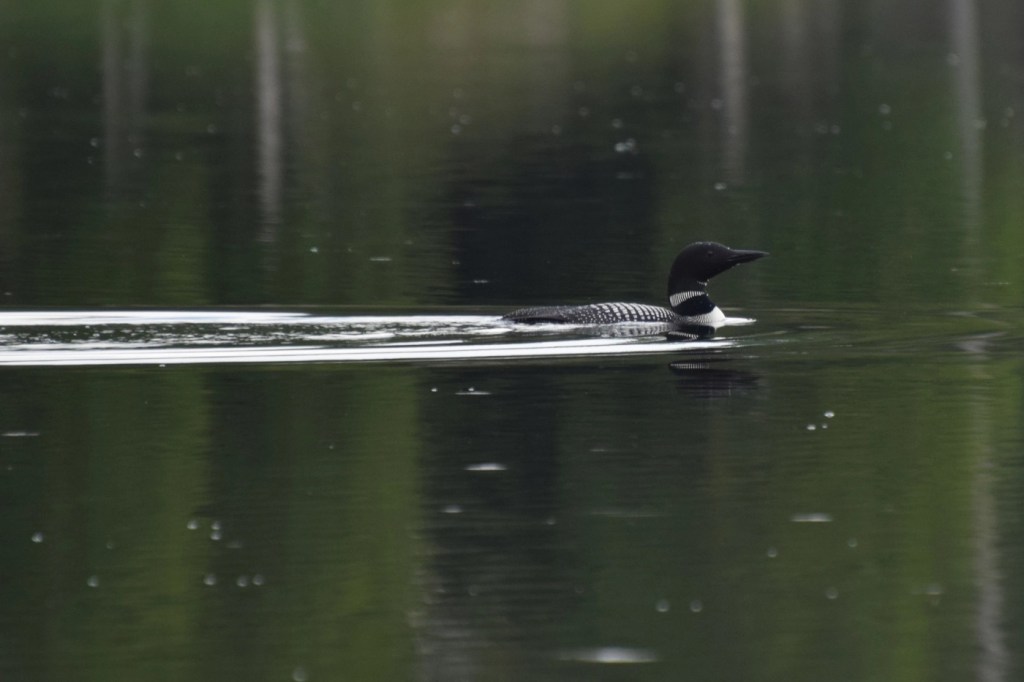
The lakes at the park are home to common loons. This distinct bird is black with white markings, and red eyes. You might be able to hear loons calling while at the park. Loons have four main calls; the wail, the hoot, the yodel and the tremolo.
Loons are sometimes called ‘feathered fish’, because they are so well adapted to swimming and diving. Most birds have hollow bones, but loons have denser bones that allow them to dive very well. Their legs are located close to the back of their body, for maximum swimming propulsion. However, this means that they cannot walk very well, as their bodies are too front-heavy. This is why loons make their nests on the shoreline, so they don’t have to go too far onto land!
Trilliums
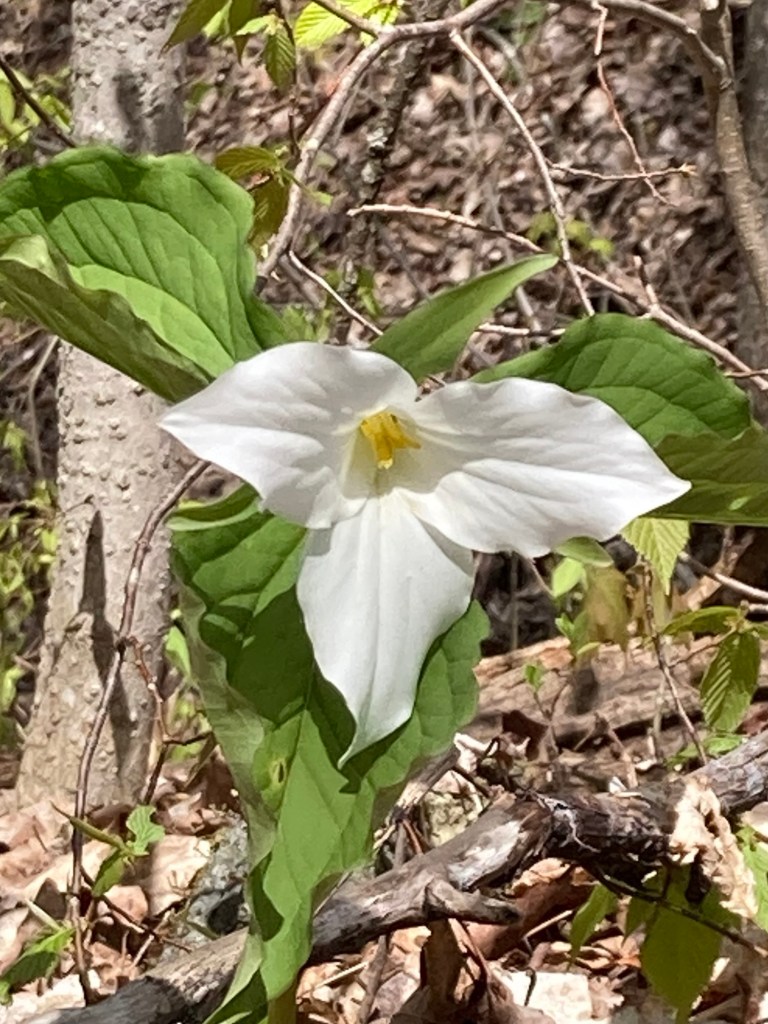
The provincial flower of Ontario, the white trillium, is prevalent in the park. There are 5 species of trillium in Ontario, but only 2 can be found in the park; the white trillium and the red trillium. Throughout the spring, the white trillium is abundant, and red trilliums can be found too. Because they grow on the forest floor and are sheltered by trees, trilliums rely on insects for seed dispersal instead of wind. Their seeds primarily attract ants, who bring the seeds back to their nest, eat the tasty part, and leave the rest of the seed to grow a new trillium.
Deer
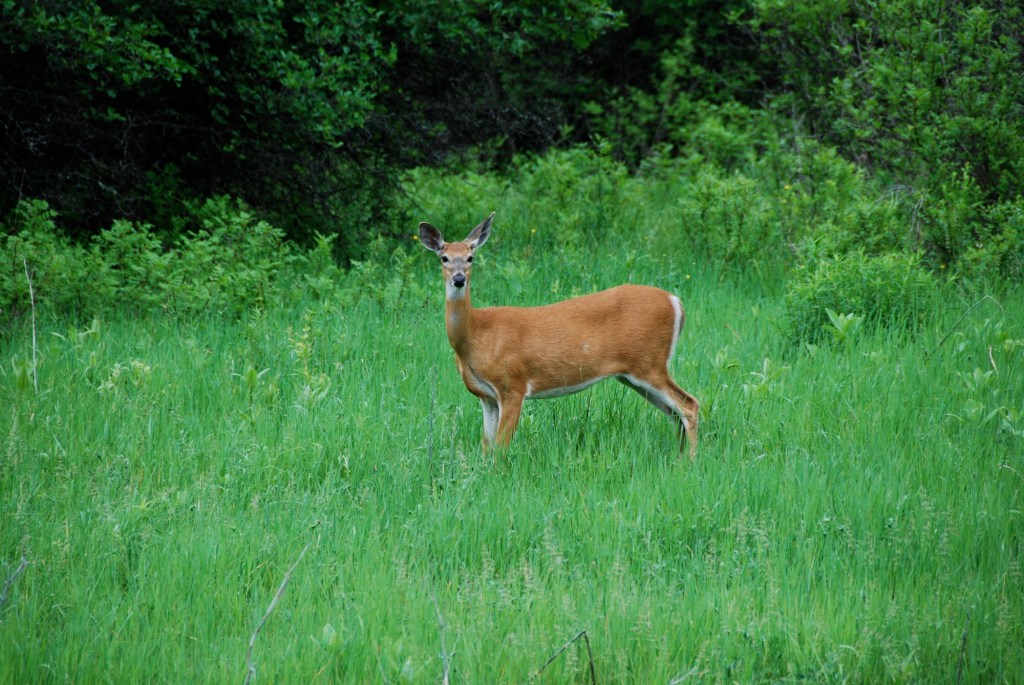
Did you know that white-tailed deer are the most widely dispersed large mammal in North America? They are also the most common of Ontario’s four deer species. Fittingly, there are lots of white-tailed deer at Murphys Point. You might be able to spot does, bucks (without their antlers yet), and fawns. Bucks (adult male deer) shed and regrow their antlers every year. In the spring, they start to grow, and before the winter, they are shed. This means that in the spring, it is hard to tell the difference between male and female deer, because the bucks don’t have their antlers yet.
Turtles
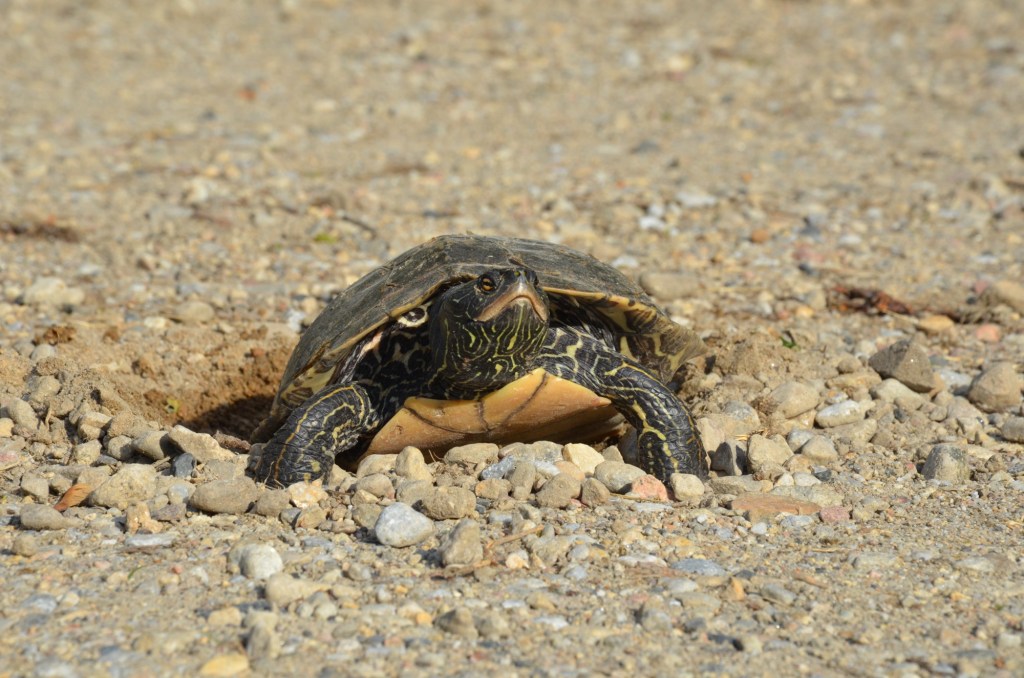
There are five species of turtle in the park. Painted turtles and snapping turtles are the most common, but you might also be able to spot map turtles, musk turtles and Blanding’s turtles. Did you know that some turtle species will lay their eggs in the fall, and the eggs will stay through the winter until they can hatch in the spring? The eggs are safely tucked underground beneath the layers of snow, and will not hatch until the soil warms back up.
Animal scat
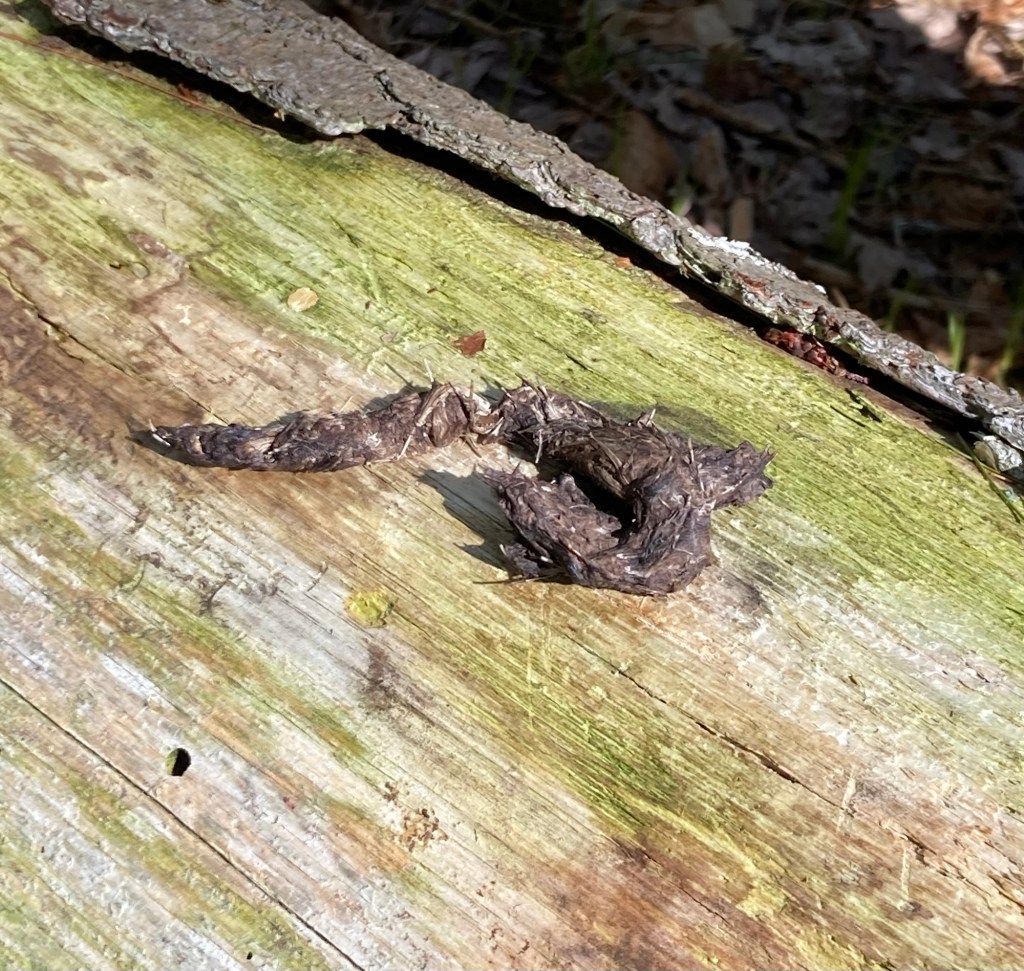
Scat, or poop, left behind by animals can let us know where they’ve been. Scat also lets us know what the animal was eating, sometimes containing fur or berries. It is common to find goose poop, deer poop, and fox poop in the park.
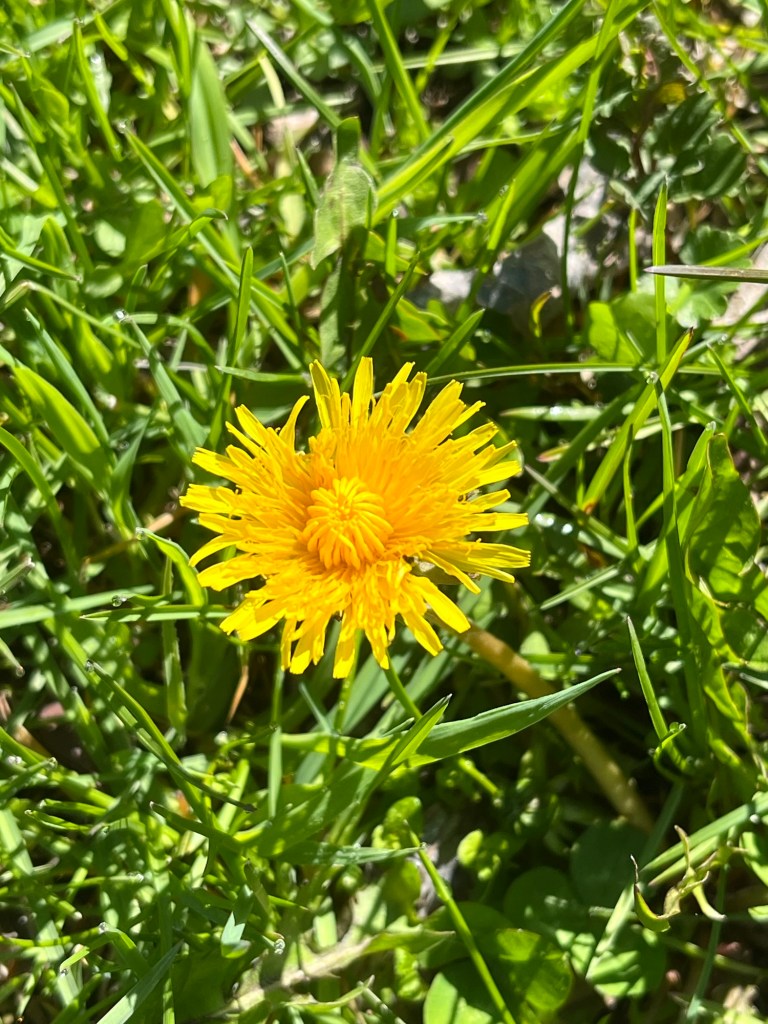
Dandelions
This one should be easy to find, as there are dandelions everywhere in the park! The name dandelion is from the French name “dent de lion”, meaning lion’s tooth. It is named for its serrated leaves, which look like lion teeth. Dandelions have adaptations that let them grow and spread quickly. For example, dandelions will produce more seeds if their environment is disturbed, in order to have the best chance of growing new plants.
Dandelions are also important for pollinators, like bees! They are a source of nectar early in the spring, when other flowers might not be in bloom yet.
It is important to remember while looking for things in the park, that Ontario Parks vegetation, wildlife and natural features are protected in order to maintain park environments. As you are looking around the park, remember not to forage, disturb or remove anything!
Happy sleuthing!




 Friends of Murphys Point Park