Species of the Week: Interrupted Clubmoss

Photo by Nata Culhane

This week’s #SpeciesOfTheWeek is the Interrupted Clubmoss (Spinulum annotinum). Clubmosses are a primitive group of plants that evolved over 440 million years ago. Despite the name, they are not mosses but true vascular plants, meaning they have specialized tissue to carry water. Clubmosses are distinguished from other plants by their small leaves with one vein, called microphylls, and they reproduce asexually using spores. In Interrupted Clubmoss, the spores are located in a cone-like structure called a strobilus at the top of the stalks. Interrupted Clubmoss gets its name because each year’s growth is marked by an interruption or constriction in the stem. The stem actually grows horizontally across the ground, with spore-bearing stalks protruding upwards for reproduction. It is a perennial plant, and the stem can grow up to three feet long. It is found in coniferous and mixed forests across all of Canada, thriving in damp, shaded areas, like at the edge of wetlands. These neat little plants can be seen popping out of the leaf litter across the forest floors throughout the park. 
Posted in Friends of Murphys Point, Murphys Point, Murphys Point Provincial Park, Species of the Week | Leave a comment

Species of the Week: The Wood Frog

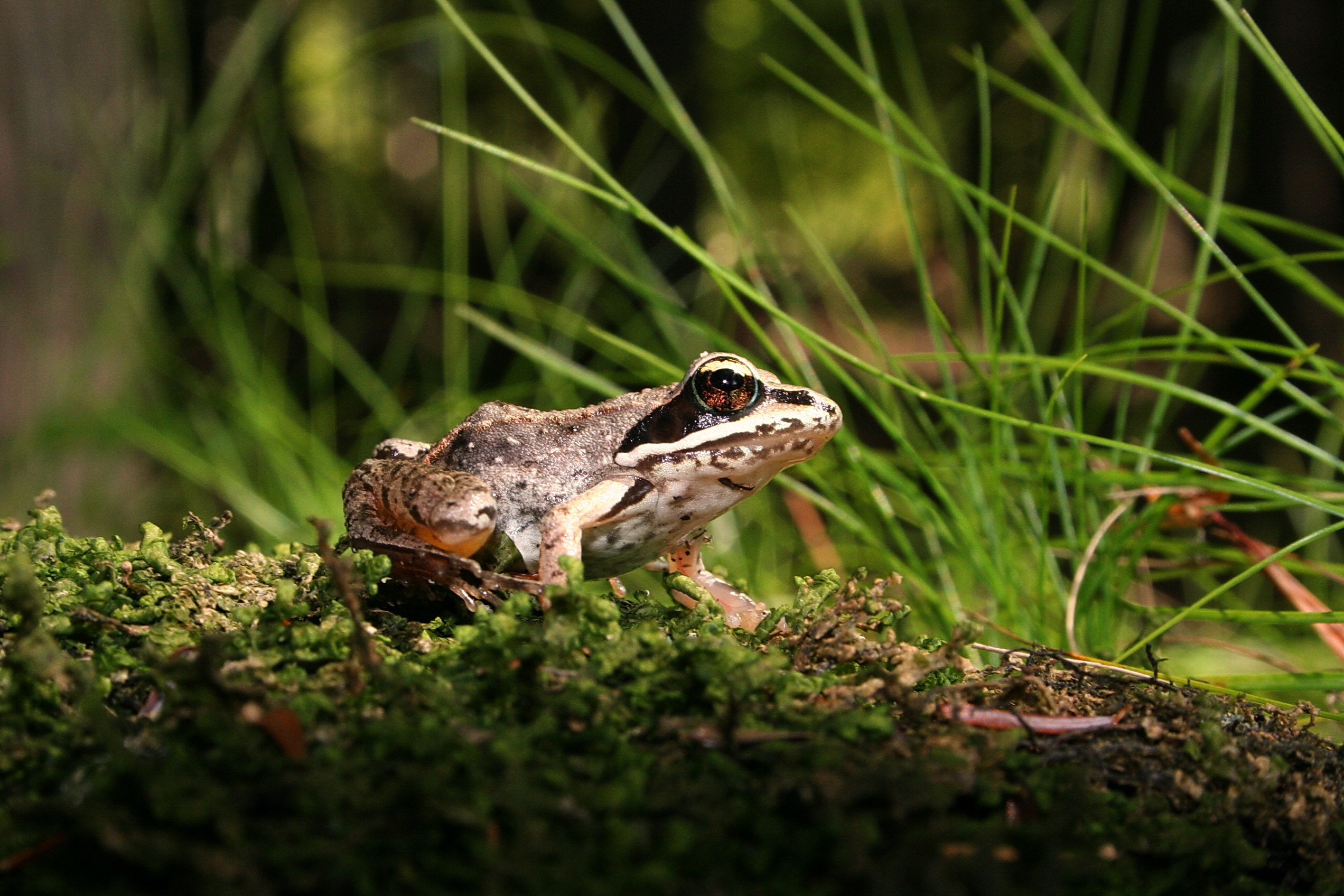
Photo by Simon Lunn

Our #SpeciesOfTheWeek is the Wood Frog (Lithobates sylvaticus). As winter nears and temperatures drop, these frogs are becoming inactive for the season – they have special adaptations that allow them to survive the cold winter by tolerating the freezing of their blood and tissues! Typically settling down in spots close to the surface in soil and leaf litter, their breathing and heart rate begin to slow until stopping altogether. During this time, their bodies produce a special antifreeze substance that prevents ice from forming within their cells, which would otherwise cause them to burst. They will then remain in this dormant state until the weather warms again in the spring when they will thaw and begin mating. Here at Murphys Point, we often find Wood Frogs in the campgrounds as they like to live in the leaves on the forest floor where they can camouflage and hide from predators. Have you ever seen a Wood Frog while camping here at the park?

Posted in Friends of Murphys Point, Murphys Point, Murphys Point Provincial Park, Species of the Week | Leave a comment

Species of the Week: Pumpkinseed

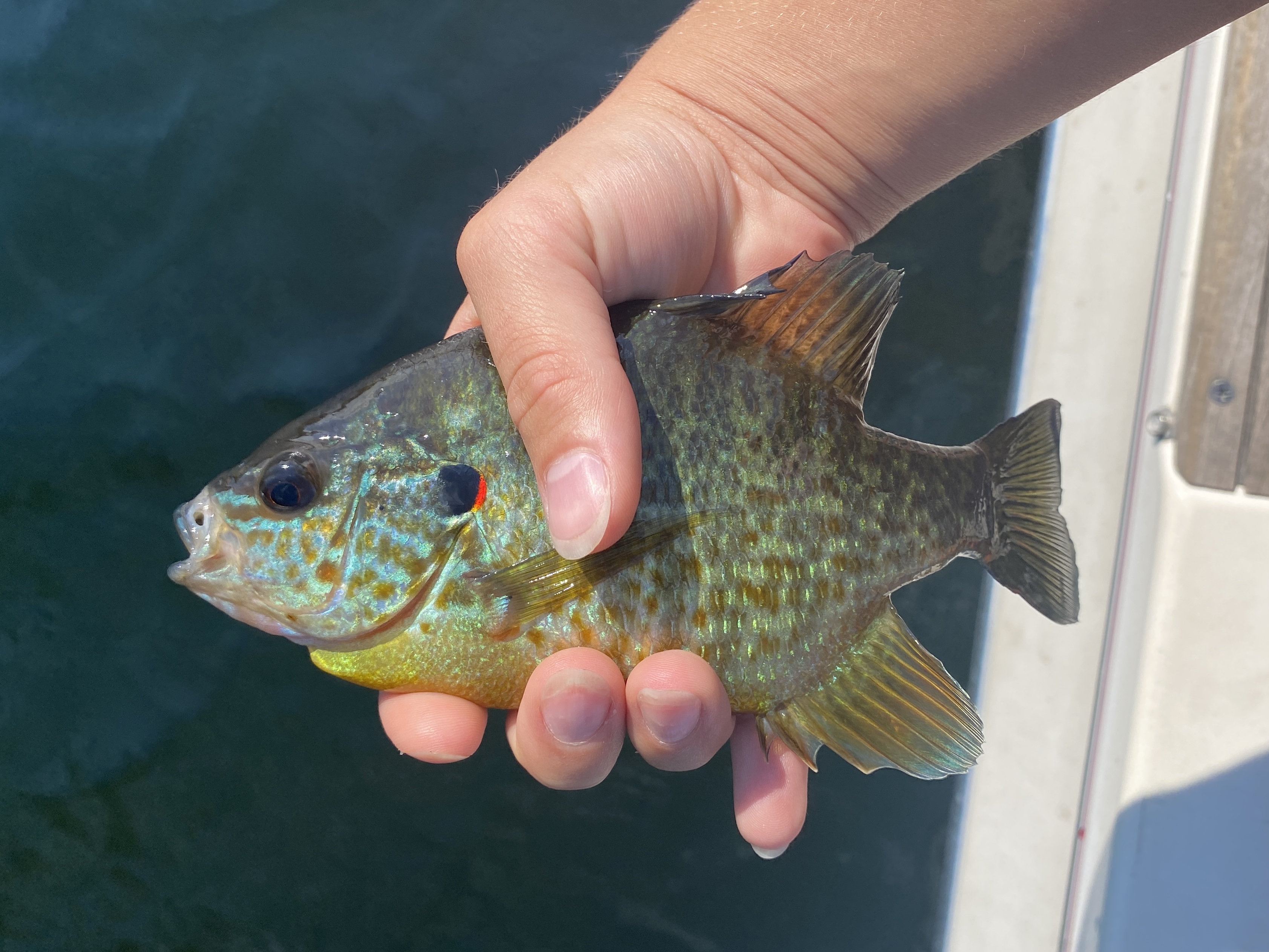
Photo by Claire Alarcon-Belanger

As pumpkin season comes to a close, we thought it would only be appropriate to discuss our jack-o-lantern-named friend, the Pumpkinseed (Lepomis gibbosus). Although Pumpkinseeds are a native species, they almost look out of place in our waters with their bright tropical colours. They are a fun and easy fish to catch but look out! Pumpkinseeds have up to 11 spines on their dorsal fins and 3 spines on their anal fins. These spines help to defend them from predators, including larger fish like Largemouth Bass and Pike, as well as birds like Cormorants and Herons. As for the Pumpkinseeds, they eat insects, small crustaceans, and other small fish. Pumpkinseeds prefer to live in warmer, slow-moving or still water, where there is aquatic vegetation to give them shelter from predators. They tend to travel in schools with other Sunfish as well. Thanks to this, it is not uncommon for Pumpkinseeds to hybridize with other Sunfish species, which we have seen here at the park! Have you ever gone fishing at Murphys Point?

Posted in Friends of Murphys Point, Murphys Point, Murphys Point Provincial Park, Species of the Week | Leave a comment