Our featured #SpeciesOfTheWeek is the Yellow Perch (Perca flavescens), which is in the same family (Percidae) as the Walleye and Sauger. It is a wide-ranging species that is found throughout the northern hemisphere. In Ontario, they are commonly found in cool waters with a medium amount of vegetation, preferring clear waters and waterbodies with bottoms consisting of sand, mud or gravel. Yellow Perch spawn in the spring and mature towards the winter and are known to live for as long as 10 years. Yellow Perch can grow up to a maximum weight of 1.5 kg. This Yellow Perch was caught in our very own Loon Lake.
This week’s #SpeciesOfTheWeek is a secretive mammal, the northern short-tailed shrew (Blarina brevicauda). With a diminutive size of just 10 to 14 cm, it’s already easy to miss, and its habit of tunnelling underground or through the leaf litter makes spotting one a rare occurrence. Despite the small size, the northern short-tailed shrew is actually the largest shrew in North America. The short-tailed shrew can be differentiated from long-tailed shrews (Sorex spp.) by the fact that its tail makes up less than 25% of its body length. The short-tailed shrew is particularly unique, as it is the only venomous mammal in North America. The shrew’s saliva contains a neurotoxin that kills or paralyzes its prey, allowing it to take down large prey like earthworms, voles, snails, mice and salamanders. Shrews have a high metabolic rate and need to eat up to three times their body weight every day, so they will cache food for later consumption. These tiny terrors can be found in a range of habitats with leaf litter or thick plant cover. Keep an eye on the ground when hiking through the park, and you might catch a glimpse of this cool mammal!
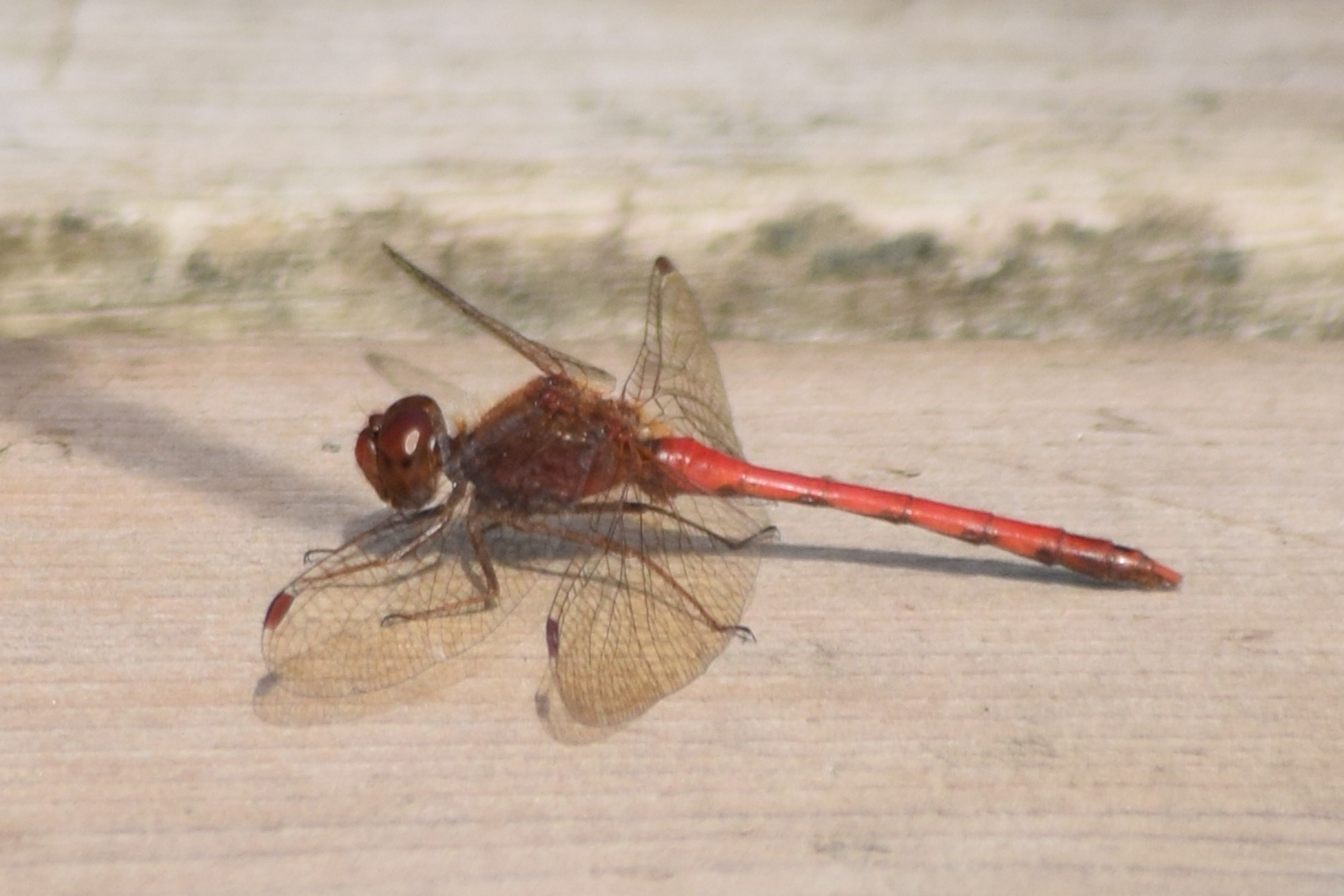
This week’s #SpeciesOfTheWeek is the Autumn Meadowhawk (Sympetrum vicinum). It is the latest-flying dragonfly in Ontario. It typically flies until the first heavy frost, so in southern Ontario, it can be seen in November and even December. Male meadowhawks are distinctive as the only small red dragonflies in the area. Females and immature males are yellow or brown in colour. The Autumn Meadowhawk is also known as the Yellow-legged Meadowhawk, as the yellow legs readily distinguish it from other meadowhawks. As the name suggests, meadowhawks can often be seen flying around meadows in large swarms, and they are possibly the most abundant genera of dragonfly at Murphys Point. Some dragonflies can spend several years in their aquatic larval phase, but the Autumn Meadowhawk’s lifespan is short and sweet. Eggs are laid on muddy banks of lakes and ponds in the fall and hatch in the spring when water levels rise to cover them. The larvae develop quickly, and adults start emerging in July. Then, it’s a race to feed, mature, and find a mate. Autumn Meadowhawks oviposit in tandem, which means the male stays attached to the female during egg-laying, guarding her against other males who might try to mate with her. The eggs are laid, and the life cycle starts again.






 Friends of Murphys Point Park