This week we’re looking at the American Crow. Their scientific name, Corvus brachyrhynchos,comes from Ancient Greek — it translates to ‘short-billed crow.’ Interestingly, a group of Crows found together is called a ‘murder.’ Crows live in family groups that can have as many as 15 individuals with young from 5 different years! American Crows don’t typically mate until they are 3-5 years old. As with other members of the crow family, such as the Common Raven and Blue Jay, they are considered intelligent and have occasionally been seen making and using tools. They will also follow other bird species in order to locate their nests, whereupon they steal their eggs and young. These birds are extremely common throughout Murphys Point — often seen perching high above campground roads in trees and on telephone wires
Photo by Murphys Point PPPhoto by Murphys Point PP
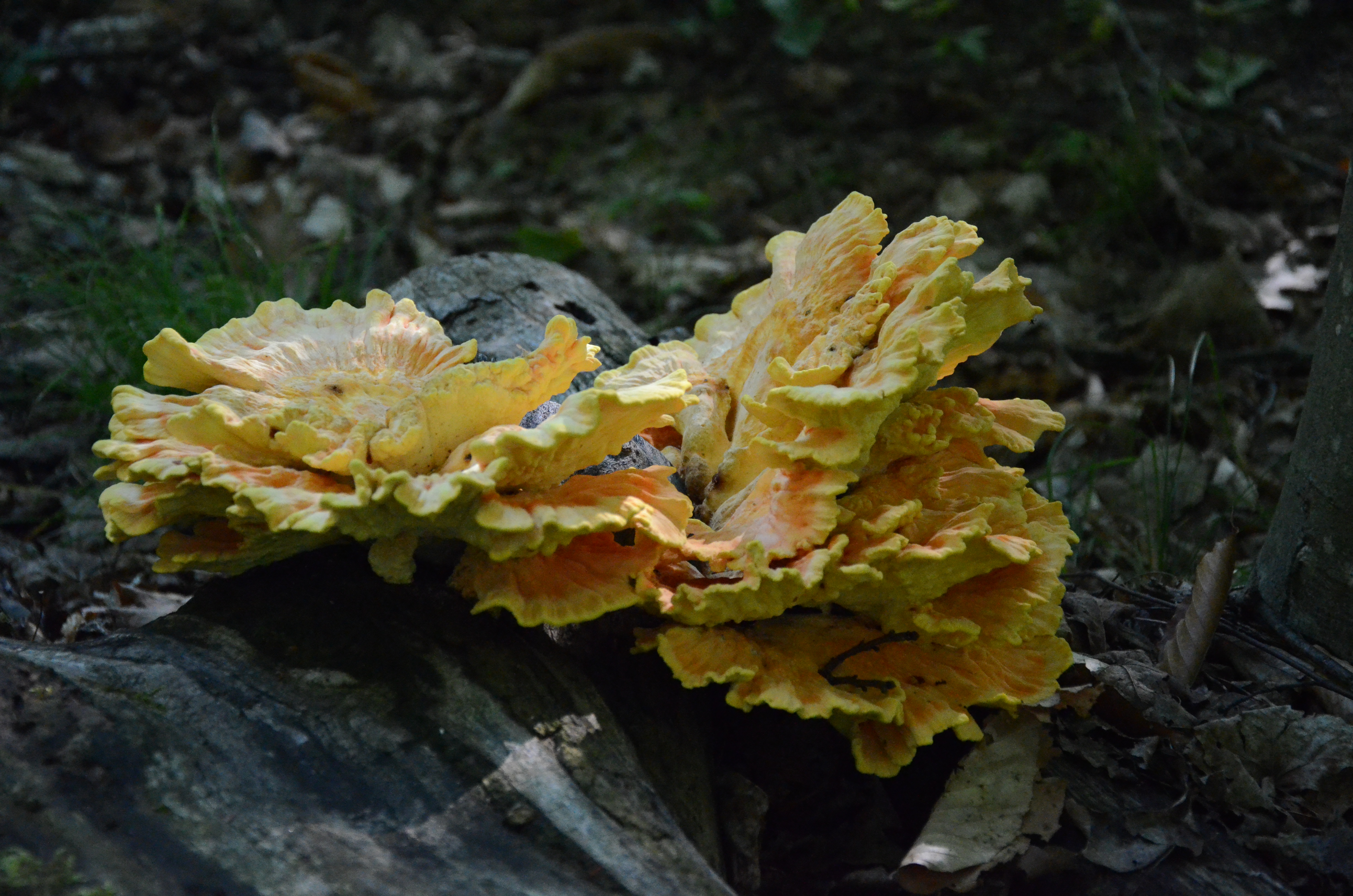
Our #SpeciesOfTheWeek is Chicken of the Woods (Laetiporus sulphureus). Sometimes called the chicken polypore, their scientific name translates to “with bright pores” (Laetiporus) and “the colour of sulphur” (sulphureus). Identifying mushrooms can be a difficult task, but this is arguably one of the easier ones to identify! This mushroom is recognized for its large, overlapping, fan-shaped shelves, and sulphur-yellow to bright orange colour. As they age, these mushrooms fade to a tan or whitish colour. Named after its taste, many people think this mushroom tastes like chicken and has a similar meaty texture. Others think it tastes like crab or lobster, earning it the nickname “Lobster of the Woods”. This species typically fruits from late summer into the fall and is often found on hardwood and conifer trees. Have you ever spotted this bright mushroom on the trails here at Murphys Point?
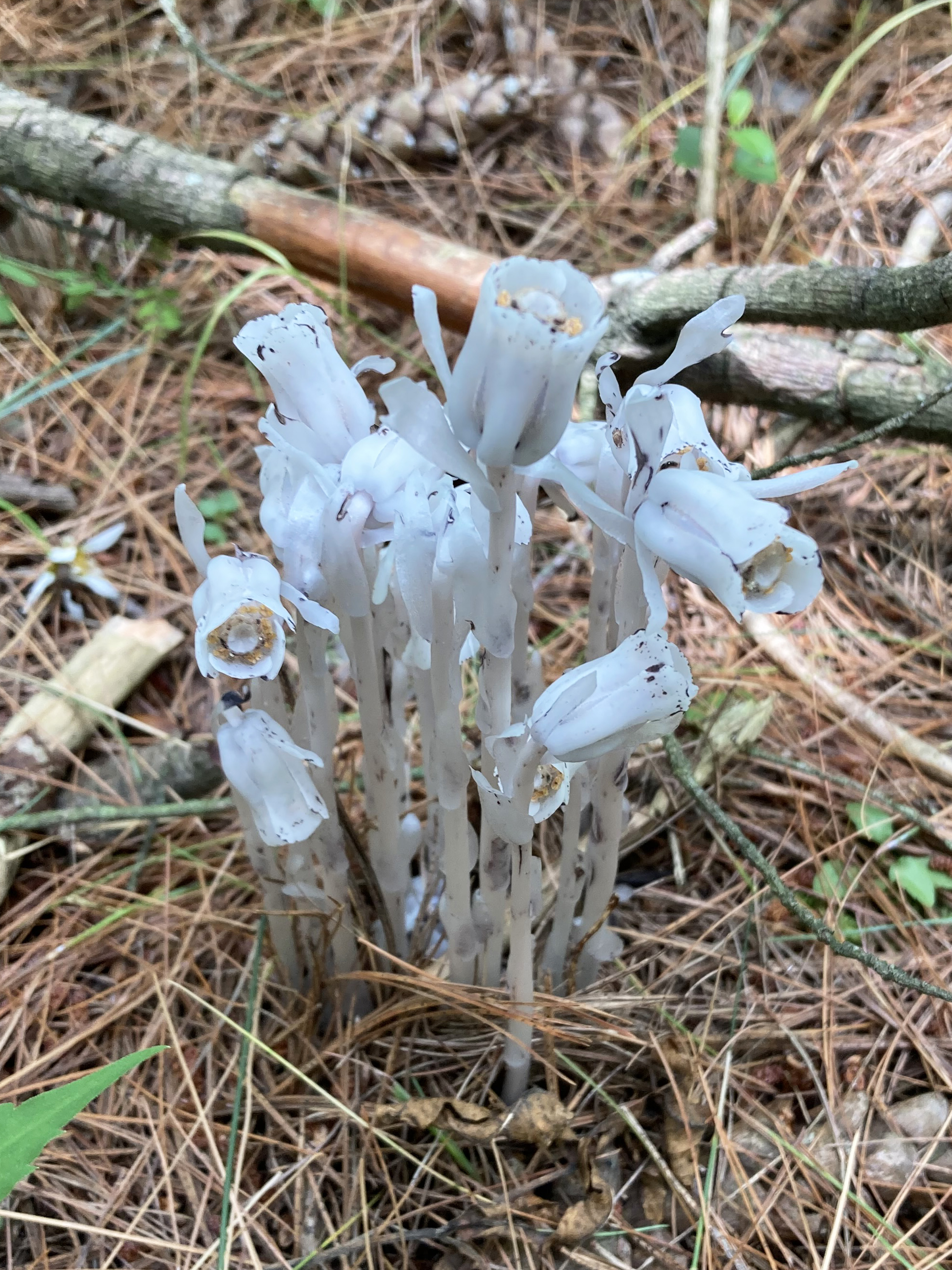
This week’s #SpeciesOfTheWeek is the Ghost Pipe (Monotropa uniflora). With its waxy white colour, it might be mistaken for a mushroom, but it is actually a perennial plant! However, it does not behave like a normal plant. The white colouration of Ghost Pipes comes from their complete lack of chlorophyll, which means they are unable to generate food from photosynthesis. Instead, this plant is a myco-heterotroph, and part of a complex relationship. Most plants have mycorrhizal fungi, which form a network in the roots and allow plants to exchange carbon and nutrients with other plants. Myco-heterotrophs like Ghost Pipe get their nutrients by parasitizing these mycorrhizal fungi. Ghost Pipe has a small range of host fungi, most of which are associated with beech trees. It is usually found in damp, shaded areas of mature forests. Ghost Pipe has a single flower with 3-8 petals, and it usually flowers during the summer and fall, a few days after rainfall. It only appears above ground when it flowers, and the flowering process lasts just one week. When the flower first opens it points downwards, but it straightens as it matures until it is pointing directly upwards. The plant then turns black, which is where its other name, Corpse Plant, comes from. This plant is highly sought after due to its short visible life cycle, perceived rarity, and uses in herbal medicine. However, it may be toxic to humans, so it is best to avoid picking it. Please remember that it is illegal to pick wild plants in a provincial park. If you wish to pick a plant for use in traditional medicine please contact the park naturalist.







 Friends of Murphys Point Park