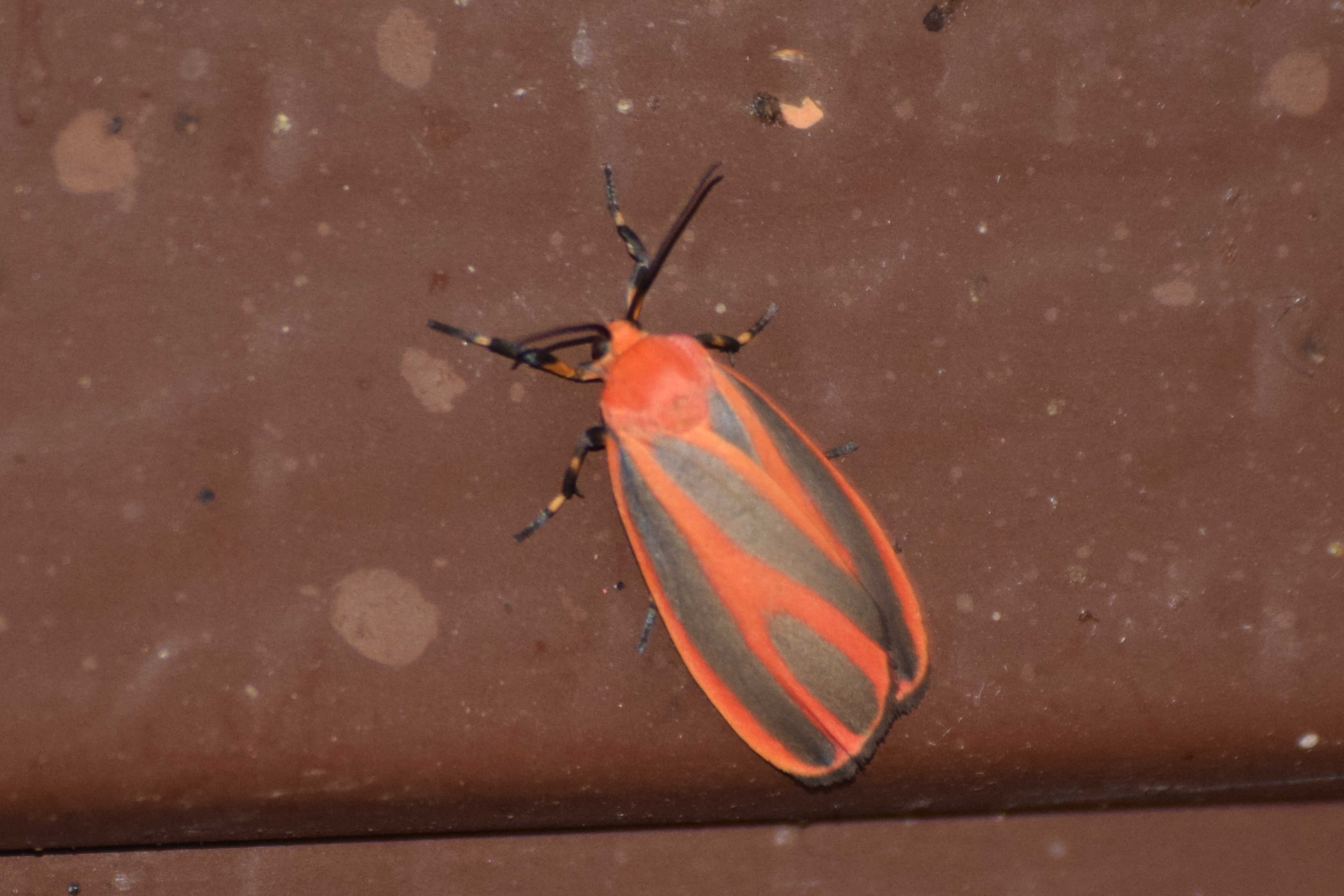
Species of the Week: Scarlet-winged Lichen Moth

Photo by Adam Kalab

This week’s #SpeciesOfTheWeek is the Scarlet-winged Lichen Moth (Hypoprepia miniata). It is easily recognizable with its bright red body and gray stripes on the forewings. The caterpillars feed on lichens growing on trees, with a preference for pine trees. This moth is found all across North America. Eastern populations are particularly abundant in Jack Pine forests, while western populations are abundant in Lodgepole Pine forests. The life cycle lasts about one year. After hatching late in the summer, the caterpillar feeds in the fall and then is dormant during the winter. The caterpillar resumes feeding in spring before pupating. Adults emerge late in the spring and fly from June to September. Since these moths fly at night, they have to avoid predation by bats, which they do with a unique adaptation. The Scarlet-winged Lichen Moth is a tiger moth in the subfamily Arctiinae, which means they have tymbal organs that produce high-frequency clicks that can be heard by bats. Some tiger moths make clicks that actually disrupt bat echolocation, but lichen moths have a different strategy. These moths are toxic to bats, so they make clicks that warn about their toxicity. It’s similar to how the colouration of a Monarch Butterfly deters predators, except using sound. Have you seen this moth, or any other tiger moths, in the park? 

Posted in Friends of Murphys Point, Murphys Point, Murphys Point Provincial Park, Species of the Week | Leave a comment

Species of the Week: The Midland Painted Turtle

Photo by Adam Kalab

This week we are featuring the Midland Painted Turtle (Chrysemys picta ssp. marginata) as our #SpeciesOfTheWeek. The Midland Painted Turtle is one of five turtles that call Murphys Point home and can be distinguished from other turtles based on a few different characteristics. For starters, the shell of the Painted Turtle is much flatter than other turtle species and the red and yellow markings along the shell and body look much like paint strokes. One of the main factors impacting the decline of turtle species is their late maturity. For the Midland Painted Turtle, it can take upwards of six years for the males to reach sexual maturity and around six to ten years for females. As such, every turtle counts when only 0.001% of hatchlings make it to maturity. From as early as mid-August to late September, turtle eggs may begin to hatch so keeping an eye out on roadways is an important step to protect these threatened species.

Posted in Friends of Murphys Point, Murphys Point, Murphys Point Provincial Park, Species of the Week | Leave a comment

Species of the Week: Spotted Touch-Me-Not

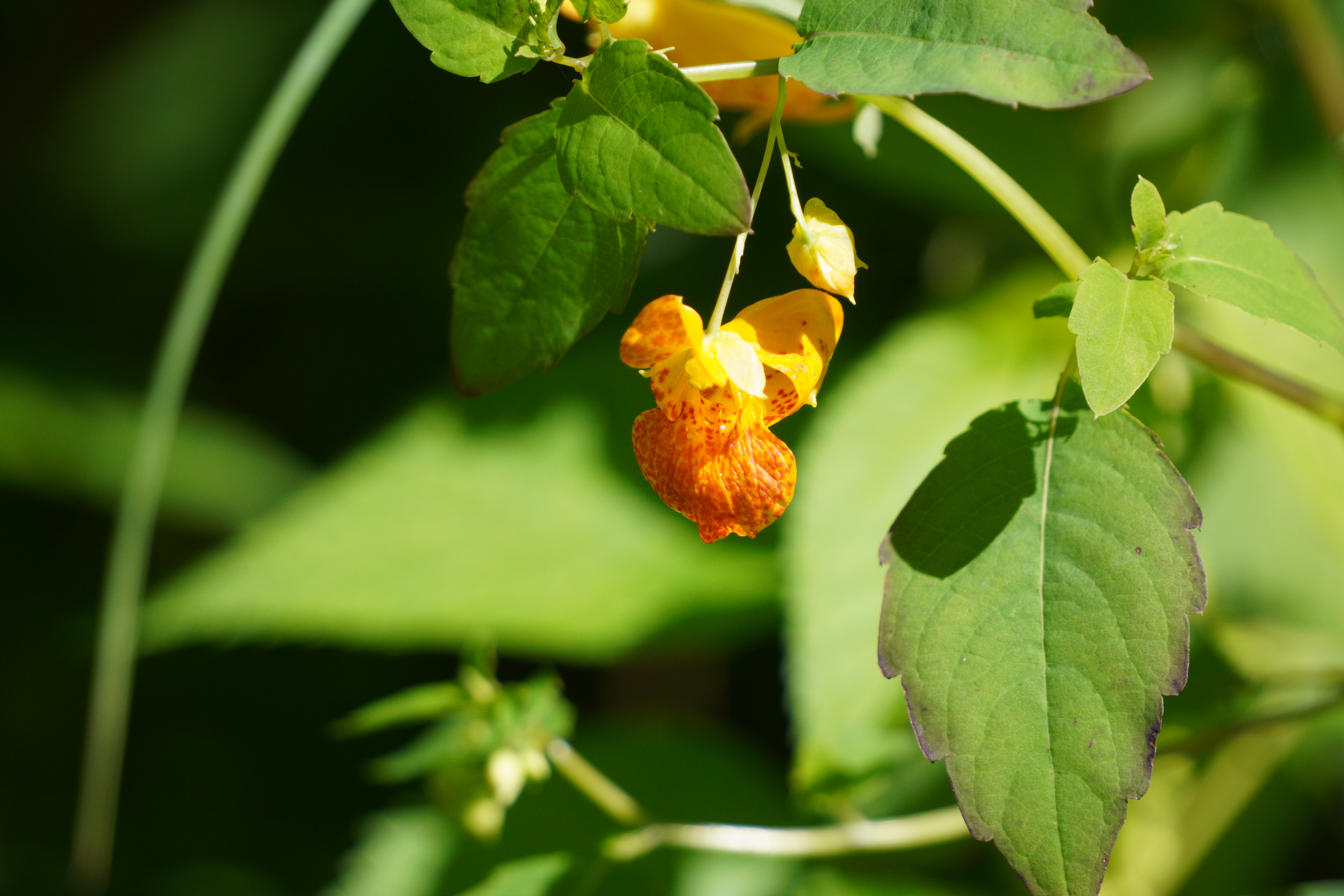
This week we will be looking at a plant with many names; the Spotted Touch-Me-Not or Spotted Jewelweed (Impatiens capensis). Also known as Jewelweed, Snapweed or Spotted Snapweed. Although the name may sound threatening, the meaning behind this plant’s name is in its method of seed dispersal. As you can see in the pictures, the horn-shaped flowers of the Spotted Jewelweed are light orange with lots of red flecks near the opening. The blooming season for these flowers is from July to September, but surprisingly each flower only lasts for about a day! The fruits contain seed pods which when touched, will eject seeds in all directions. Hence the name “Touch-Me-Not”. This flower has many beneficial uses. It tends to grow in the same areas as Poison Ivy, which is helpful because it could help to alleviate the pain and itching caused by Poison Ivy and Poison Sumac. The leaves and stems of Spotted Touch-Me-Not are believed to have a compound which counteracts the effects of urushiol (the oily irritant found in Poison Ivy). The Spotted Jewelweed is also a critical flowering plant for Hummingbirds. Thanks to their deep flowers, Hummingbirds are able to use their long beaks to reach their nectar. This flower is said to make up 5-10% of the Ruby Throated Hummingbirds diet! Spotted Touch-Me-Nots thrive the best in moist environments. If you happen upon any of these plants, try gently touching their pale green fruit pods and see what happens!

Posted in Friends of Murphys Point, Murphys Point, Murphys Point Provincial Park, Species of the Week | Leave a comment