Species of the Week: The Pearl Crescent

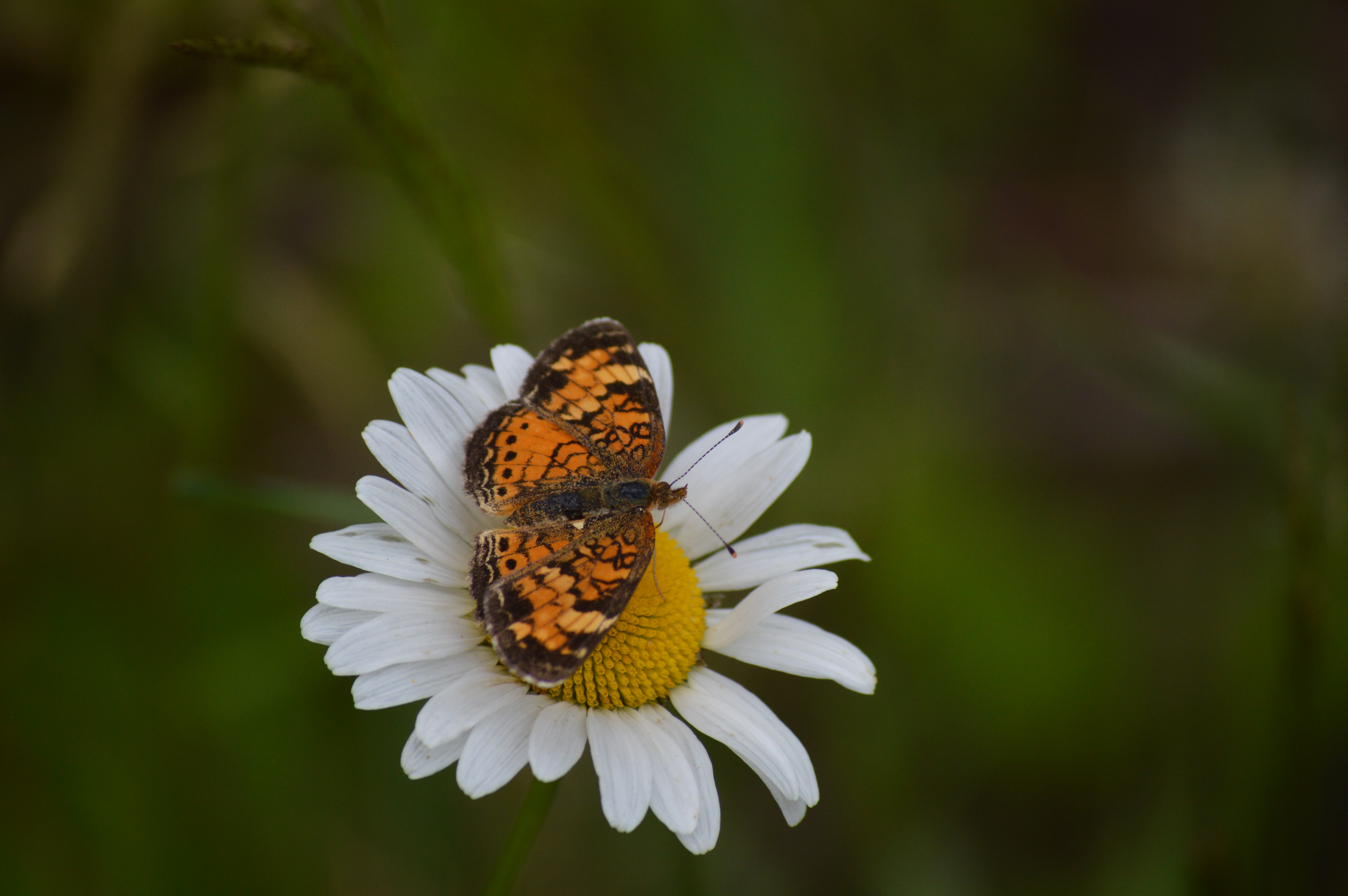
Photo by Sarah Wray

This week’s #SpeciesOfTheWeek is the Pearl Crescent (Phyciodes tharos). Commonly found throughout the park, they get their name from a dark marginal patch containing light crescents on their hindwing. Pearl Crescents are commonly mistaken for Northern Crescents, as they were considered the same species until quite recently. Pearl Crescents do, however, have more black markings on their hindwings in comparison to Northern Crescents, which have more orange. A fun fact about the Pearl Crescent is that three different generations of this butterfly emerge every year in Ontario! This Pearl Crescent was spotted near the McParlan House, so be sure to keep an eye out when hiking along Hogg Bay!
Posted in Friends of Murphys Point, Murphys Point, Murphys Point Provincial Park, Species of the Week | Leave a comment

Species of the Week: The Red Milkweed Beetle

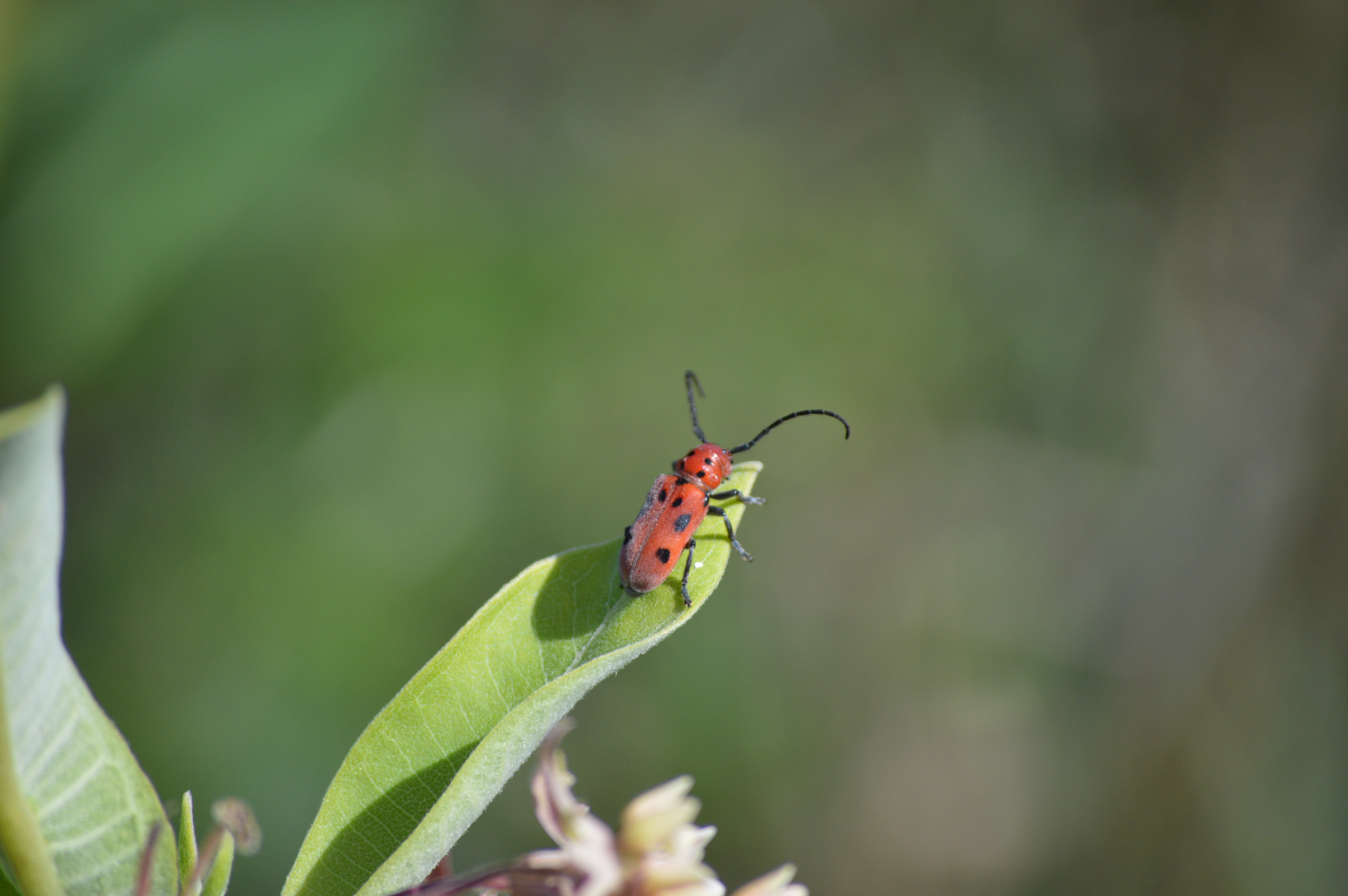
Photo by Sarah Wray

This week’s #SpeciesOfTheWeek is the Red Milkweed Beetle (Tetraopes tetrophthalmus). This is a commonly sighted species at the park, particularly in the fields of milkweed plants near the Lally Homestead. Both its genus and species name mean “four eyes”, derived from the way that the socket of its antenna divides each compound eye into two, creating four eyes. Female Red Milkweed Beetles lay their eggs at the base of Common Milkweed stems. The larvae then burrow down to the roots where they feed until early fall. Overwintering within the root, they continue to feed in the spring before pupating and emerging a month later as adults. The adults eat the buds, leaves, and flowers, meaning their entire life cycle is dependent upon this one species of milkweed. Here at Murphys Point, these critters are quite commonly found in the milkweed field by the Lally Homestead – have you ever seen one?

Posted in Friends of Murphys Point, Murphys Point, Murphys Point Provincial Park, Species of the Week | Leave a comment

Species of the Week: Round-leaved Sundew

Photo by Adam Kalab

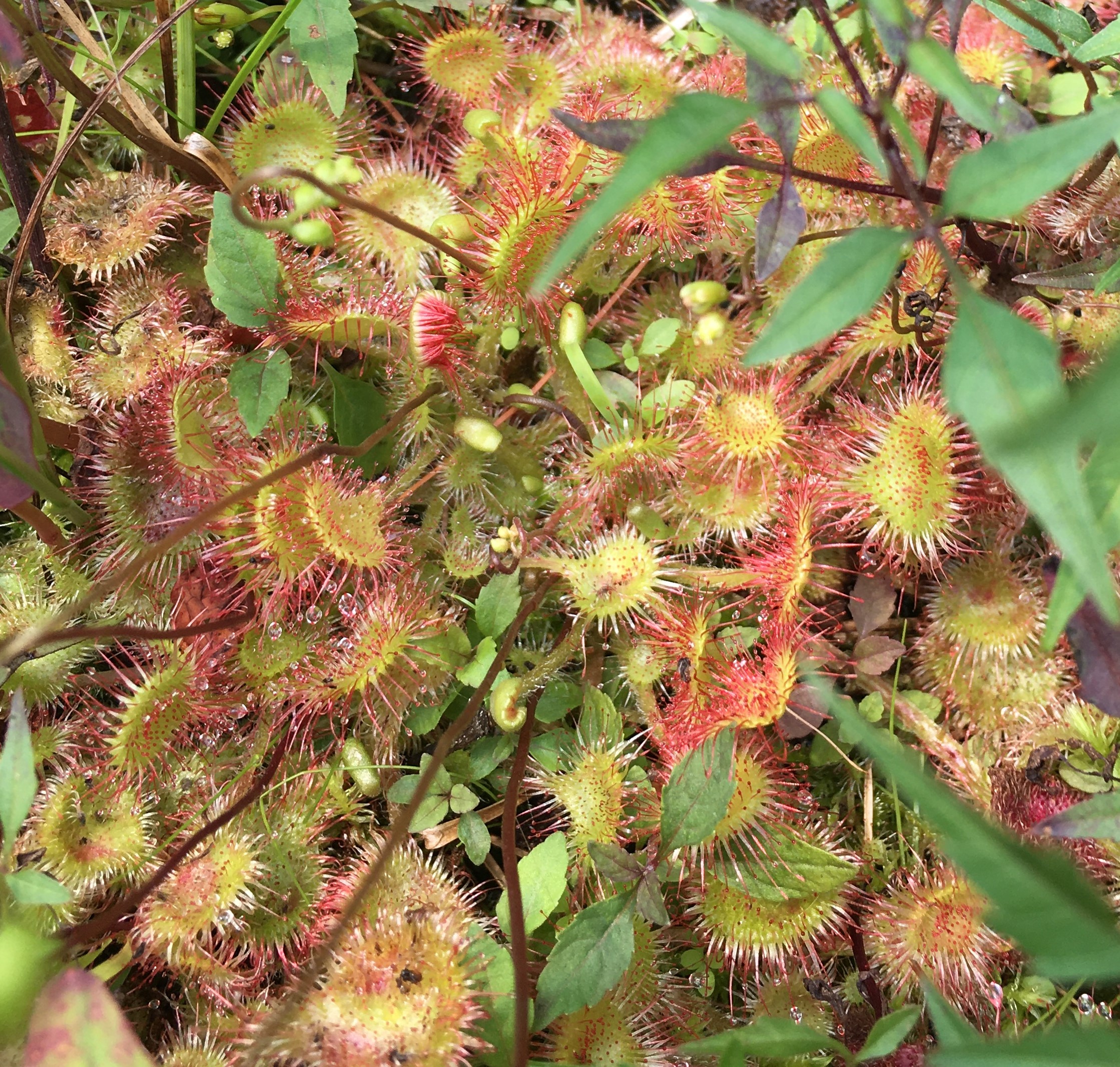
This week’s #SpeciesOfTheWeek is the Round-leaved Sundew (Drosera rotundifolia). Many people don’t expect to find carnivorous plants in Ontario but in fact, we have 4 different types! Pitcher plants, butterworts, bladderworts and sundews. Each plant has its own way of catching and digesting its insect prey, but here we’ll focus on that of the Round-leaved Sundew. Round-leaved Sundews can be identified by their tall red stems, with round or spoon-shaped leaves on the end of the stems. These disks will be covered in little red hairs that have droplets of a clear sticky liquid on them. These droplets resemble dew hence the name “Sundew”. The sticky droplets work like glue and insects that get stuck cannot get away. The Sundews then release another liquid that paralyzes and breaks down the prey. The reason Sundews are carnivorous is that they live in wetland habitats where there is very little to no nitrogen present in the soil. By “eating” insects, Sundews are able to get the right amount of nitrogen they need to thrive. Something else that Sundews can do is alter their carnivorous behaviour based on the conditions around them. If a Sundew is in a site with more nutrients available in the soil it will eat fewer insects, and if in a site with poorer nutrients, will eat more insects! The next time you’re in a wetland check out the soil and see if you can find these cool carnivorous plants!

Posted in Friends of Murphys Point, Murphys Point, Murphys Point Provincial Park, Species of the Week | Leave a comment