Species of the Week: The Indigo Bunting

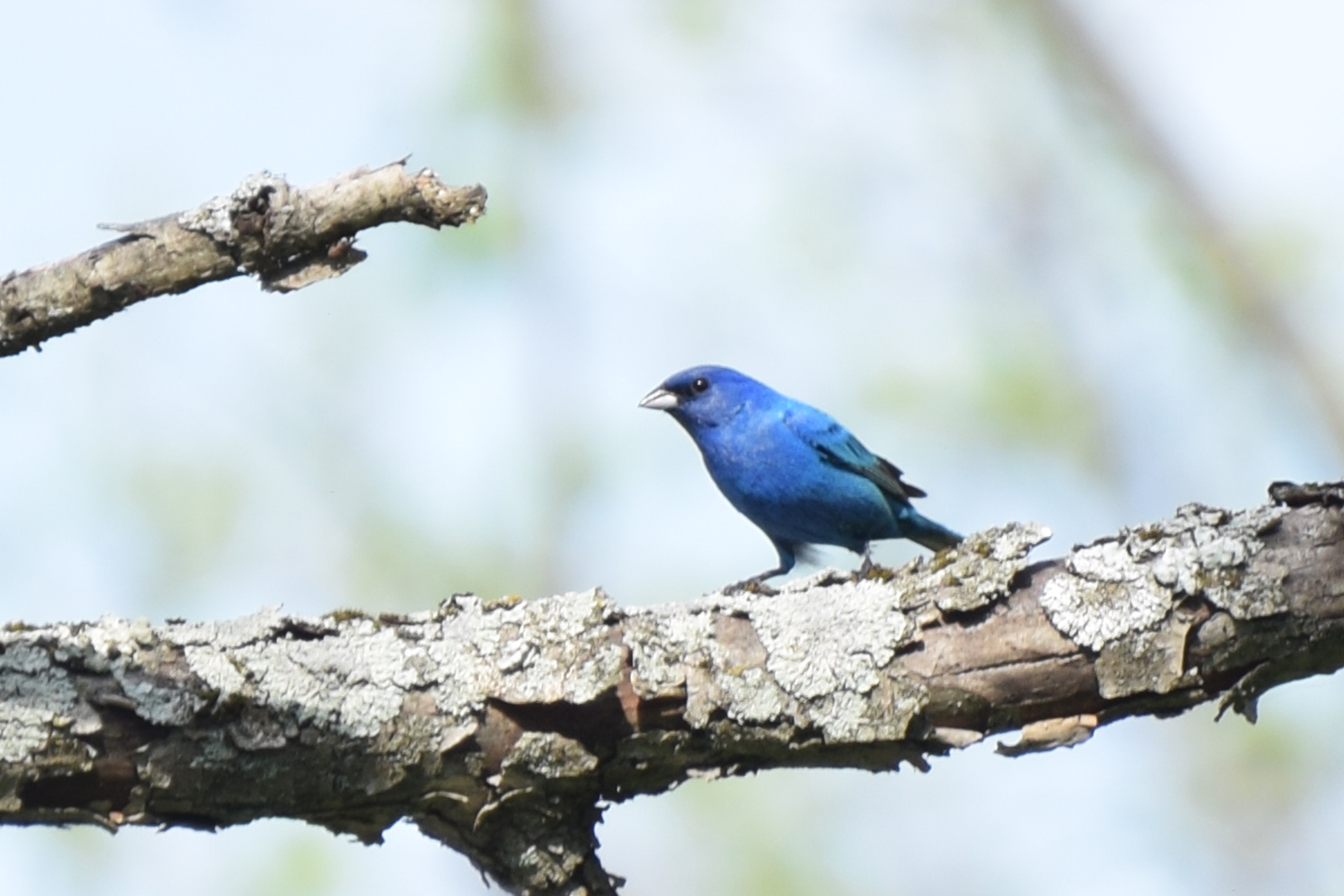
Photo by Adam Kalab

This week’s #SpeciesOfTheWeek is the Indigo Bunting (Passerina cyanea). Males are unmistakable with their bright blue plumage. Females are more inconspicuous with their plain brown plumage, which helps them blend into the brush. The female needs to be unnoticed by predators, as she does all the work to build the nest, incubate the eggs, and feed the babies. Nests are hidden in low shrubs, no more than one meter above the ground, and are home to two broods of three to four chicks. Buntings mainly eat insects but will supplement their diet with seeds and berries. They prefer edge habitats along open woodlands and old fields. In the park, a breeding pair has been seen around the Lally Homestead for the last several years and on the Silver Queen Mine Trail. Males mark their territory with their song and may frequently be heard singing along country roads in the spring and summer. In the fall, buntings will migrate up to 2,000 kilometres to their wintering grounds in Mexico and the Caribbean. The Indigo Bunting’s populations are abundant and stable, but they are at risk of habitat loss due to increasing urbanization. If you have any photos of these beautiful birds, feel free to share them with the hashtag  #SpeciesOfTheWeek so we can see them!

Posted in Friends of Murphys Point, Murphys Point, Murphys Point Provincial Park, Species of the Week | Leave a comment

Species of the Week: The Eastern Red-Backed Salamander

This week’s #SpeciesOfTheWeek is the Eastern Red-backed Salamander (Plethodon cinereus). The first photo features 2 red-backed salamanders and a sneaky red-spotted newt eft! The second picture is also an Eastern Red-backed Salamander, but it is a lead-back morph. This is a great example of the two different colour variations that this salamander can have. This little amphibian is one of three salamander species in Ontario which does not have any lungs! This means that the salamanders breathe entirely through their skin. To do this, salamanders must keep their skin moist, which means living in certain environments that allow them to stay cool and damp at all times. Have you ever wondered what can live under rotting logs on the forest floor? Salamanders can! Under rocks and logs, salamanders have the perfect cover to keep them out of the heat on warm summer days. They also have an all-you-can-eat buffet with all of the invertebrates and other insects that live there too. Like other salamanders, red-backed salamanders are most likely to come out on rainy nights and hunt for insects and spiders on the forest floor. It’s important to remember that since salamanders breathe through their skin, humans can make them very sick if we pick them up, due to our natural oils which are foreign to them. Sunscreen and bug spray can be especially damaging to salamanders as they contain harsh chemicals. Please admire these awesome amphibians from afar! If you’re curious if you have any Eastern Red-backed Salamanders in your area, check out this cool interactive map of Ontario!  https://www.ontarioinsects.org/herp/index.html?Sort=41&area2=squaresCounties&records=all&myZoom=5&Lat=43.13&Long=-81.22

Posted in Friends of Murphys Point, Murphys Point, Murphys Point Provincial Park, Species of the Week | Leave a comment

Species of the Week: The Eastern Musk Turtle

Photo by Nata Culhane

This week’s #SpeciesOfTheWeek is the Eastern Musk Turtle (Sternotherus odoratus). Also known as the Stinkpot, it produces a musky odour when disturbed. This species is one of the world’s smallest turtles and is seldom seen due to its shy nature. Additionally, it spends a lot of time hanging around the bottom of different wetlands – the muddier, the better. In fact, musk turtles rarely swim, despite being good swimmers. As carnivores, they eat a variety of critters such as minnows, tadpoles, fish eggs, and small invertebrates found on the bottom of lakes and other bodies of water. Since the Eastern Musk Turtle is considered a Species at Risk in Ontario, it is important to remember to watch out for them, as well as other wildlife, when driving the winding road to Murphys Point. Have you ever been lucky enough to spot one of these turtles?

Posted in Friends of Murphys Point, Murphys Point, Murphys Point Provincial Park, Species of the Week | Leave a comment