Species of the Week: Round-leaved Sundew

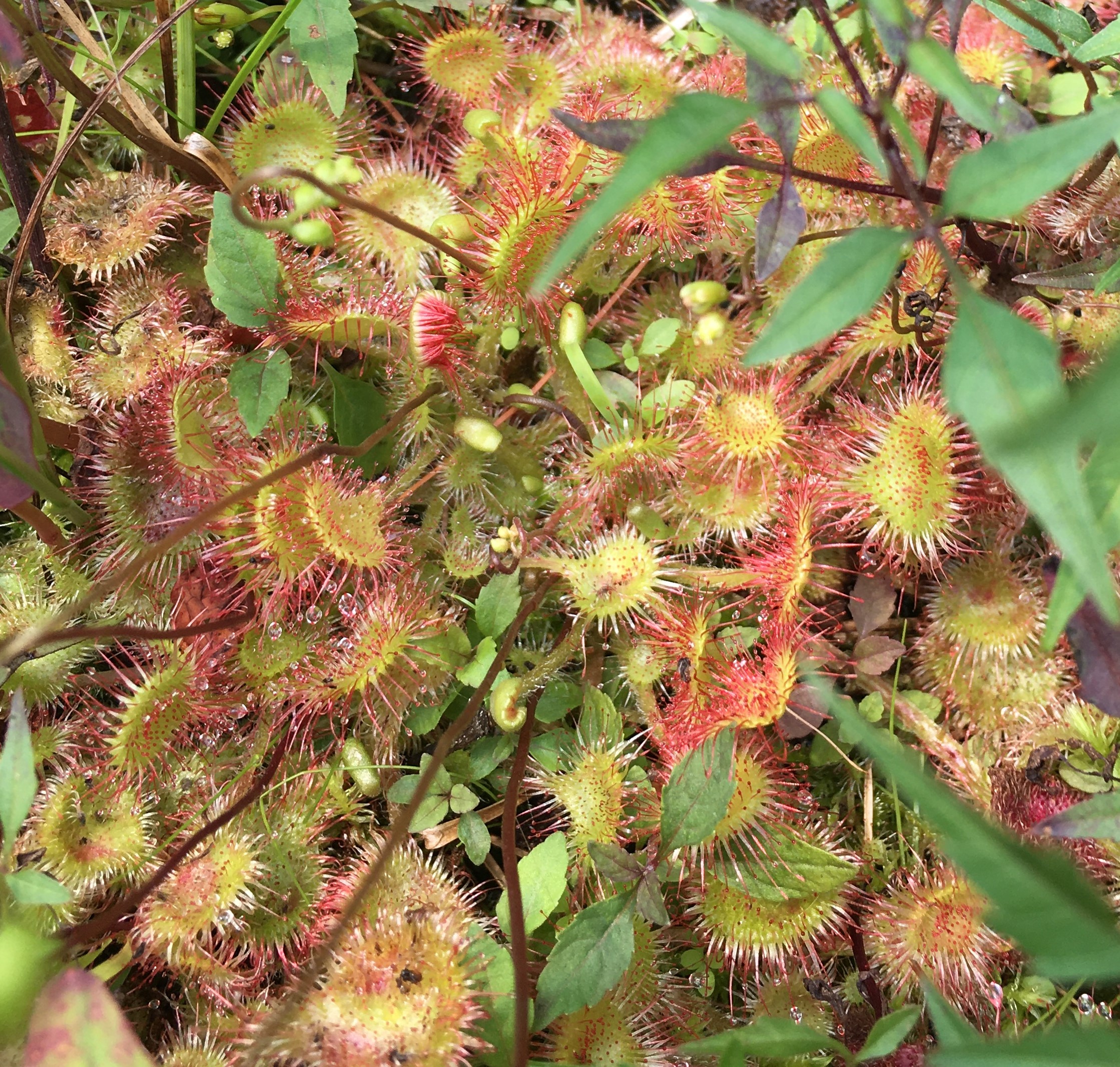
Photo by Adam Kalab

This week’s #SpeciesOfTheWeek is the Round-leaved Sundew (Drosera rotundifolia). Many people don’t expect to find carnivorous plants in Ontario but in fact, we have 4 different types! Pitcher plants, butterworts, bladderworts and sundews. Each plant has its own way of catching and digesting its insect prey, but here we’ll focus on that of the Round-leaved Sundew. Round-leaved Sundews can be identified by their tall red stems, with round or spoon-shaped leaves on the end of the stems. These disks will be covered in little red hairs that have droplets of a clear sticky liquid on them. These droplets resemble dew hence the name “Sundew”. The sticky droplets work like glue and insects that get stuck cannot get away. The Sundews then release another liquid that paralyzes and breaks down the prey. The reason Sundews are carnivorous is that they live in wetland habitats where there is very little to no nitrogen present in the soil. By “eating” insects, Sundews are able to get the right amount of nitrogen they need to thrive. Something else that Sundews can do is alter their carnivorous behaviour based on the conditions around them. If a Sundew is in a site with more nutrients available in the soil it will eat fewer insects, and if in a site with poorer nutrients, will eat more insects! The next time you’re in a wetland check out the soil and see if you can find these cool carnivorous plants!
Posted in Friends of Murphys Point, Murphys Point, Murphys Point Provincial Park, Species of the Week | Leave a comment

Species of the Week: Scarlet-winged Lichen Moth

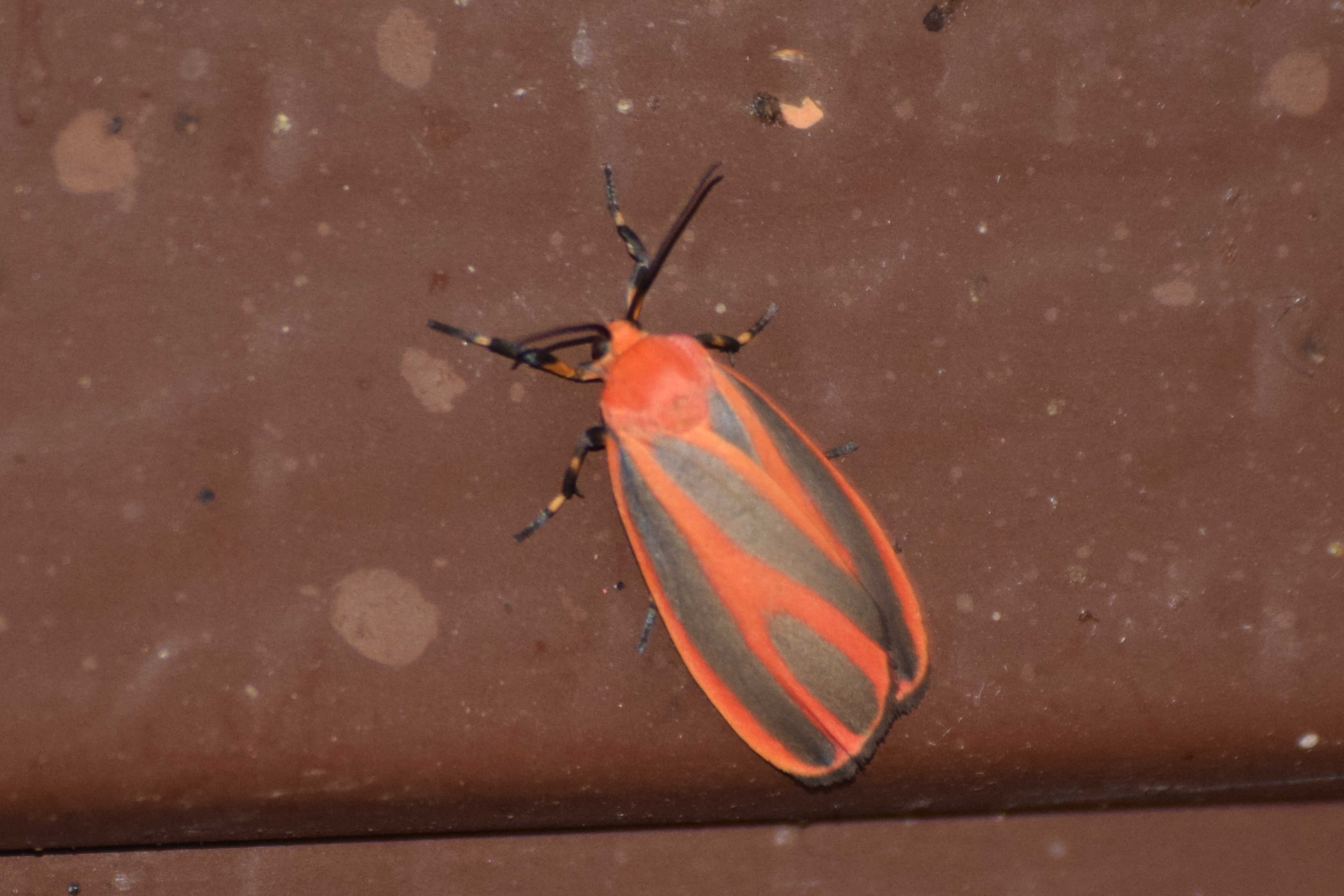
Photo by Adam Kalab

This week’s #SpeciesOfTheWeek is the Scarlet-winged Lichen Moth (Hypoprepia miniata). It is easily recognizable with its bright red body and gray stripes on the forewings. The caterpillars feed on lichens growing on trees, with a preference for pine trees. This moth is found all across North America. Eastern populations are particularly abundant in Jack Pine forests, while western populations are abundant in Lodgepole Pine forests. The life cycle lasts about one year. After hatching late in the summer, the caterpillar feeds in the fall and then is dormant during the winter. The caterpillar resumes feeding in spring before pupating. Adults emerge late in the spring and fly from June to September. Since these moths fly at night, they have to avoid predation by bats, which they do with a unique adaptation. The Scarlet-winged Lichen Moth is a tiger moth in the subfamily Arctiinae, which means they have tymbal organs that produce high-frequency clicks that can be heard by bats. Some tiger moths make clicks that actually disrupt bat echolocation, but lichen moths have a different strategy. These moths are toxic to bats, so they make clicks that warn about their toxicity. It’s similar to how the colouration of a Monarch Butterfly deters predators, except using sound. Have you seen this moth, or any other tiger moths, in the park? 

Posted in Friends of Murphys Point, Murphys Point, Murphys Point Provincial Park, Species of the Week | Leave a comment

Species of the Week: The Midland Painted Turtle

Photo by Adam Kalab

This week we are featuring the Midland Painted Turtle (Chrysemys picta ssp. marginata) as our #SpeciesOfTheWeek. The Midland Painted Turtle is one of five turtles that call Murphys Point home and can be distinguished from other turtles based on a few different characteristics. For starters, the shell of the Painted Turtle is much flatter than other turtle species and the red and yellow markings along the shell and body look much like paint strokes. One of the main factors impacting the decline of turtle species is their late maturity. For the Midland Painted Turtle, it can take upwards of six years for the males to reach sexual maturity and around six to ten years for females. As such, every turtle counts when only 0.001% of hatchlings make it to maturity. From as early as mid-August to late September, turtle eggs may begin to hatch so keeping an eye out on roadways is an important step to protect these threatened species.

Posted in Friends of Murphys Point, Murphys Point, Murphys Point Provincial Park, Species of the Week | Leave a comment