Species of the Week: Spotted Touch-Me-Not

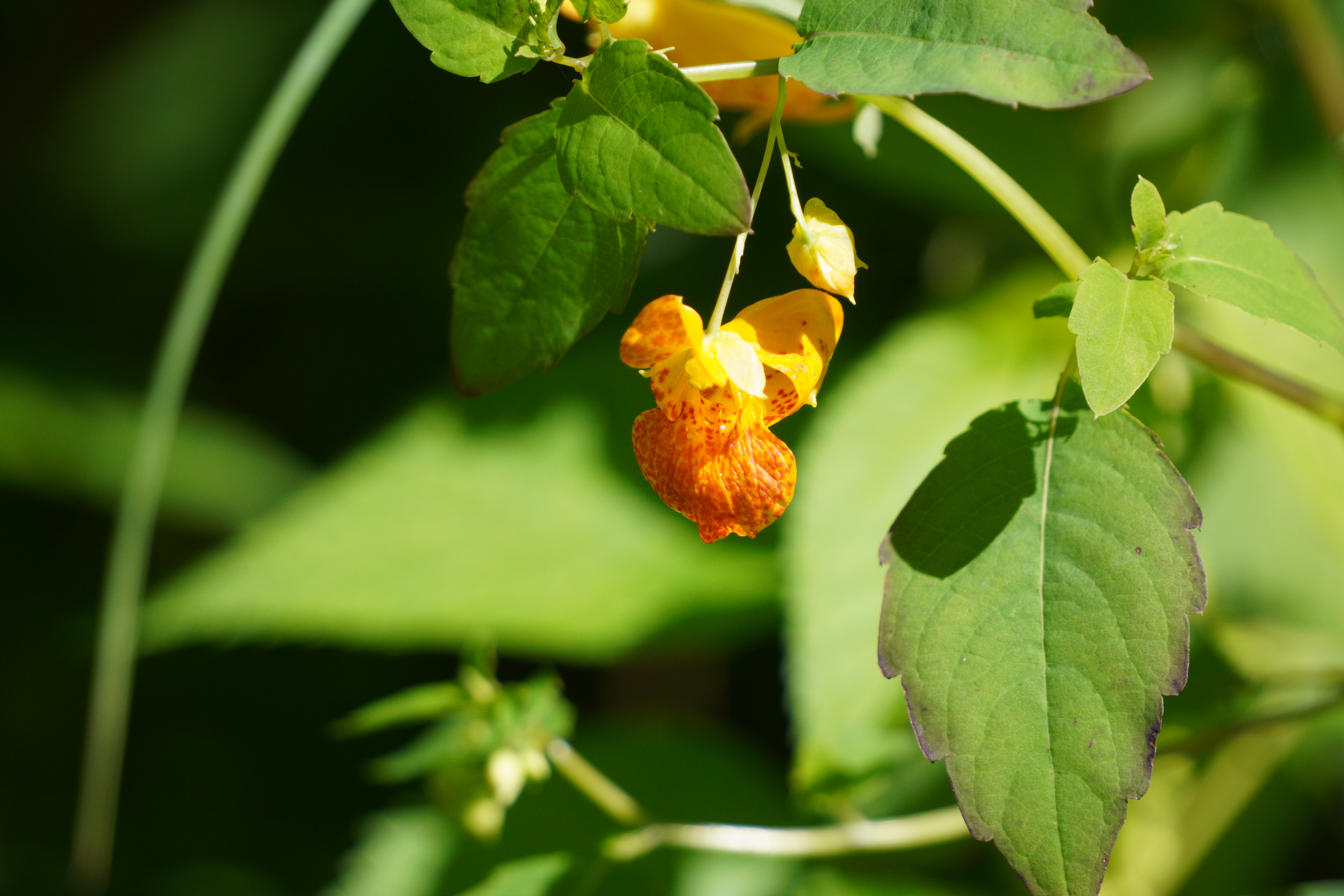
This week we will be looking at a plant with many names; the Spotted Touch-Me-Not or Spotted Jewelweed (Impatiens capensis). Also known as Jewelweed, Snapweed or Spotted Snapweed. Although the name may sound threatening, the meaning behind this plant’s name is in its method of seed dispersal. As you can see in the pictures, the horn-shaped flowers of the Spotted Jewelweed are light orange with lots of red flecks near the opening. The blooming season for these flowers is from July to September, but surprisingly each flower only lasts for about a day! The fruits contain seed pods which when touched, will eject seeds in all directions. Hence the name “Touch-Me-Not”. This flower has many beneficial uses. It tends to grow in the same areas as Poison Ivy, which is helpful because it could help to alleviate the pain and itching caused by Poison Ivy and Poison Sumac. The leaves and stems of Spotted Touch-Me-Not are believed to have a compound which counteracts the effects of urushiol (the oily irritant found in Poison Ivy). The Spotted Jewelweed is also a critical flowering plant for Hummingbirds. Thanks to their deep flowers, Hummingbirds are able to use their long beaks to reach their nectar. This flower is said to make up 5-10% of the Ruby Throated Hummingbirds diet! Spotted Touch-Me-Nots thrive the best in moist environments. If you happen upon any of these plants, try gently touching their pale green fruit pods and see what happens!
Posted in Friends of Murphys Point, Murphys Point, Murphys Point Provincial Park, Species of the Week | Leave a comment

Species of the Week: The Eastern Cottontail

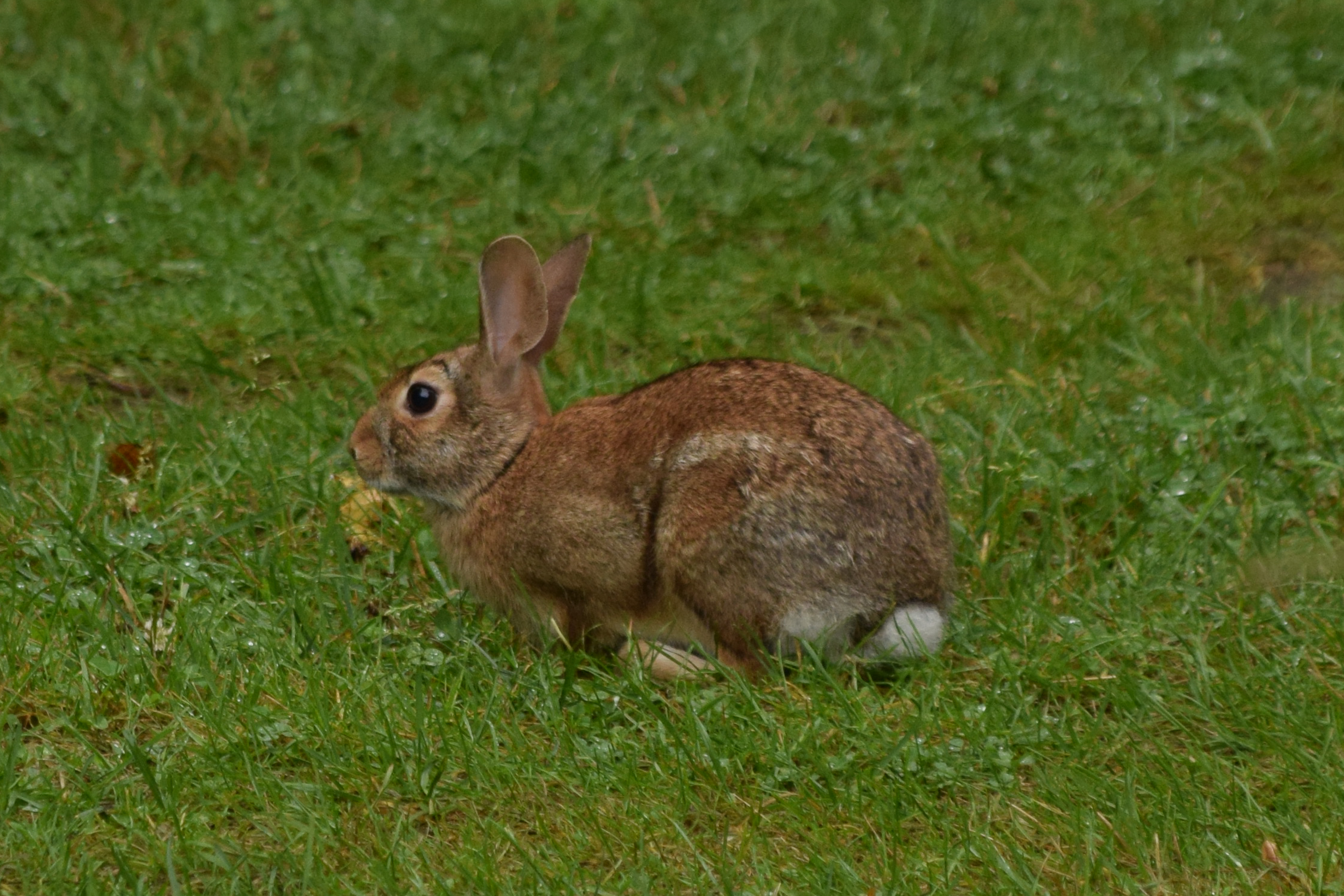
Photo by Adam Kalab

This week we turn our attention to the Eastern Cottontail (Sylvilagus floridanus), as our #SpeciesOfTheWeek. Often found in grassy clearings and old fields adjacent to forested areas, Eastern Cottontails have rightfully established a healthy population here at Murphys Point. Cottontails range in colour from red-brown to grey-brown, but all feature the distinctive round, fluffy white tail after which they are named. Cottontails are quite agile and have very strong senses. Their large feet and powerful legs allow them to reach speeds of up to 29 km/h! They also run in a characteristic zig-zag pattern which confuses predators and throws them off their track. If you’ve ever seen a rabbit up close, you’ll notice that their noses twitch non-stop. This is because they’re picking up scents in the air — they have around one hundred million sensing receptors in their nose, making for an exceptional sense of smell! They can also see and hear almost everything in their immediate surroundings. The cupped shape of their ears helps to catch and amplify sound waves, and they can also move their ears back and forth to determine the direction of a sound. Together, all of these features help the Eastern Cottontail to escape predators, as they are prey to a long list of species.

Posted in Friends of Murphys Point, Murphys Point, Murphys Point Provincial Park, Species of the Week | Leave a comment

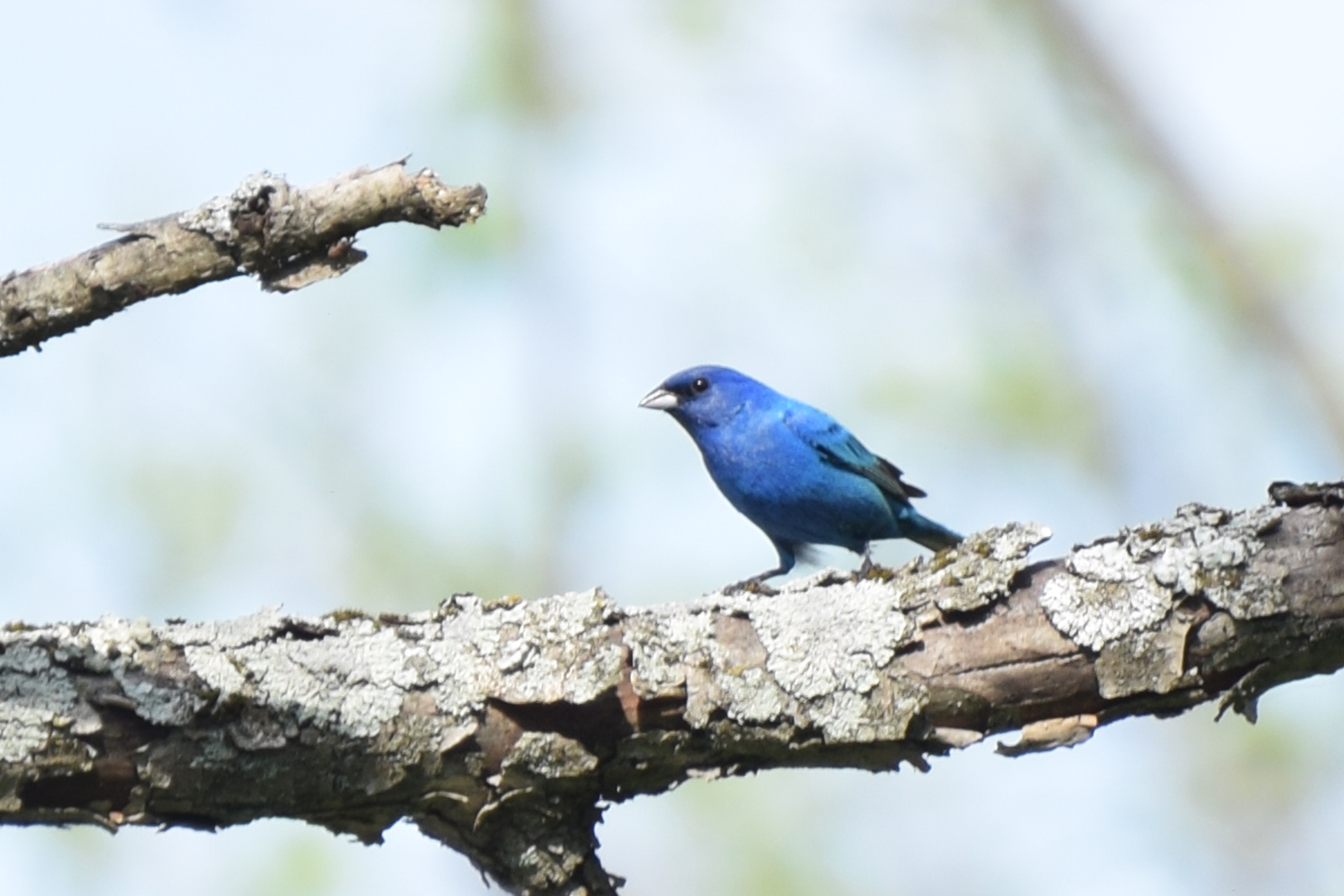
Species of the Week: The Indigo Bunting

Photo by Adam Kalab

This week’s #SpeciesOfTheWeek is the Indigo Bunting (Passerina cyanea). Males are unmistakable with their bright blue plumage. Females are more inconspicuous with their plain brown plumage, which helps them blend into the brush. The female needs to be unnoticed by predators, as she does all the work to build the nest, incubate the eggs, and feed the babies. Nests are hidden in low shrubs, no more than one meter above the ground, and are home to two broods of three to four chicks. Buntings mainly eat insects but will supplement their diet with seeds and berries. They prefer edge habitats along open woodlands and old fields. In the park, a breeding pair has been seen around the Lally Homestead for the last several years and on the Silver Queen Mine Trail. Males mark their territory with their song and may frequently be heard singing along country roads in the spring and summer. In the fall, buntings will migrate up to 2,000 kilometres to their wintering grounds in Mexico and the Caribbean. The Indigo Bunting’s populations are abundant and stable, but they are at risk of habitat loss due to increasing urbanization. If you have any photos of these beautiful birds, feel free to share them with the hashtag  #SpeciesOfTheWeek so we can see them!

Posted in Friends of Murphys Point, Murphys Point, Murphys Point Provincial Park, Species of the Week | Leave a comment