Species of the Week: The Brown Waterscorpion

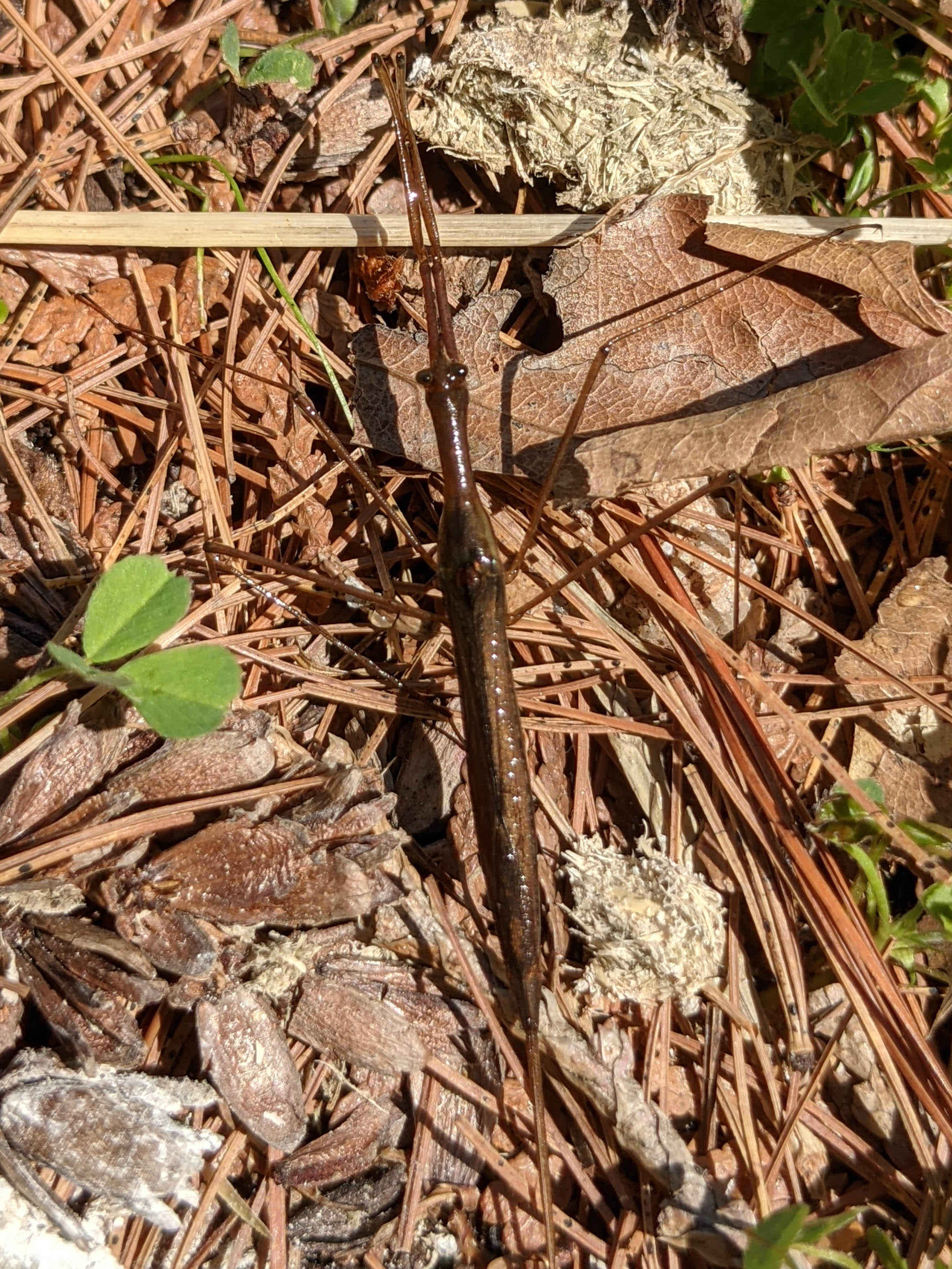
Photo by Nata Culhane

 If you look closely at this picture, you’ll spot our #SpeciesOfTheWeek – the Brown Waterscorpion (Ranatra fusca)! Waterscorpions live in ponds and streams, hanging out on aquatic vegetation or right on shore where they like to bask in the sun. Occasionally they dry out their weak wings, which are usually kept flat on their back and mainly used if their home dries up. Waterscorpions are carnivorous stealth hunters (like herons!), lying on vegetation with their face in the water patiently looking for prey with their big eyes. When they spot a potential meal, they use their back legs to push themselves towards it, grab it with their long front arms, and impale it with their needle-like beak – sharp enough to cut human skin! Finally, they season their meal with digestive enzymes, like spiders do! These enzymes partially digest the prey’s tissue, turning it into a bug smoothie! A waterscorpion’s tail has a crucial role in hunting, but it’s very different from what land scorpions use their tails for… it’s actually a breathing tube! They keep a bubble of air between their front legs and abdomen at all times and use their tail to diffuse oxygen. This is why waterscorpions can spend so much time with their faces in the water without running out of air. Interestingly, waterscorpion eggs, which are laid in submerged vegetation or shoreside moss, also have respiratory filaments protruding from them. In the winter, waterscorpions survive under the ice because their metabolism is lowered so much by the cold that the little amount of oxygen they get via diffusion from the water is enough to sustain them. Have you spotted these cool long bugs at the park? Keep an eye out for them along the shore when you’re looking for frogs!

Posted in Friends of Murphys Point, Murphys Point, Murphys Point Provincial Park, Species of the Week | Leave a comment

Species of the Week: The Twelve-spotted Skimmer

Photo by Murphys Point PP

This week’s #SpeciesOfTheWeek is the Twelve-spotted Skimmer (Libellula pulchella). Twelve-spotted Skimmers are large showy dragonflies with a wingspan of about 10cm. When sighted, they often appear larger due to an illusion caused by the 6 alternating white and black spots on each wing (in the case of the male). Twelve-spotted Skimmers are most active in July and August and are very territorial, often patrolling the whole shore of water bodies, such as lakes and ponds. Oftentimes, male Twelve-spotted Skimmers will engage in territorial disputes with other males. These altercations consist of repeating loops around the other male, with the victor being the male that completes a full loop around the other male. The aquatic larvae of Twelve-spotted Skimmers feed on insects such as mosquito larvae, aquatic fly larvae, and freshwater shrimp. They have even been seen catching small fish! As adults, they eat a range of soft-bodied insects, including mosquitos, moths, flies, mayflies, flying ants, and termites. Let us know if you see this or other species of dragonflies in the park!

Posted in Friends of Murphys Point, Murphys Point, Murphys Point Provincial Park, Species of the Week | Leave a comment

Species of the Week: The Eastern Milksnake

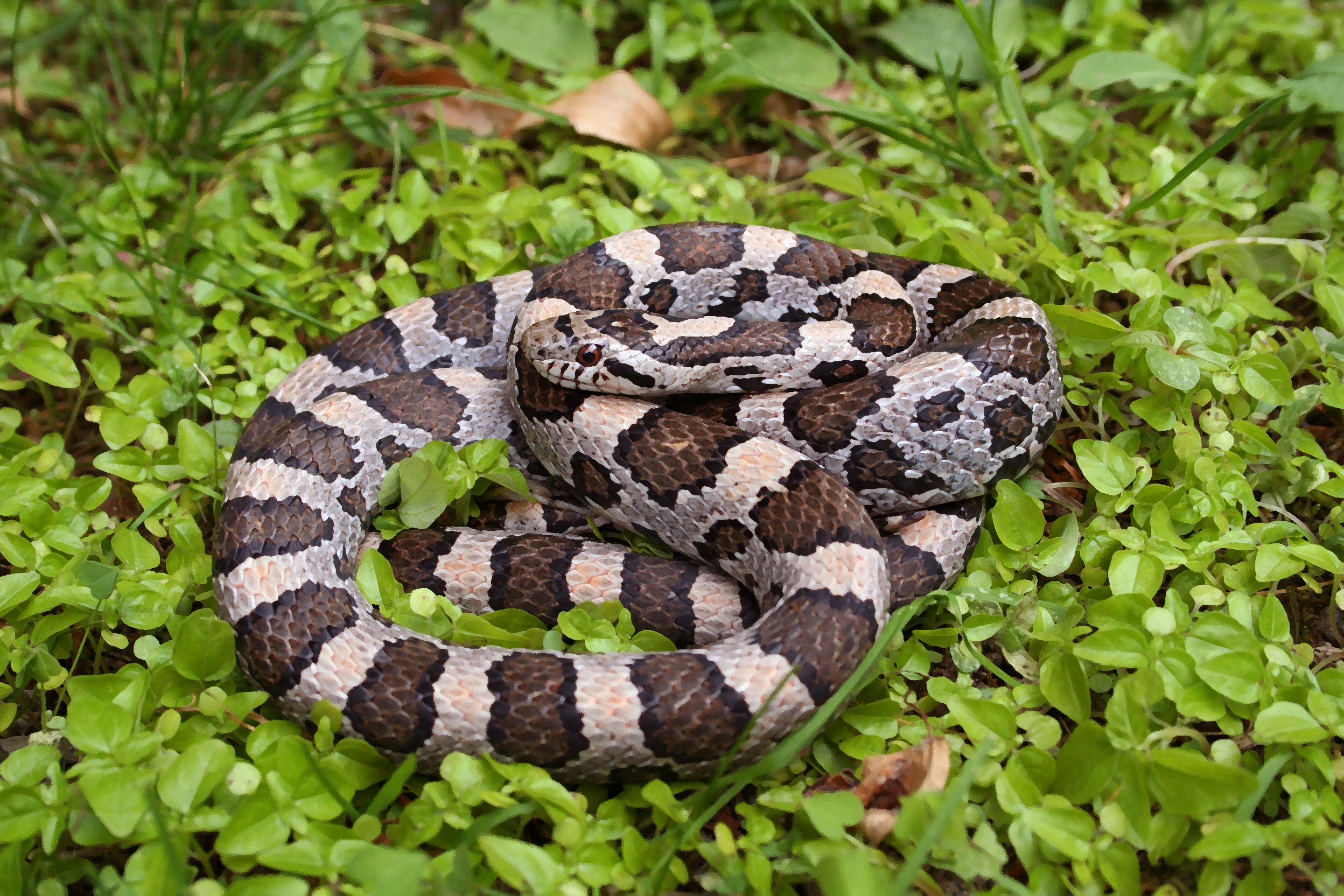
Photo by Simon Lunn

This week’s featured #SpeciesOfTheWeek is the Eastern Milksnake (Lampropeltis triangulum). This species of snake inhabits a wide variety of habitats including rocky outcrops, forests, meadows, and pastures, and can occasionally be found here in the park along the trails or even inside buildings like the McParlan House. As adults, milksnakes typically reach 60-90cm in length, with reddish-brown blotches outlined in black along their beige backs. A little more timid than Grey Ratsnakes, milksnakes will often try to escape when approached, and may even vibrate their tails, hiss, or strike when they feel threatened – though they do not actually have rattles and are non-venomous of course. As you may have wondered, the name “milksnake” comes from an old fable about the snakes sucking cow udders to get milk. While this story is total fiction, as they are physically incapable of such abilities, milksnakes are often found in barns as they enjoy the dark and cool environment, as well as the abundance of rodents that make for a convenient food supply.

Posted in Friends of Murphys Point, Murphys Point, Murphys Point Provincial Park, Species of the Week | Leave a comment