The History and Astronomy of the Perseids Meteor Shower

The following post is contributed by Friends of Murphys Point student Lazar Stevanovic.

This week we will be taking a closer look at the Perseids Meteor Shower, named after the constellation Perseus. When the shower is at its peak, Perseus is at its highest point in the night sky. This meteor shower lasts from late July to mid-August, reaching its peak on August 11th-12th.  When watching the Perseids, the peak of activity occurs in the hours after midnight with 50-80 meteors becoming visible per hour! The Perseids are caused by the Comet 109P/Swift-Tuttle. During its orbit around the sun, it ejects dust and gravel.  When the Earth passes the debris, it enters our atmosphere as the meteors.

Meteors seen in the night sky during the 2020 Perseids Meteor Shower © Nata Culhane

The Perseids Meteor Shower has special significance in Christianity.  The martyrdom of St. Lawrence, known as the “Tears of St. Lawrence,” occurred on August 10th, which coincides with the Perseids.  To Christians, the Perseids symbolize the tears of St. Lawrence during his martyrdom.  Historical records of the Perseids go back to an even earlier time. Chinese records from 36 A.D. show that the Perseids were even occurring then.

The comet which causes the Perseids was discovered in 1862 by Lewis Swift.  This same comet was sighted 3 weeks later by another astronomer, Horace Tuttle.  Swift did not announce the discovery of the comet so the comet now bears both of their names (Swift-Tuttle). The orbital period of 109P/Swift-Tuttle is 120 years, with its last near-Earth appearance being in 1992. 

Many Indigenous Peoples have stories about comets and asteroids, one of which is the story of Genondahwayanung from the Ojibwa of the Upper Great Lakes.  The meaning of Genondahwayanung is “long-tailed heavenly climbing star.”  The story speaks of how Genondahwayanung, a star, would return one day to destroy the Earth. It had arrived one day thousands of years ago and burned everything, even rocks. Nothing was left except the Indigenous Peoples, who had covered themselves in mud to protect themselves from the heat. This is just one example of an Indigenous story amongst many about comets.

Frank Hitchens, an amateur astronomer who has led programs at Murphys Point, explained some of the science behind the Perseids Meteor Shower.  When asked about how the strength of the Perseids Meteor Shower is measured, he responded: “As the comet called Swift orbits the sun, it leaves a trail of debris behind it and once a year the Earth passes through that trail of debris, and sometimes we pass through areas of that debris that are denser and sometimes areas that are less dense. So, the numbers [of meteors] per hour can differ significantly.”  When asked about whether this year’s meteor shower will be stronger than past years, he responded: “All the information I have, it seems to indicate it will be about average, so you’re expecting to see probably 40 to 50 meteors per hour.” 

Murphys Point Provincial Park is an excellent place to see the Perseids and we hope you will come and observe this meteor shower in the park!

Posted in Friends of Murphys Point, Murphys Point, Murphys Point Provincial Park | Leave a comment

Species of the Week: The Yellow-bellied Sapsucker

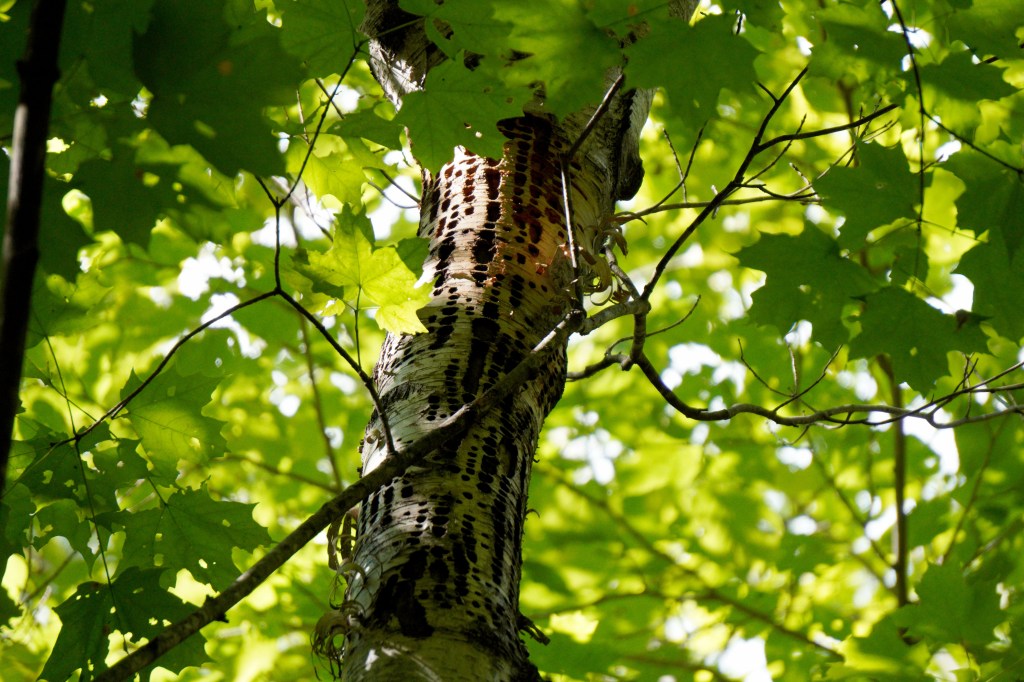
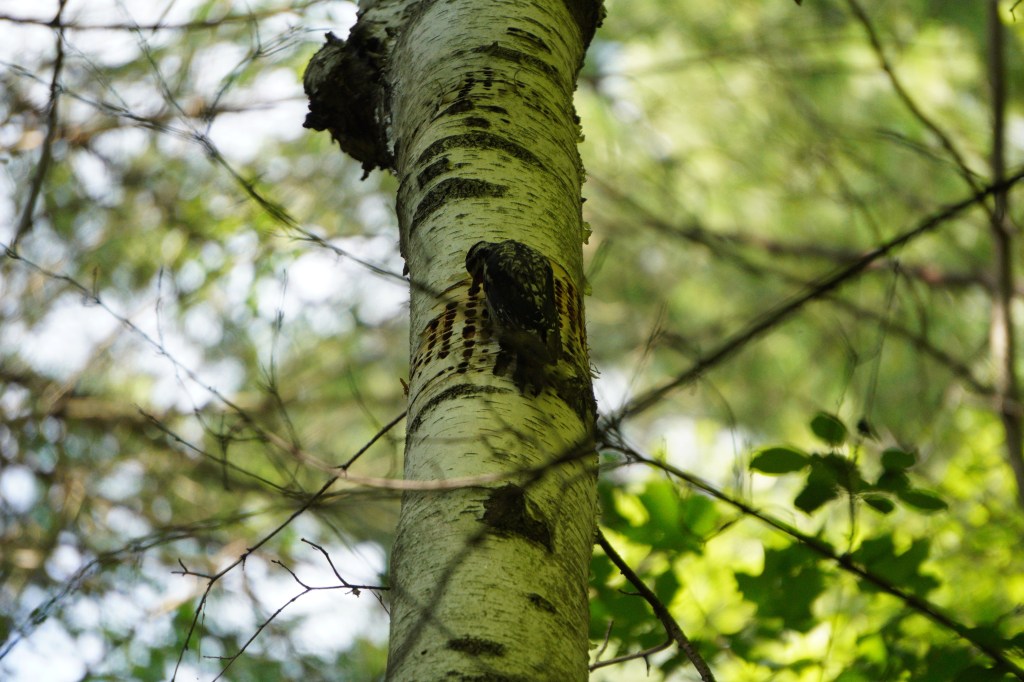
This week’s #SpeciesoftheWeek is the Yellow-bellied Sapsucker (Sphyrapicus varius), one of the most brilliant woodpeckers we have in the park! Yellow-bellied Sapsuckers are medium-sized woodpeckers with distinct, beautiful colouration, as well as a name-giving yellow belly. They are most common in young forests and along edge habitats, as young, fast growing trees are great places to look for their favourite meal… sap! They drill both circular and rectangular wells, often in sick or wounded birch, maple and hickory trees, and then lap up the sap that comes out… that’s right, sapsuckers love maple syrup just as much as we do! They will also eat insects they find below bark or in their sap wells. Interestingly, by creating these holes sapsuckers make sap available to many other animals that love this sweet liquid. Bats, squirrels, warblers, nuthatches, hummingbirds and many others come to eat at the ‘sapsucker cafe’, and lots of insects are attracted to the sap as well, attracting yet more birds that eat them. Sapsuckers nest in trees, usually picking those that are suffering from a fungal disease that makes heavy-duty excavating easier. Females have one brood per year, each clutch being 4-6 eggs large. We often see sapsuckers along the Silver Queen Mine Trail. Have you ever seen one of these lovely birds?

Posted in Friends of Murphys Point, Murphys Point, Murphys Point Provincial Park, Species of the Week | Leave a comment

Species of the Week: The Smallmouth Bass

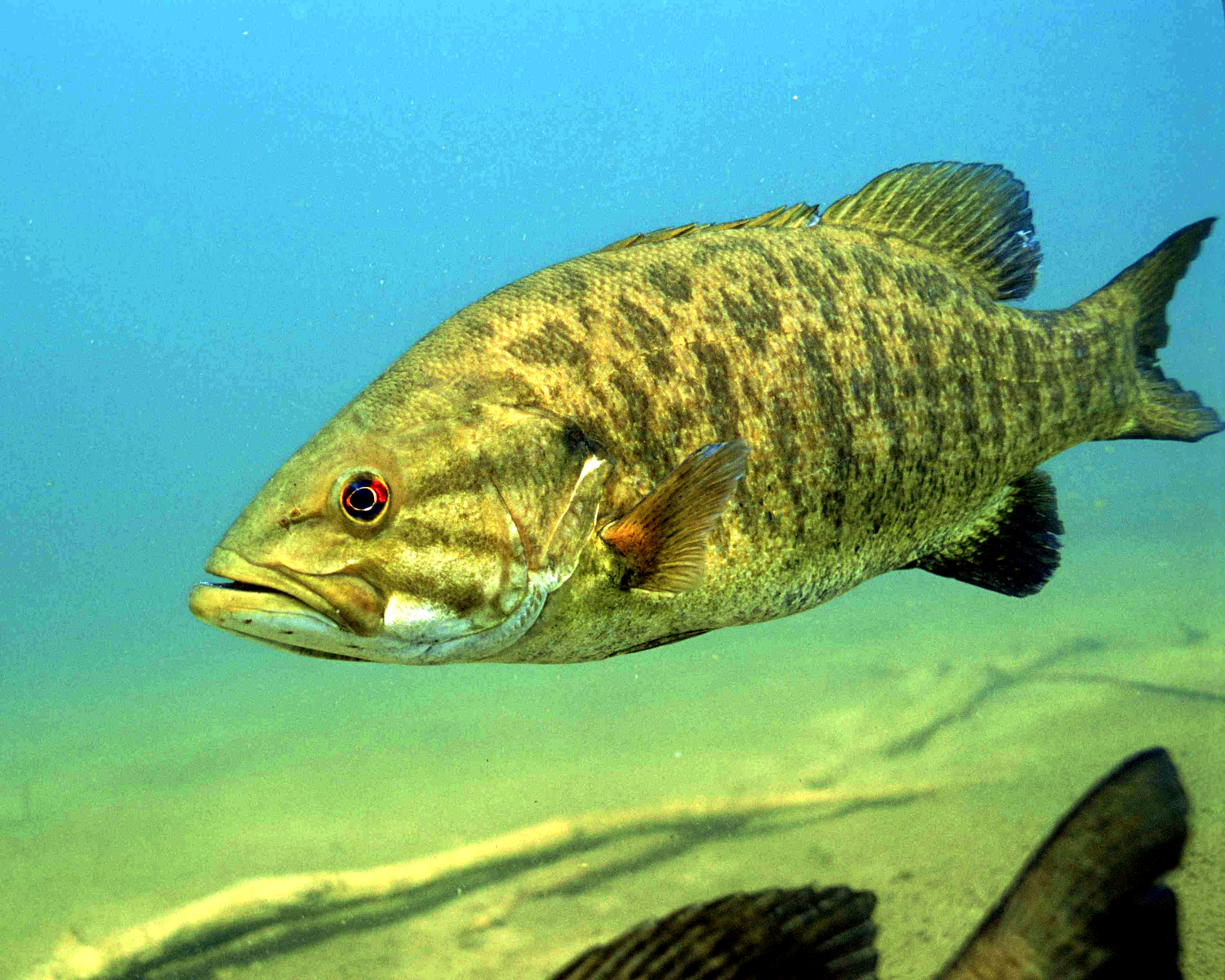
Photo retrieved from Engbretson Eric, U.S. Fish and Wildlife Service

Today’s #SpeciesOfTheWeek is the Smallmouth Bass (Micropterus dolomieu). Smallmouth Bass are members of the Sunfish Family which also includes Bluegill, Pumpkinseed, Largemouth Bass, Rock Bass and Crappie. A Smallmouth Bass has red eyes, a jaw that does not extend beyond the eye, vertical bars on the body, a laterally compressed body and dorsal fins that are joined to appear as one. The native range of the Smallmouth Bass is the waters of eastern and central North America. Within Canada, this fish is native to the Great Lakes – St Lawrence system. This Smallmouth Bass is a very popular sportfish and has been introduced to many places outside its native range. This has led to its proliferation as an invasive species in places such as British Columbia. The Smallmouth Bass prefers a habitat consisting of cold water found near shoals or submerged logs. They prefer sandy or rocky bottoms in relatively shallow waters. They do not compete with a similar species, Largemouth Bass, because Largemouth Bass prefer grassy areas with large amounts of aquatic vegetation.  Smallmouth Bass are top predators. Their typical prey includes other fish, crayfish, insects, frogs, tadpoles, and plants. The oldest Smallmouth Bass ever reported was 26 years old. At Murphys Point Provincial Park, Smallmouth Bass are commonly found in Big Rideau Lake and Loon Lake. 

Posted in Friends of Murphys Point, Murphys Point, Murphys Point Provincial Park, Species of the Week | Leave a comment