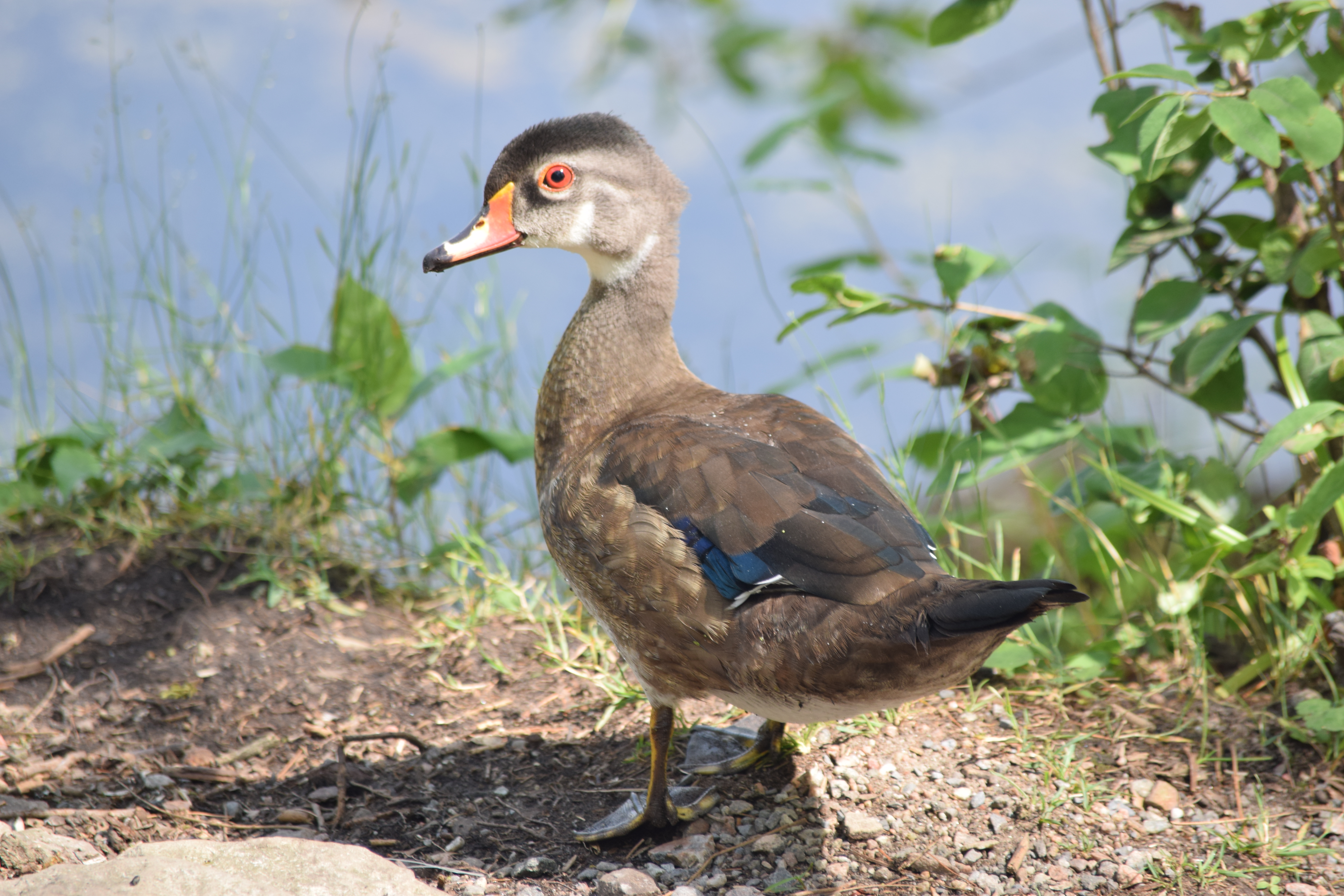
Species of the Week: The Wood Duck

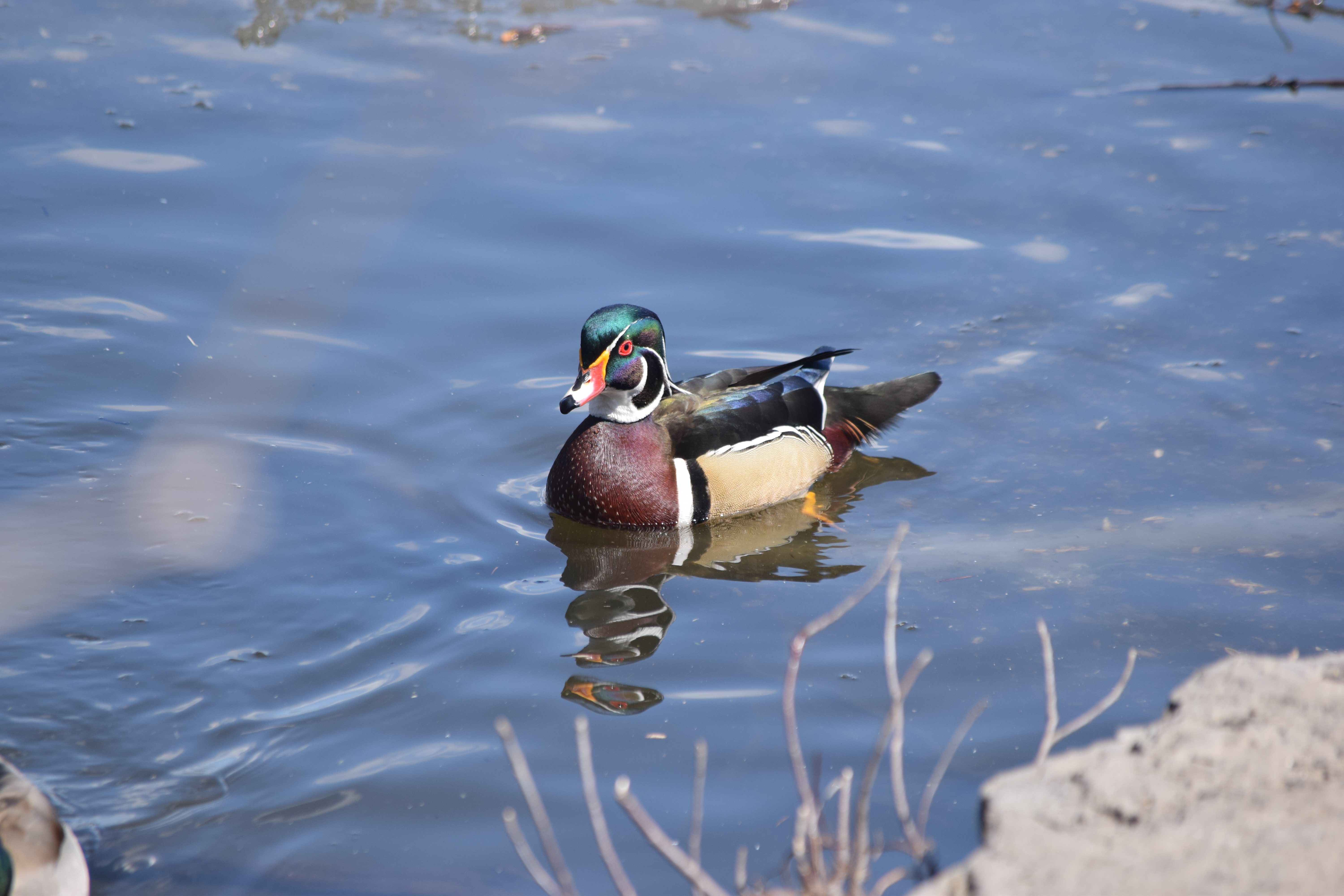
This week we turn our attention to arguably one of the most stunning waterfowl, the Wood Duck (Aix sponsa). The adult males have iridescent chestnut and green plumage, with intricate patterns on each feather. The females are less colourful but nonetheless elegant with their warm brown plumage and delicate white marking around the eye. Wood Ducks pair up for mating in January and are capable of producing two broods in one year – the only North American duck that can do so! They typically nest in tree cavities near the water but will also take advantage of nesting boxes in wetlands due to the scarcity of natural cavities. However, if nesting boxes are too close in proximity, females may lay eggs in the nests of other females, resulting in nests of up to 30 eggs and unsuccessful incubation. Wood Ducks are year-round residents in the southern parts of their range, and have been spotted here at Murphys Point along Black Creek and Round Lake. Be sure to keep an eye out for these gorgeous ducks as they return for their breeding season!
Posted in Friends of Murphys Point, Murphys Point, Murphys Point Provincial Park, Species of the Week | Leave a comment

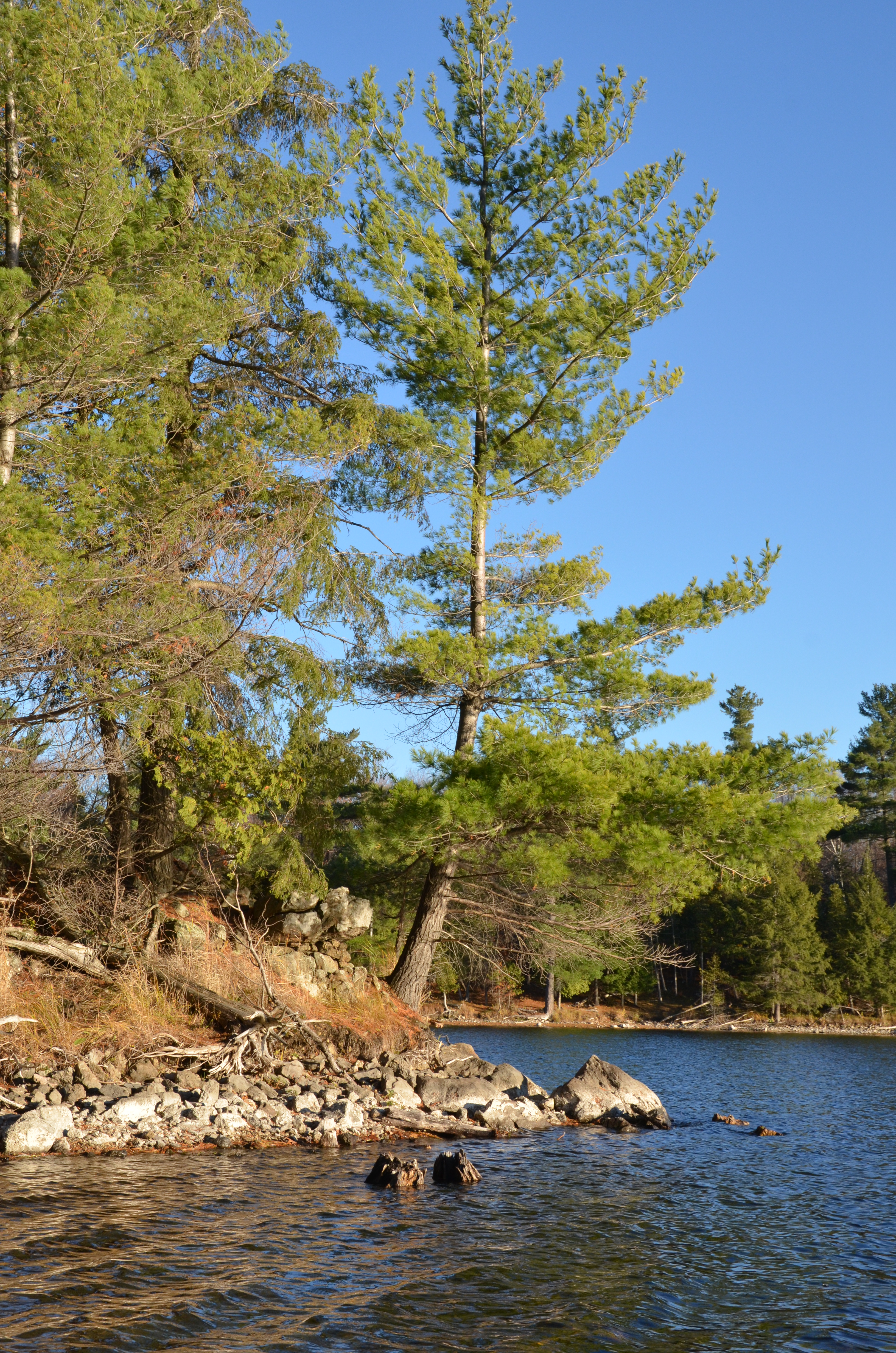
Species of the Week: Eastern White Pine

Photo by Murphys Point PP

This week’s #SpeciesOfTheWeek is Ontario’s provincial tree, the Eastern White Pine (Pinus strobus). This is the tallest tree we have in Eastern Canada! The tallest White Pine is a whopping 47 meters tall and it is located close to Ottawa. The easiest way to identify a White Pine is by counting the needles in a bundle. There are 5 needles in a bundle just like there are 5 letters in the word white! They are the only pines with 5 needles that are native to Eastern North America. The bark of White Pines is smooth and gray when young, gradually developing broad furrowed ridges as it matures. White Pines are important wildlife trees. They provide food and shelter for many animals like porcupines, squirrels, owls, hawks and deer. Their soaring height also makes them ideal places for birds like Red-tailed Hawks to nest. White Pine needles are much softer than other pines so the next time you see one, try running your hand across them! If the needles are too high to touch, you can marvel at the size of the tree and give it a big hug!

Posted in Friends of Murphys Point, Murphys Point, Murphys Point Provincial Park, Species of the Week | Leave a comment

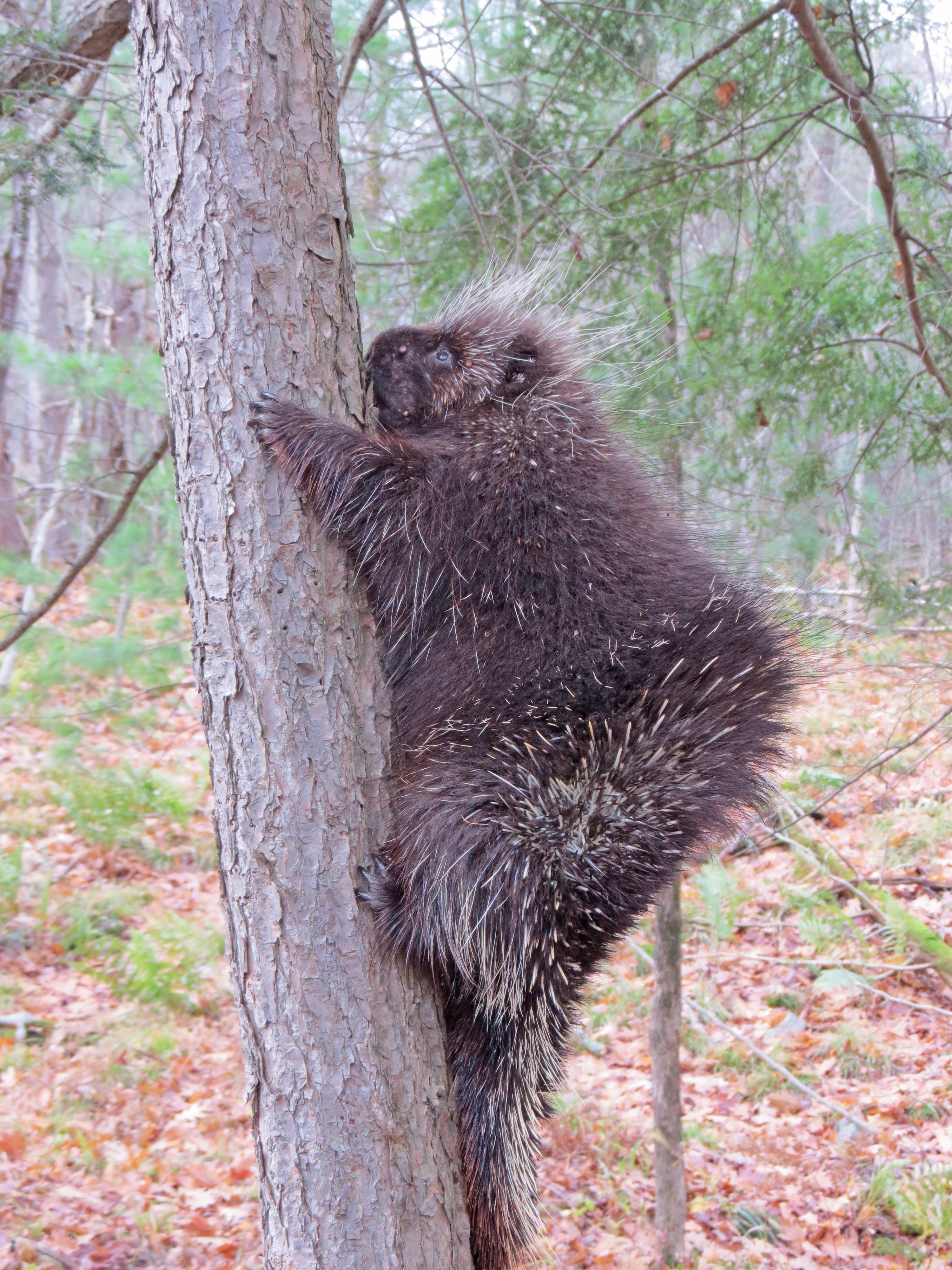
Species of the Week: The North American Porcupine

Photo by Mark Read

This week’s #SpeciesOfTheWeek is the North American Porcupine (Erethizon dorsatum). It is the second-largest rodent in North America after the beaver, and also has the most northerly range of any rodent species. The characteristic 3” barbed quills on the back and tail can number up to 30,000, and each has yellowish colour with black tips. The North American Porcupine is mostly a solitary creature, though in the winter they may den with up to 8 individuals. They are mostly nocturnal and communicate using a system of chemical, tactile, visual and acoustic signals. A porcupine’s diet mainly consists of vegetation such as leaves, twigs and fruits, but during the winter they switch to mainly eating tree bark. Murphys Point Provincial Park is a great place to observe this species in its natural habitat. Have you ever seen one here at the park?

Posted in Friends of Murphys Point, Murphys Point, Murphys Point Provincial Park, Species of the Week | Leave a comment