Species of the Week: The Coyote

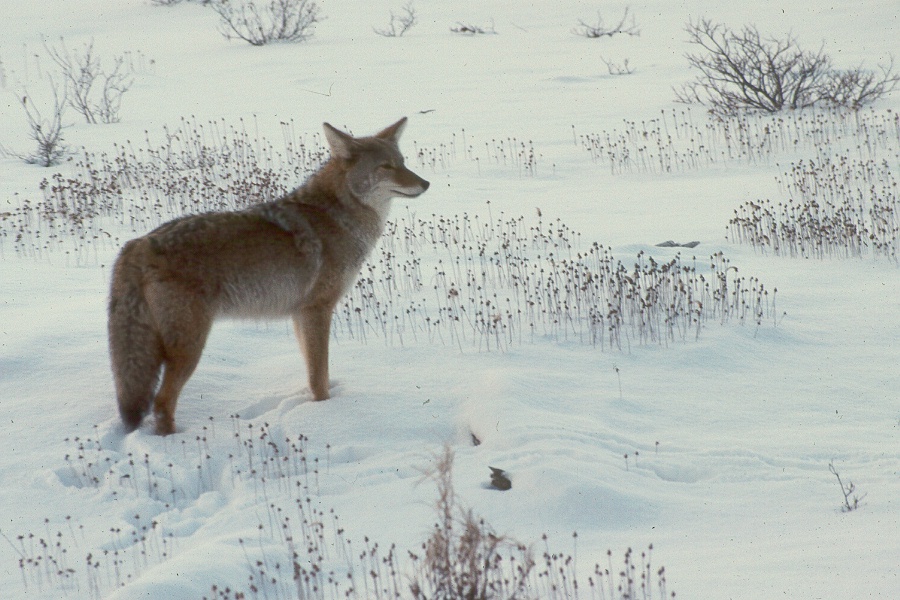
Photo by Simon Lunn

Our #SpeciesOfTheWeek is the Coyote (Canis latrans), one of seven members of the Canidae family. This canine has exceptional senses – a sudden noise or scent can make it change its course mid-step. They also have very powerful legs which allow them to reach running speeds of up to 64 km per hour! Their swiftness not only helps them to escape from hunters but also makes them excellent hunters themselves. Coyotes are primarily meat-eaters and enjoy a good meal of rabbits, hares, deer, and domestic livestock when available. However, they will also eat berries, fruits, and insects. They are what is known as an opportunistic feeder and will adjust their diet according to what sources are available. Coyotes are primarily nocturnal creatures whose yips and howls can be heard from the campgrounds here at night. Coyote scat has also been found on the main road of Murphys Point, which points to coyotes using it as a movement corridor. The individual pictured here was sighted on Scotch Line Road, not far from the park! Have you ever heard coyotes here in the campgrounds?
Posted in Friends of Murphys Point, Murphys Point, Murphys Point Provincial Park, Species of the Week | Leave a comment

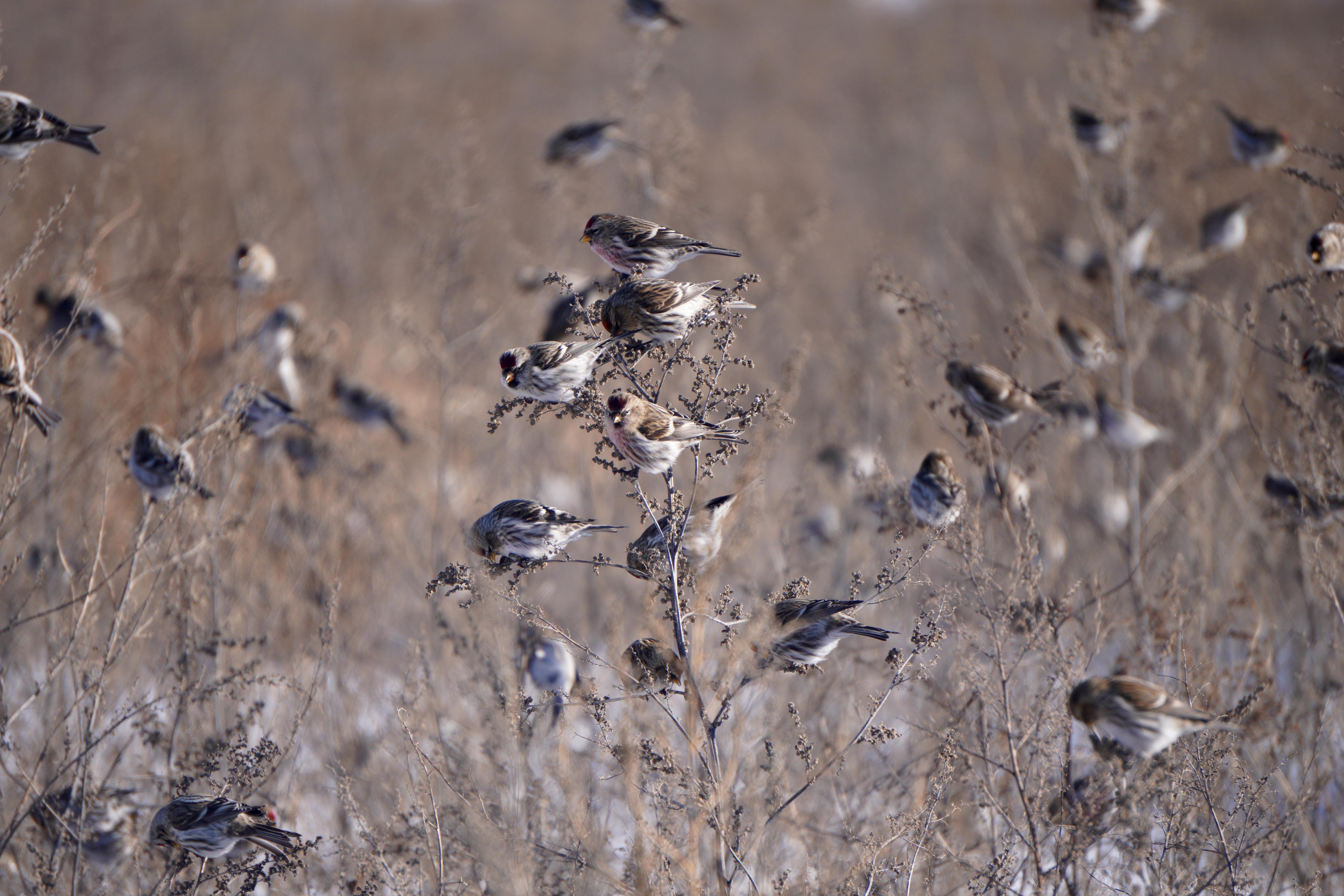
Species of the Week: The Common Redpoll

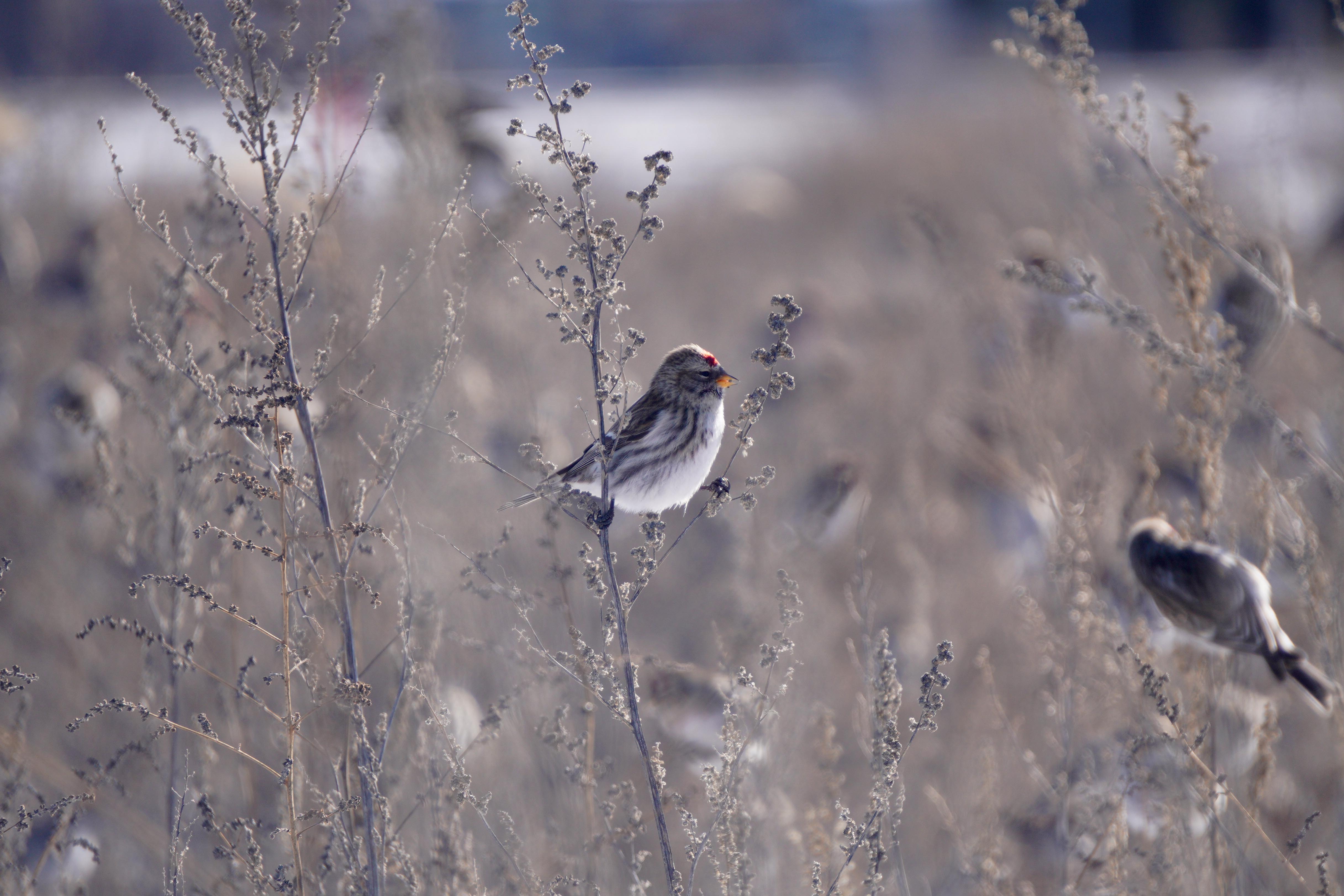
This week’s #SpeciesOfTheWeek is the Common Redpoll (Acanthis flammea), a small, white, brown and red finch that commonly travels in large flocks. In fact, their flocks can be as large as a few hundred. They’ll often be found in areas with lots of food in the winter – such as this weed field – but will also come to feeders and spend time in open woodlands. We generally only see this beautiful bird in the winter, as their breeding range is further north and they only come this far south when they need food in the off-season. As such, their presence here is somewhat unpredictable, as they go wherever there is enough food and so may appear in flocks of hundreds one year and not make an appearance at all the next. This is called an irruption. Apart from seeds, redpolls also eat wildflowers, grasses, sedges, berries, and some insects in the summer. To help them gather food fast, Common Redpolls have an extendible throat pouch that they can fill with food to eat later, which is especially helpful in wintertime. They’re very social and acrobatic little birds and are super fun to watch as they feed on seeds and fly around together. If you’d like to entice some to your feeders, try putting out Nyjer or sunflower seeds. Have you ever seen this cute little bird?

Posted in Friends of Murphys Point, Murphys Point, Murphys Point Provincial Park, Species of the Week | Leave a comment

Species of the Week: The Northern Cardinal

Photo by Adam Kalab

This week’s #SpeciesOfTheWeek is the Northern Cardinal (Cardinalis cardinalis). Most brightly-coloured birds have migrated south by this time of year, but the Cardinal stays here year-round and the male’s bright red plumage dramatically stands out in a winter forest. The female’s plumage is slightly drabber, but she still sports brilliant red highlights on her wings and crest and a bright red beak. Their loud whistling calls are a common sound on spring and summer mornings. Females will also sing while sitting on the nest, which is rare in North American songbirds. Cardinals are one species that has benefited from human expansion, as they use forest edge habitats that can be found at the edge of farmlands and suburban areas. Since they are seed-eaters, cardinals are common visitors to bird feeders and seem to have a preference for black oil sunflower seeds. Cardinals are very territorial and attack any perceived intruders – including their own reflections. During the breeding season, when hormone levels are high, both males and females may spend hours attacking their own reflection in windows, car mirrors, and other reflective surfaces. Treating windows to make them less reflective is one way you can help protect cardinals and other birds.

Posted in Friends of Murphys Point, Murphys Point, Murphys Point Provincial Park, Species of the Week | Leave a comment