Species of the Week: The Monarch Butterfly

Photo by Sarah Wray

This week’s #SpeciesOfTheWeek is the Monarch (Danaus plexippus). The Monarch is one of the most famous and popular species of butterflies, known for their bright orange coloration, with black lines and white spots, as well as their migration from Canada/United States to Southern California/Mexico. It is not uncommon to see thousands of Monarchs lining the tree canopy at their overwintering sites, truly a sight to behold. Impressively, it takes three generations of Monarchs to complete such a lengthy migration. Milkweed plants play an important role in the life of a Monarch as that is the host species for their caterpillars. When the caterpillars eat the toxic milkweed, the toxins build up in their tissues making them unpalatable to predators. Since the 1980s, there has been a 99% decline in the western Monarch population and an 80% decline in the eastern population which has resulted in them being recognized as a species at risk. Major threats to Monarch populations are habitat loss and climate change. Due to their popularity, the decline of Monarch populations has received a lot of attention and efforts to promote habitat conservation and milkweed planting have arisen in the hopes to help this iconic species. At Murphys Point, it is not uncommon to see this beautiful species flying around the meadow at the Lally Homestead.
Posted in Friends of Murphys Point, Murphys Point, Murphys Point Provincial Park, Species of the Week | Leave a comment

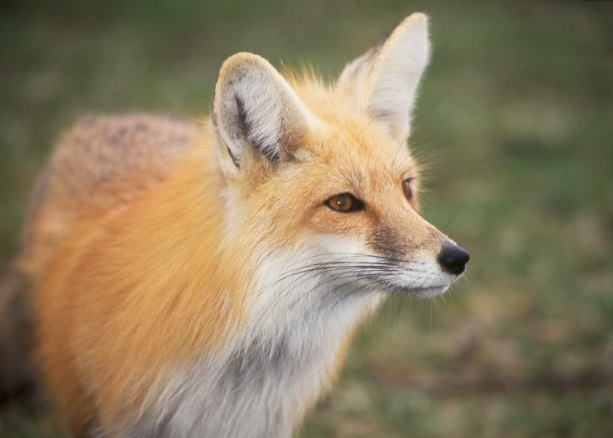
Species of the Week: The Red Fox

Photo by Murphys Point PP

Our #SpeciesOfTheWeek this week is the Red Fox. Interestingly enough, its scientific name (Vulpes vulpes) actually translates to “fox fox”. A masterful predator, the Red Fox’s agility allows it to reach speeds of nearly 50 kilometres an hour and leap over obstacles as high as 2 metres. This could explain why these beautifully coloured animals have such striking features without a need to camouflage. The Red Fox is also a very clever animal. Unlike other mammals, it can hear low-frequency sounds very well, allowing it to hear the squeal of a mouse almost 150 yards away. When it detects a mouse, it will watch and listen intently while remaining motionless, to determine its exact location. Once located, the fox will leap up in the air and dive straight down to pin the mouse to the ground. Aside from mice, the Red Fox will eat whatever else is available but typically prefers small rodents. For this reason, they generally prefer to live in meadows and other open areas but will burrow in mountain slopes to escape bad weather. Since they are nocturnal creatures, the Red Fox is not commonly seen here in the park, but may be heard yipping at night. Have you ever heard one at night while camping here at the park?

Posted in Friends of Murphys Point, Murphys Point, Murphys Point Provincial Park, Species of the Week | Leave a comment

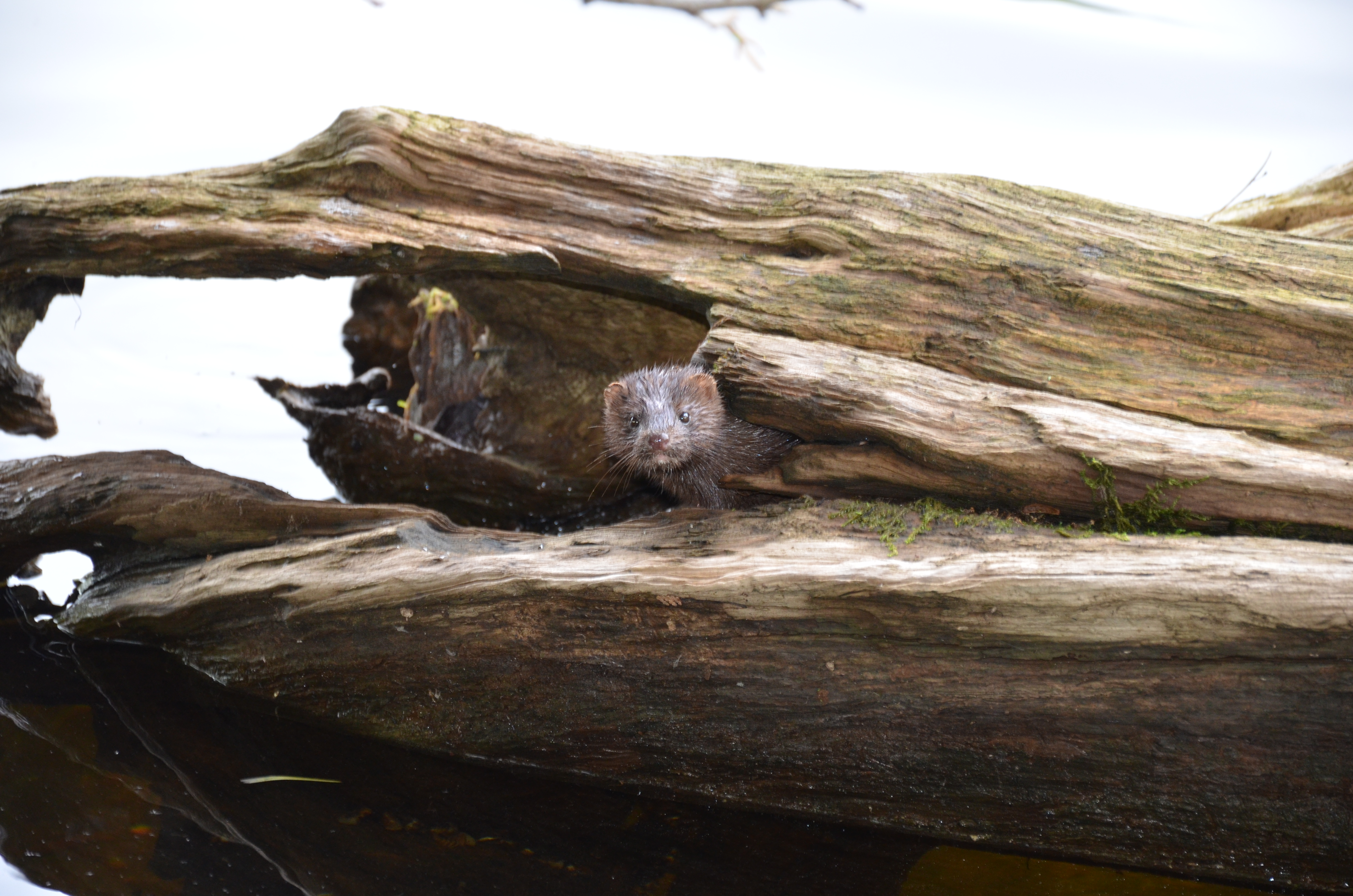
Species of the Week: The American Mink

Photo by Murphys Point PP

This week we are looking closely at the American Mink (Neogale vison). Plentiful at Murphys Point, these semi-aquatic carnivores primarily eat rodents, fish, crustaceans, frogs, and birds. Despite being active throughout the year, they are mostly nocturnal and not seen as often as expected. The long slender body of the American Mink allows it easy access to the dens of its prey, with their long tails making up approximately one-third of their body length.  They are very good swimmers and are known to swim for up to 3 hours at a time. With a weak sense of smell, they rely primarily on hearing when hunting. Their waterproof coat is predominantly brown to black with a white patch below the chin and throat. American Mink are widespread throughout Canada and the United States, with the exception of some of the Canadian Tundra, and parts of the continental United States. Mink have an average lifespan of 3 years in the wild.  Murphys Point Provincial Park is a great place to observe American Mink in its natural environment.

Posted in Friends of Murphys Point, Murphys Point, Murphys Point Provincial Park, Species of the Week | Leave a comment